Chicken Tikka Masala
British Recipe
Overview
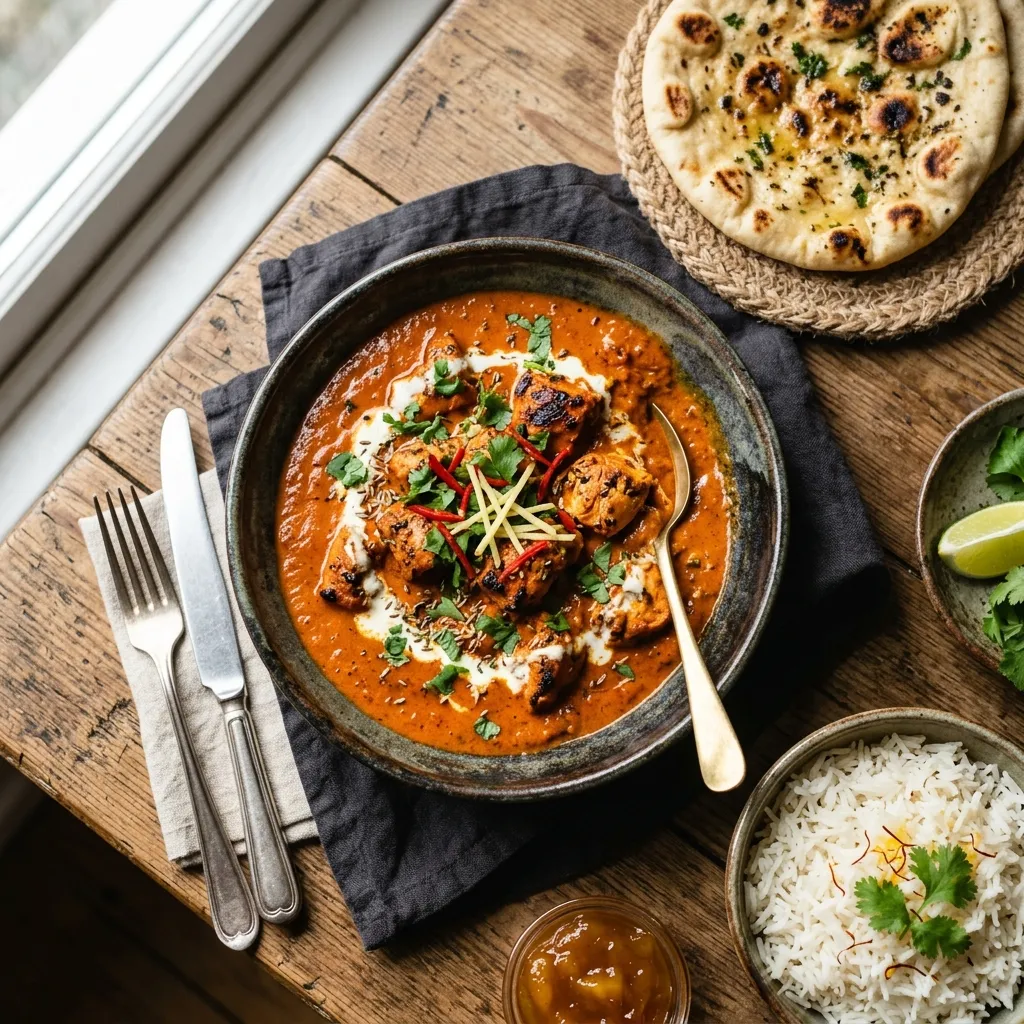
Chicken tikka masala was declared Britain's national dish by Foreign Secretary Robin Cook in 2001, and its origin story is a contested piece of culinary history. The most widely cited account places its invention in the 1970s at a Bangladeshi restaurant in Glasgow, where a customer complained that his chicken tikka was too dry. The chef improvised a sauce from tinned tomato soup, spices, and cream, creating a dish that would become more popular in Britain than fish and chips. Whether this origin is apocryphal or not, the dish is undeniably a British creation — a fusion of Mughlai cooking techniques with British tastes. The preparation has two stages. First, chicken pieces are marinated in yoghurt with Kashmiri-style spices and grilled or roasted at high heat — this is the tikka. Then a separate masala sauce is built from onions, tomatoes, cream, and a careful blend of spices: garam masala, cumin, coriander, turmeric, and paprika. The charred chicken is folded into the creamy sauce and simmered briefly to meld the flavours. Ayurvedically, this dish presents a complex energetic profile. The yoghurt marinade is cooling and sour, the spice blend is warming and pungent, the cream is heavy and sweet, and the tomatoes are heating and sour. The result is a rajasic dish with mixed energetics that stimulates digestion powerfully but can overwhelm Pitta types with its combined heat from spices, tomato, and fermented dairy.
Pacifies Vata with warm, oily, heavy, and moist qualities. Aggravates Pitta due to heating spices, sour tomato, and fermented dairy. May increase Kapha from cream and heaviness, though spices provide some counterbalance.
The warming spice blend supports digestion during cold weather and can help kindle weakened agni. The turmeric and ginger provide anti-inflammatory action that complements the protein for tissue repair.
Ingredients
- 700 g Boneless chicken thighs (cut into large chunks)
- 200 g Plain yoghurt (full-fat)
- 2 tbsp Lemon juice
- 2 tsp Kashmiri chili powder
- 2 tsp Garam masala
- 2 tsp Ground cumin
- 1 tsp Turmeric powder
- 1 tsp Ground coriander
- 2 tbsp Fresh ginger (grated)
- 4 cloves Garlic (crushed)
- 2 large Onion (finely diced)
- 400 g Tinned chopped tomatoes
- 2 tbsp Tomato paste
- 200 ml Heavy cream
- 30 g Butter
- 2 tbsp Vegetable oil
- 3 tbsp Fresh coriander (chopped, for garnish)
- 1.5 tsp Salt
Instructions
- Combine yoghurt, lemon juice, half the ginger, half the garlic, 1 tsp each of Kashmiri chili, cumin, and garam masala, and all the turmeric in a large bowl. Add chicken pieces and toss to coat thoroughly. Cover and marinate for at least 2 hours, or overnight in the refrigerator.
- Preheat the oven to its highest grill setting. Thread the marinated chicken onto skewers or spread on a lined baking tray. Grill for 12-15 minutes, turning once, until charred at the edges and cooked through. Set aside.
- Heat oil and butter in a large, deep pan over medium heat. Add the diced onions and cook for 8-10 minutes until deeply golden. Add the remaining ginger and garlic, cooking for 1 minute.
- Add the remaining cumin, coriander, garam masala, and Kashmiri chili. Stir for 30 seconds until the spices are fragrant and toasted in the fat.
- Add the tinned tomatoes and tomato paste. Simmer for 10 minutes, stirring occasionally, until the sauce thickens and the oil begins to separate at the edges.
- Pour in the cream and stir until the sauce turns a uniform orange-red. Season with salt. If you prefer a smooth sauce, blend briefly with a stick blender.
- Add the grilled chicken tikka pieces to the sauce. Simmer together for 5 minutes so the chicken absorbs the flavours.
- Garnish with fresh coriander and serve with basmati rice, naan bread, or both.
Nutrition
These values are estimates calculated from the ingredient list and may vary based on brands, cooking methods, and serving size. Not a substitute for medical or dietary advice.
How This Recipe Affects Each Dosha
Vata
The combination of warm, oily sauce, well-spiced chicken, and moist cooking method delivers deep Vata pacification. The cumin and ginger support Vata digestion, the cream provides unctuousness, and the overall warmth counters Vata's cold tendency. Served with basmati rice, this is an excellent cold-weather Vata meal.
Pitta
Multiple heating factors converge: chili powder, garlic, onion, tomato, and the sour quality of yoghurt and tomatoes. The cream provides some cooling counterbalance but not enough to offset the accumulated heat. Pitta types will notice increased internal heat, possible heartburn, and skin reactions — particularly if eaten in the evening.
Kapha
The cream-based sauce adds heaviness and sweetness that Kapha should limit. However, the pungent spice blend — cumin, chili, ginger, garlic — provides significant digestive stimulation and Kapha-cutting quality. The net effect is moderately Kapha-increasing, which the spice adjustments below can address.
The spice blend powerfully stimulates agni. Cumin, ginger, and garlic are primary digestive kindlers in Ayurveda, and the pungent quality of the chili accelerates metabolic processing. The cream adds heaviness that the spices must counterbalance — the dish's digestibility depends on the ratio of spice to cream.
Nourishes: Mamsa (muscle), Rasa (plasma), Rakta (blood)
Adjustments by Constitution
For Vata Types
This dish suits Vata well as written. For additional support, add a pinch of asafoetida to the sauce and serve with warm chapati or naan brushed with ghee. A small side of sauteed spinach with cumin provides mineral balance.
For Pitta Types
Replace chicken thighs with chicken breast for less fat. Omit garlic and reduce chili to half a teaspoon. Replace tomatoes with a cashew-cream sauce: soak 50g cashews, blend smooth with water, and use as the sauce base. Add fennel seeds and extra coriander. Garnish with fresh mint alongside cilantro.
For Kapha Types
Replace heavy cream with coconut milk (lighter) or omit cream entirely for a drier, spicier preparation. Increase ginger, black pepper, and chili. Use chicken breast rather than thigh. Serve with cauliflower rice or a small portion of millet instead of basmati rice. Skip the naan.
Seasonal Guidance
Best in cold and transitional seasons when the body benefits from warming, substantive meals. The heating spice blend is ideal for Vata season (autumn) and cold winter nights. Reduce cream and increase spice in spring to prevent Kapha accumulation. In summer, this dish is too heating for most constitutions.
Best time of day: Dinner, served between 6 and 8 PM. The protein and spice complexity need adequate digestion time before sleep — allow at least 2 hours.
Cultural Context
Chicken tikka masala tells the story of modern multicultural Britain. The wave of South Asian immigration following Indian independence in 1947 and the partition of Bangladesh in 1971 brought cooks who adapted their traditional dishes for British palates — milder, creamier, and saucier than the originals. The tikka masala represents this adaptation at its most successful: a dish that belongs to neither India nor Britain exclusively but to the space between them. Its 2001 coronation as Britain's national dish sparked genuine debate about cultural identity, belonging, and what it means for a nation's food to evolve. Over 23 million portions are sold annually in British restaurants alone.
Deeper Context
Origins
Widely attributed to Glasgow's Shish Mahal restaurant in the early 1970s, though several other Punjabi-British curry-house kitchens have claimed the invention. The dish does not exist in classical Indian cuisine — the tomato-cream sauce format is a British adaptation designed for British palates unfamiliar with Indian regional cookery. Robin Cook's 2001 speech as UK Foreign Secretary declaring it a national British dish crystallized its status in British food identity and marked a symbolic moment in post-colonial cultural integration.
Food as Medicine
Turmeric (in garam masala) carries extensive classical and modern medicinal status for anti-inflammatory and blood-moving effects; ginger and cinnamon in the spice blend add digestive-and-circulatory support; yogurt in the marinade provides probiotic fermentation benefits; tomato contributes lycopene. The whole preparation is accidentally more therapeutically composed than its takeaway reputation would suggest.
Ritual & Seasonal Role
Friday-night curry-house tradition is a specifically British cultural ritual — the post-pub Indian takeaway has anchored British weekend food culture since the 1970s and 1980s. Not religiously ceremonial, but heavily ritualized in British takeaway and pub-Indian dining. Year-round with no strong seasonal pattern.
Classical Pairings & Cautions
Basmati rice, naan or paratha, a side of raita, poppadoms and chutney. Beer or lassi alongside. Cautions: dairy sensitivity precludes the yogurt-and-cream base; tomato allergies and nightshade-family sensitivities; nut allergies if cashew paste is added to the sauce (common in commercial versions); Pitta aggravation in hot weather; chicken religious restrictions are rare but present.
Cross-Tradition View
How other medical and food-wisdom traditions read this dish. Each tradition names the same physiological reality in its own language — the agreements across them are where universal principles live.
Traditional Chinese Medicine
Chicken is Qi-building and warming; yogurt marinade is Yin-building; tomato is cool-sour and moves Liver Qi; cream is Yin-building; garam masala is warming and dispersing. A Qi-and-Yin-building preparation with Liver-Qi-moving accent. TCM physicians would class this as a balanced Qi-Blood tonic, appropriate across most deficiency patterns.
Greek Humoral
Hot-wet sanguine-building. A Galenic convalescent-favored preparation — the chicken-yogurt-cream combination was well known in Byzantine and medieval European cookery as suitable for the sick, the weak, and the convalescent. The tomato is the only modern-era ingredient.
Ayurveda
Heating virya, pungent vipaka. Pacifies Vata through protein and cream-warmth; mildly aggravates Pitta through the tomato-and-spice combination; aggravates Kapha through the cream base. The garam masala heat is what keeps this from being a pure Kapha-aggravator — well-composed by accident.
Anglo-Indian Curry House
Chicken tikka masala was invented in Glasgow in the 1970s — the Shish Mahal restaurant is the widely-cited origin point, where chef Ali Ahmed Aslam allegedly improvised a tomato-cream sauce to soften a dry tandoori chicken that a customer had complained about. It is British by national cuisine (UK Foreign Secretary Robin Cook's 2001 speech famously called it 'a true British national dish') and Indian by ingredients — a thoroughly colonial-era creolized preparation.
Chef's Notes
The overnight marinade is what separates restaurant-quality tikka from a weeknight shortcut. The yoghurt's lactic acid tenderizes the chicken while the spices penetrate deep into the meat. For the best char, remove excess marinade before grilling — it burns before the chicken colors properly. Kashmiri chili gives the signature red color without excessive heat; regular chili powder is hotter and less vibrant. If the sauce is too thin, simmer it longer before adding the cream. A tablespoon of dried fenugreek leaves (kasoori methi), crushed between your palms and stirred in at the end, gives the dish its characteristic restaurant flavour.
Frequently Asked Questions
Is Chicken Tikka Masala good for my dosha?
Pacifies Vata with warm, oily, heavy, and moist qualities. Aggravates Pitta due to heating spices, sour tomato, and fermented dairy. May increase Kapha from cream and heaviness, though spices provide some counterbalance. The combination of warm, oily sauce, well-spiced chicken, and moist cooking method delivers deep Vata pacification. Multiple heating factors converge: chili powder, garlic, onion, tomato, and the sour quality of yoghurt and tomatoes. The cream-based sauce adds heaviness and sweetness that Kapha should limit.
When is the best time to eat Chicken Tikka Masala?
Dinner, served between 6 and 8 PM. The protein and spice complexity need adequate digestion time before sleep — allow at least 2 hours. Best in cold and transitional seasons when the body benefits from warming, substantive meals. The heating spice blend is ideal for Vata season (autumn) and cold winter nights. Reduce cream and increas
How can I adjust Chicken Tikka Masala for my constitution?
For Vata types: This dish suits Vata well as written. For additional support, add a pinch of asafoetida to the sauce and serve with warm chapati or naan brushed with For Pitta types: Replace chicken thighs with chicken breast for less fat. Omit garlic and reduce chili to half a teaspoon. Replace tomatoes with a cashew-cream sauce:
What are the Ayurvedic properties of Chicken Tikka Masala?
Chicken Tikka Masala has Sweet, Sour, Pungent, Salty taste (rasa), Heating energy (virya), and Pungent post-digestive effect (vipaka). Its qualities (gunas) are Warm, Oily, Heavy, Moist. It nourishes Mamsa (muscle), Rasa (plasma), Rakta (blood). The spice blend powerfully stimulates agni. Cumin, ginger, and garlic are primary digestive kindlers in Ayurveda, and the pungent quality of the chili accelerates metabolic processing. The cream adds heaviness that the spices must counterbalance — the dish's digestibility depends on the ratio of spice to cream.