Ayib
Ethiopian Recipe
Overview
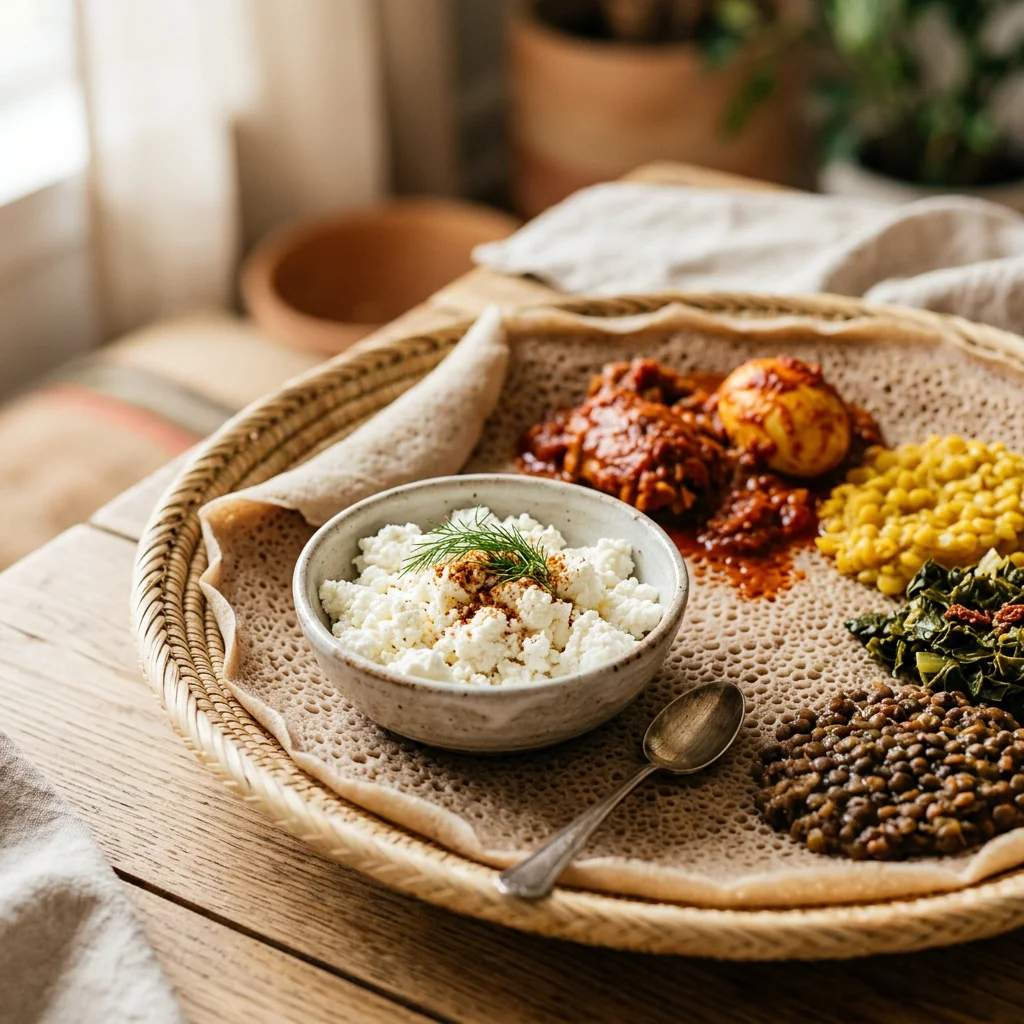
Ayib is Ethiopian fresh cheese — a simple, snow-white, crumbly curd made by heating buttermilk or yogurt until the whey separates, then draining the curds through cloth. It is the cooling, mild counterpoint to the intense spicing of Ethiopian cuisine, placed strategically on the communal injera platter to provide relief between bites of fiery wot. Its flavor is clean, faintly tangy, and remarkably subtle — a blank canvas that absorbs whatever it sits next to on the plate. The preparation is among the simplest in all of cooking: heat milk or buttermilk slowly, wait for it to curdle, strain, and season lightly. Some versions add a pinch of salt or a gentle herb; others are left completely plain. The resulting cheese has a texture somewhere between ricotta and cottage cheese — soft, moist, and crumbly. It is never aged, never pressed into blocks, and never melted. It is freshness itself, made to be eaten the same day. Ayurvedically, ayib functions much like paneer or fresh ricotta in the Indian tradition — it is sweet, cooling, and heavy, providing the sweet rasa and cooling virya that balance pungent, heating foods. On an Ethiopian platter dominated by berbere-spiced stews, ayib serves the same role that yogurt raita serves on an Indian thali: thermal and energetic counterbalance. Its moist, heavy, sweet qualities specifically pacify the drying, heating effects of the chili and spice concentration in wots.
Pacifies Pitta and Vata. Increases Kapha due to heavy, moist, cooling qualities.
Ingredients
- 4 cups Whole milk yogurt or buttermilk (full-fat, plain, live culture)
- 1/4 tsp Salt (optional)
- 1 tsp Fresh lemon juice (optional, to help curding)
- 1 pinch Black pepper (optional garnish)
- 1 tbsp Fresh herbs (optional — finely minced bishop's weed leaf, basil, or koseret)
Instructions
- Pour the yogurt or buttermilk into a heavy-bottomed pot over medium-low heat. Stir occasionally as it warms.
- Heat slowly until the mixture begins to separate into white curds and yellowish whey. This takes 15-20 minutes. Do not boil vigorously — gentle heat produces the softest, most delicate curds. If using yogurt that is reluctant to separate, add the lemon juice.
- Once the curds and whey have clearly separated, remove from heat and let stand for 5 minutes.
- Line a fine-mesh strainer with cheesecloth or a clean cotton kitchen towel. Set over a bowl to catch the whey.
- Gently ladle the curds into the lined strainer. Let drain for 20-30 minutes. For a drier ayib, gather the cloth and gently squeeze; for a moister, more spreadable version, drain less.
- Transfer the drained curds to a bowl. Season with salt and optional fresh herbs. Gently crumble and mix with a fork — ayib should be soft and crumbly, never dense or compressed.
- Serve immediately at room temperature, or refrigerate for up to 2 days. Place on the injera platter alongside spicy wots as a cooling counterpoint.
Nutrition
These values are estimates calculated from the ingredient list and may vary based on brands, cooking methods, and serving size. Not a substitute for medical or dietary advice.
How This Recipe Affects Each Dosha
Vata
The moist, heavy, and sweet qualities of ayib are nourishing for Vata. Fresh cheese is easier to digest than aged cheese and provides the oleation and substance that Vata craves. The cooling nature is Vata's only concern — serve alongside warming dishes to balance.
Pitta
Ideal for Pitta. The sweet, cool, moist qualities directly counteract Pitta heat. Ayib placed on the platter between fiery wots allows Pitta types to modulate their intake of heating food. It cools the palate, soothes the stomach lining, and provides building nourishment without adding heat.
Kapha
The heavy, moist, cool, sweet qualities are everything that increases Kapha. Fresh cheese contributes to mucus production, heaviness, and congestion in Kapha types. Small amounts as a condiment are acceptable, but Kapha types should not eat ayib as a main protein source.
Fresh cheese is mildly dampening to agni due to its heavy, cool, moist qualities. It is best eaten as a small accompaniment to well-spiced, agni-kindling dishes rather than on its own. The live cultures in minimally heated ayib provide some digestive support.
Nourishes: Rasa (plasma), Mamsa (muscle), Meda (fat), Shukra (reproductive)
Adjustments by Constitution
For Vata Types
Season the ayib with a generous pinch of black pepper and a tiny pinch of fenugreek powder for warmth. Drizzle with a half-teaspoon of niter kibbeh to add heating, oily qualities that balance the cheese's coolness. Always serve alongside a warm wot, never cold on its own.
For Pitta Types
Ayib is already perfect for Pitta. Serve plain or with a gentle herb like fresh basil or koseret (Ethiopian oregano). Increase the portion slightly when the platter includes extra-spicy dishes.
For Kapha Types
Use only a small dollop — one tablespoon — as a condiment rather than a side dish. Season with a pinch of mitmita and a generous amount of black pepper to counteract the heavy, cool, moist qualities. The fasting version of the Ethiopian platter (without dairy) is preferable for Kapha types.
Seasonal Guidance
Most appropriate in summer when its cooling quality counterbalances seasonal heat and Pitta aggravation. In spring, use in small amounts — the moist, heavy quality can increase spring Kapha. In autumn and winter, eat only alongside very warming, well-spiced dishes, and keep portions small. Never eat cold ayib on a cold day.
Best time of day: Lunch, as a cooling condiment alongside spicy wots
Cultural Context
Ayib holds a quiet but essential place on the Ethiopian table — it is the breath between bites, the cool space between fires. On the traditional beyaynetu platter, a small mound of ayib is placed in the center or between the hottest wots, inviting diners to moderate their experience. During the long fasting seasons, ayib is forbidden (as all dairy products are), and its return at the breaking of the fast is a small celebration of abundance. The simplicity of its preparation — any household with access to milk can make it — reflects the Ethiopian value of creating profound satisfaction from modest ingredients.
Deeper Context
Origins
Ethiopian pastoral cheese-making predates written history — the Horn of Africa was among the earliest centers of cattle and goat domestication, and fresh-cheese preparations have been made continuously for at least 6,000 years. Ayib's current role in Ethiopian cuisine was formalized by the Ethiopian Orthodox fasting calendar, which restricts meat and certain dairy products on fasting days but permits ayib as a gentle dairy protein source.
Food as Medicine
Fresh cheese provides probiotic content when traditionally prepared (the yogurt-curdling method creates a lacto-fermented cheese). Classical Horn-of-Africa convalescent food for the sick and the elderly. Used as a cooling palate-balance food alongside berbere-intense stews, functioning practically as an anti-inflammatory dairy-protein delivery alongside capsaicin-heavy main dishes. Modern nutrition recognizes ayib as a reasonable probiotic and calcium source.
Ritual & Seasonal Role
Ethiopian Orthodox fasting days (Wednesdays and Fridays year-round, plus extended fasting periods including Lent, Advent, and the Fast of the Apostles). Injera-and-wat meals across the week. Year-round pastoral food. Deeply embedded in Ethiopian Orthodox religious observance despite its pre-Christian pastoral origin.
Classical Pairings & Cautions
Served alongside injera (teff flatbread), spicy wat stews, kitfo (spiced raw beef), and shiro (chickpea stew). Cautions: dairy sensitivity and lactose intolerance (though traditional ayib is low-lactose due to the curdling process); raw-milk food safety concerns in unpasteurized preparations (traditional Ethiopian ayib is made from raw pastoral milk); Kapha aggravation in damp weather; pregnancy should favor pasteurized versions.
Cross-Tradition View
How other medical and food-wisdom traditions read this dish. Each tradition names the same physiological reality in its own language — the agreements across them are where universal principles live.
Traditional Chinese Medicine
Fresh cheese is Yin-building and builds Kidney essence; yogurt is Yin-and-Liver-supporting; black pepper is hot-dispersing. A Yin-building preparation with corrective heat from the pepper — a rare example of East African pastoral cheese-making that aligns cleanly with TCM constitutional dietetics. Used for Yin-deficient types in cold-damp weather.
Greek Humoral
Cold-wet with hot-dry corrective from the pepper. A Mediterranean-African parallel to Greek feta, Cypriot halloumi, and Turkish beyaz peynir — the fresh-cheese-with-pepper format reflects a shared Afro-Mediterranean pastoral tradition predating the colonial period. Galenic cheese dietetics would place this in the phlegmatic-corrective category.
Ayurveda
Cooling virya, pungent vipaka. Pacifies Pitta through the cool-moist quality; aggravates Kapha through dairy heaviness; Vata-neutral with the pepper correction. Paneer-adjacent in Indian terms, and the preparation method closely parallels the classical Indian fresh-cheese technique of heating milk with acid (yogurt or lemon) to curdle.
Ethiopian Orthodox & Habesha Folk
Ayib is central to Ethiopian Orthodox Christian fasting cuisine — one of the permitted foods during the many fasting periods (over 200 days per year in strict Orthodox observance). Pastoral Oromo and Amhara cheese-making traditions predate Orthodox Christianity but were incorporated into the Orthodox dietary calendar. Classically served alongside spicy berbere-based stews (wat, kitfo) to cool the palate and balance the intense heat of Ethiopian chili preparations.
Chef's Notes
The quality of ayib depends entirely on the quality of the dairy — use the best full-fat yogurt or cultured buttermilk you can find. Ultra-pasteurized dairy will not curdle properly. If using fresh whole milk instead, add 2 tablespoons of lemon juice or vinegar to acidulate. Save the whey — it is protein-rich and can be used in bread dough, soups, or smoothies. Ayib is traditionally served plain or with a small spoonful of mitmita on top for those who want heat even with their cooling agent. The cheese does not keep long and is meant to be made fresh for each meal.
Frequently Asked Questions
Is Ayib good for my dosha?
Pacifies Pitta and Vata. Increases Kapha due to heavy, moist, cooling qualities. The moist, heavy, and sweet qualities of ayib are nourishing for Vata. Ideal for Pitta. The heavy, moist, cool, sweet qualities are everything that increases Kapha.
When is the best time to eat Ayib?
Lunch, as a cooling condiment alongside spicy wots Most appropriate in summer when its cooling quality counterbalances seasonal heat and Pitta aggravation. In spring, use in small amounts — the moist, heavy quality can increase spring Kapha. In autumn
How can I adjust Ayib for my constitution?
For Vata types: Season the ayib with a generous pinch of black pepper and a tiny pinch of fenugreek powder for warmth. Drizzle with a half-teaspoon of niter kibbeh to For Pitta types: Ayib is already perfect for Pitta. Serve plain or with a gentle herb like fresh basil or koseret (Ethiopian oregano). Increase the portion slightly wh
What are the Ayurvedic properties of Ayib?
Ayib has Sweet, Slightly Sour taste (rasa), Cooling energy (virya), and Sweet post-digestive effect (vipaka). Its qualities (gunas) are Heavy, Moist, Cool, Soft. It nourishes Rasa (plasma), Mamsa (muscle), Meda (fat), Shukra (reproductive). Fresh cheese is mildly dampening to agni due to its heavy, cool, moist qualities. It is best eaten as a small accompaniment to well-spiced, agni-kindling dishes rather than on its own. The live cultures in minimally heated ayib provide some digestive support.