Avocado Toast
American Recipe
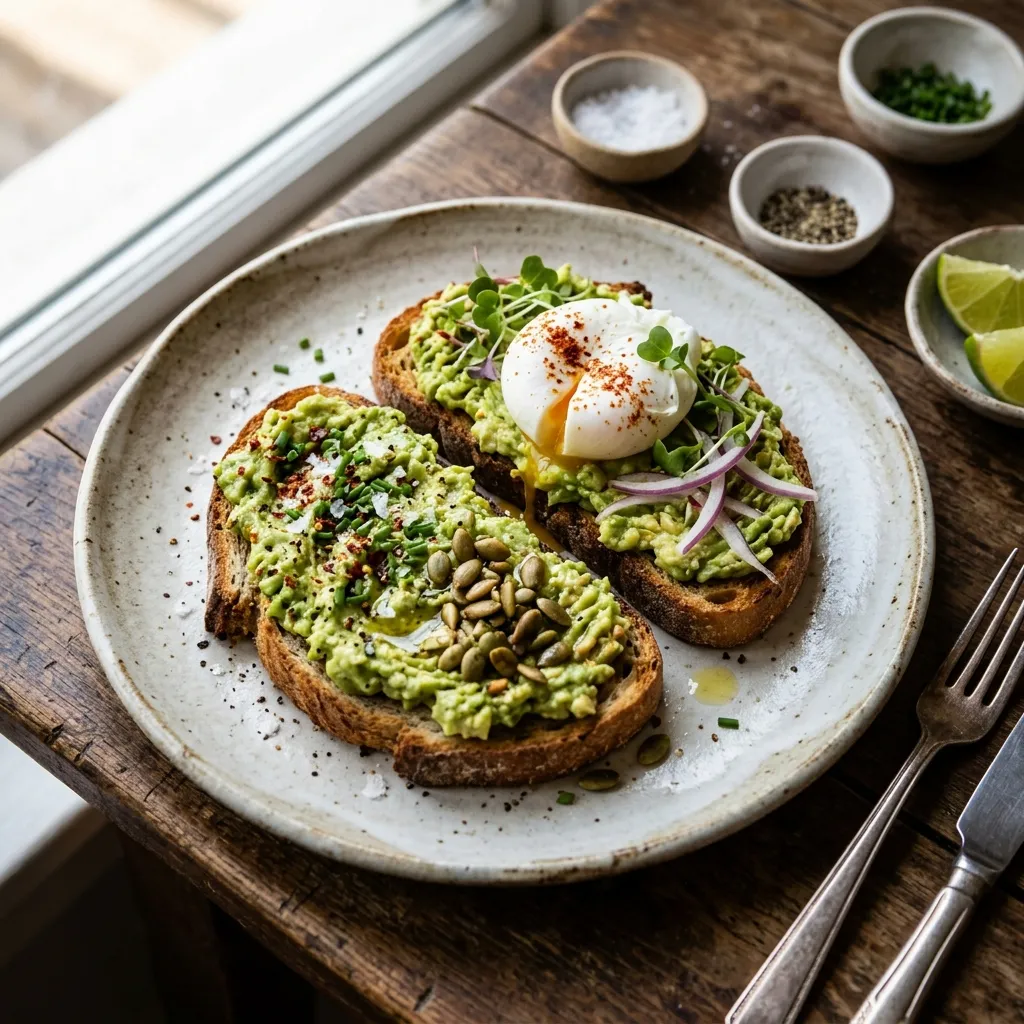
Overview
Avocado toast first appeared on a restaurant menu in 1993 at Bill Granger's cafe in Sydney, Australia, but the combination of mashed avocado on bread has roots in Mexican and Central American foodways stretching back centuries. The dish entered mainstream American food culture around 2010-2013, driven by Instagram food photography and the cafe culture of coastal cities like Los Angeles and New York. By 2017, it had become a cultural symbol — both celebrated as a healthy, photogenic meal and lampooned as a marker of millennial spending habits. Ayurveda views avocado as a sweet, heavy, oily fruit with a cooling virya — qualities that make it profoundly nourishing for vata dosha while potentially aggravating kapha. The high fat content (approximately 15 grams per half avocado) is predominantly monounsaturated oleic acid, which Ayurveda categorizes as snigdha (unctuous) — the quality most needed by dry, depleted vata types. When combined with whole grain bread and balanced with pungent, bitter, or astringent toppings, avocado toast becomes a surprisingly well-rounded meal from a doshic perspective. Ripeness determines everything with avocados. A ripe Hass avocado yields to gentle pressure, has dark, nearly black skin, and the small stem nub pops off easily to reveal green flesh beneath. Unripe avocados are hard and waxy-tasting; overripe ones have brown spots, stringy fibers, and a sour, off flavor. The window of perfect ripeness lasts roughly 24-48 hours at room temperature. Refrigerating ripe avocados extends this window by 2-3 days.
Avocado toast is exceptionally balancing for vata — the heavy, moist, oily, and cooling qualities address every vata aggravation except cold. Pitta benefits from the cooling virya and sweet rasa of avocado but should moderate the pungent toppings. Kapha is aggravated by the heavy, oily, moist qualities, particularly when consumed regularly or in large portions.
Avocado toast serves as a tissue-building food for vata-type depletion, dry skin, and constipation. The high oleic acid content supports cell membrane integrity and neurological function. In Ayurvedic dietary therapy, avocado — though not a classical Indian ingredient — fills the role of a snigdha (unctuous) fruit that moisturizes from within, comparable to how ghee and sesame oil function in traditional formulations.
Ingredients
- 2 medium ripe avocados
- 4 slices sourdough bread (thick-cut, about 1/2-inch)
- 1 tablespoon lime juice (fresh squeezed)
- 2 teaspoons extra virgin olive oil (for drizzling)
- 1/2 teaspoon flaky sea salt
- 1/4 teaspoon black pepper (freshly cracked)
- 1/4 teaspoon red pepper flakes (optional)
- 6 pieces cherry tomatoes (halved, optional)
- 1 handful microgreens or sprouts (for topping, optional)
Instructions
- Toast the sourdough bread slices until golden brown and firm enough to support the avocado without buckling. A toaster oven or broiler produces more even results than a pop-up toaster for thick slices.
- While the bread toasts, halve the avocados lengthwise and remove the pits. Score the flesh in a crosshatch pattern while still in the skin, then scoop it out into a bowl with a large spoon.
- Add the lime juice and a pinch of salt to the avocado. Mash with a fork to your preferred consistency — some prefer it completely smooth, while others leave large chunks for texture. Do not use a blender or food processor, which turns avocado into a paste.
- Taste the mashed avocado and adjust the lime juice and salt. The acid should brighten the flavor without making it noticeably sour, and the salt should enhance the avocado's natural richness.
- Divide the mashed avocado evenly among the four toast slices, spreading it in a thick, even layer that reaches the edges of the bread.
- Season each slice with cracked black pepper and red pepper flakes if using. The pungent heat of pepper stimulates agni and helps counterbalance the heavy, cool qualities of the avocado.
- Top with halved cherry tomatoes and microgreens if using. Drizzle each slice with about 1/2 teaspoon of olive oil.
- Sprinkle flaky sea salt over the top as a finishing touch — the large crystals provide bursts of salinity that contrast with the creamy avocado. Serve immediately; avocado browns within 20-30 minutes of exposure to air.
Nutrition
These values are estimates calculated from the ingredient list and may vary based on brands, cooking methods, and serving size. Not a substitute for medical or dietary advice.
How This Recipe Affects Each Dosha
Vata
Avocado is among the best foods for pacifying vata dosha. Its heavy, oily, moist qualities directly counteract vata's dry, light, rough nature. The sweet rasa nourishes depleted tissues, and the high fat content provides the unctuous quality (snigdha) that vata craves at a cellular level. The sourdough bread adds a fermented sour rasa that further pacifies vata and supports digestion. The combination of fat, complex carbohydrates, and fiber provides sustained energy without the crashes that plague vata types. Adding lime juice introduces additional sour rasa, making this a comprehensively vata-pacifying meal.
Pitta
Avocado's cooling virya and sweet rasa make it generally favorable for pitta. The heavy, oily qualities ground pitta's sharp intensity without adding heat. However, the sour rasa from lime juice and sourdough can mildly increase pitta when consumed in excess — sour is pitta-aggravating in large amounts. The red pepper flakes and black pepper add heating pungency that pitta should use sparingly. In moderate portions with minimal pungent toppings, avocado toast is a pleasant, cooling meal for pitta types. The olive oil drizzle adds more cooling, sweet quality.
Kapha
Avocado's heavy, oily, moist qualities mirror kapha's own constitution, making this a kapha-increasing food. The dense fat content, combined with bread and olive oil, creates a meal dominated by earth and water elements that kapha already has in excess. Regular consumption contributes to weight gain, sluggishness, and the feeling of heaviness that characterizes kapha imbalance. The pungent toppings (pepper, red pepper flakes) provide some counterbalance, but not enough to offset the fundamentally heavy nature of the dish. Kapha types should limit avocado toast to once or twice a week at most.
Avocado's heavy, oily nature can slow digestion for those with weak agni. The cooling virya does not stimulate digestive fire the way heating foods do. However, the pungent additions — black pepper, red pepper flakes, and lime juice — provide necessary digestive stimulation that prevents the avocado from sitting like a stone in the stomach. Without these pungent and sour accompaniments, avocado toast can leave people with variable digestion feeling heavy and sluggish for hours.
Nourishes: Rasa (plasma), Rakta (blood), Mamsa (muscle), Meda (fat), Shukra (reproductive)
Adjustments by Constitution
For Vata Types
Use the full amount of lime juice and add a pinch of cumin and hing (asafoetida) to the mashed avocado for additional vata-pacifying digestive support. Top with a poached egg for warming protein. Drizzle with sesame oil instead of olive oil for deeper warmth. Add a thin layer of ghee to the toast before spreading the avocado. Eat warm — toast the bread just before assembling so the warmth partially offsets the cooling nature of the avocado.
For Pitta Types
Omit the red pepper flakes and use only a light grinding of black pepper. Replace lime juice with a squeeze of lemon, which is slightly less sour. Add cooling toppings: sliced cucumber, fresh cilantro, and a sprinkle of hemp seeds. Use rye or spelt sourdough if available, which is lighter than wheat. Drizzle with coconut oil instead of olive oil for maximum cooling effect. A thin spread of fresh goat cheese beneath the avocado adds cooling, sweet-sour creaminess.
For Kapha Types
Use only half an avocado per serving and spread it thin. Choose a dry, light bread — rye crackers or thin-sliced pumpernickel rather than thick sourdough. Add generous amounts of pungent and bitter toppings: arugula, radish slices, a thick coating of cracked black pepper, and a sprinkle of turmeric. Skip the olive oil drizzle. Add a squeeze of lemon and a pinch of cayenne to stimulate agni and counteract the heavy oiliness. Top with a handful of peppery sprouts or watercress for bitter rasa.
Seasonal Guidance
Avocado toast is well-suited to warmer months when the cooling virya complements seasonal heat and lighter meals feel appropriate. In summer, it serves as a refreshing, nutrient-dense meal that does not generate excess internal heat. During autumn, it helps moisturize tissues as the air becomes dry, though warming modifications are recommended. In winter, the cooling quality works against the body's need for warmth — eat warm soups or cooked breakfasts instead.
Best time of day: Best as a late morning meal (9-11 AM) or light lunch. The fat and fiber content provides sustained energy for several hours. Avoid eating late in the evening, as the heavy, oily qualities are difficult to digest when agni naturally diminishes after sunset.
Cultural Context
While avocados have been cultivated in Central America for over 5,000 years — the oldest evidence comes from Coxcatlan Cave in Mexico's Tehuacan Valley, dated to approximately 3,400 BCE — the specific combination of mashed avocado on toast is a modern invention. Australian chef Bill Granger served it at his Sydney cafe Bills in 1993, and Melbourne cafes expanded on the concept throughout the 2000s. The dish reached American coastal cities around 2010 and went viral on Instagram by 2013. California's year-round avocado production (80% of US avocados come from California, with the rest imported from Mexico) made widespread adoption possible. The Hass variety, which accounts for 95% of American avocado consumption, was patented by California mail carrier Rudolph Hass in 1935 from a chance seedling in his La Habra Heights yard.
Deeper Context
Origins
Avocado toast in its current form emerged in Sydney, Australia in the early 1990s at Bill's restaurant under chef Bill Granger, and spread globally through the 2000s-2010s Instagram-driven brunch culture. The combination is genuinely new — avocados are 7,000 years old as a cultivated food, sourdough is millennia older still, but the specific pairing is a millennial-era dish that spread through café menus faster than almost any preparation in modern food history.
Food as Medicine
Avocado carries a strong classical reputation across Mesoamerican medicine as a Yin-tonic equivalent — restorative for thin or exhausted patients, galactagogue for new mothers, and skin-and-hair nourisher. Traditional Nahua usage included avocado leaf teas for menstrual complaints and avocado seed decoctions for diarrhea. The sourdough's fermentation makes its grain easier on digestion than conventional bread, which is why Ayurveda-curious eaters often tolerate sourdough when ordinary wheat aggravates them.
Ritual & Seasonal Role
Not ceremonial. A breakfast and brunch dish, year-round, associated with café culture and urban wellness trends. The closest thing to a cultural role is generational signaling — avocado toast became a shorthand for millennial consumption patterns in 2010s financial commentary, culminating in the notorious 2017 suggestion that young Americans could afford homes if they stopped buying it. The dish's symbolic weight exceeds its actual caloric cost.
Classical Pairings & Cautions
Served with poached or fried egg, feta or ricotta, red pepper flakes, microgreens, smoked salmon in luxe versions, and a squeeze of lemon at the table. Cautions: the cooling-heavy combination is Kapha-aggravating without adequate spice; gluten intolerance precludes the sourdough base — gluten-free sourdough substitutions work poorly for this dish; high potassium content contraindicates avocado in patients on potassium-sparing diuretics or with advanced renal insufficiency.
Cross-Tradition View
How other medical and food-wisdom traditions read this dish. Each tradition names the same physiological reality in its own language — the agreements across them are where universal principles live.
Traditional Chinese Medicine
Avocado is cool-sweet, moistens Yin and tonifies Liver Blood; sourdough is pre-digested wheat and Spleen-tonifying; lime is cool-sour and moves Liver Qi; black pepper disperses cold; olive oil is cool-moistening. The dish builds Yin fluids and Liver Blood, suitable for dry-constitution types and post-menopausal Yin deficiency. Cool overall — a summer food more than a winter breakfast by TCM reading.
Greek Humoral
Cold-wet base with a hot-dry correction from pepper and sourdough crust. Galenic reading: phlegmatic-leaning with choleric balancing. Good for sanguine and choleric excess, particularly when tomato or chili flakes are added. Less suited to melancholic or phlegmatic baseline without substantial heat corrections — black pepper, chili, hot-smoked paprika all work.
Ayurveda
Cooling virya, sweet vipaka. Pacifies Pitta strongly through the avocado's cool-unctuous quality. Mixed for Vata — unctuousness helps, but the rawness and cold can aggravate. Increases Kapha through heaviness and fat content. The lime and black pepper partly correct the Kapha tendency, but the dish is fundamentally a Pitta-pacifier, best in summer and for hot-climate populations.
Mesoamerican Indigenous
Avocado is native to central Mexico and Guatemala; pre-Columbian Nahua peoples ate it as a sacred food associated with Quetzalcoatl and used it for skin, hair, and postpartum restoration. The modern global rise of avocado toast, however, traces to 1990s Sydney, Australia — not to ancient usage. What reads as wellness-culture discovery is a Mesoamerican staple finally reaching dietary celebrity after 7,000 years of continuous use.
Chef's Notes
A squeeze of lime juice is non-negotiable — it prevents browning, brightens flavor, and adds a sour rasa that balances the dense sweetness of avocado. Flaky finishing salt (Maldon or similar) makes a noticeable difference over regular table salt. For a more substantial meal, top each slice with a poached or fried egg, which adds protein and transforms this from a snack into a complete breakfast. Everything bagel seasoning — a blend of sesame, poppy, garlic, onion, and salt — has become a popular avocado toast topping in American cafes. Store unused avocado halves with the pit still in, pressed tightly against plastic wrap, and use within 24 hours.
Frequently Asked Questions
Is Avocado Toast good for my dosha?
Avocado toast is exceptionally balancing for vata — the heavy, moist, oily, and cooling qualities address every vata aggravation except cold. Pitta benefits from the cooling virya and sweet rasa of avocado but should moderate the pungent toppings. Kapha is aggravated by the heavy, oily, moist qualities, particularly when consumed regularly or in large portions. Avocado is among the best foods for pacifying vata dosha. Avocado's cooling virya and sweet rasa make it generally favorable for pitta. Avocado's heavy, oily, moist qualities mirror kapha's own constitution, making this a kapha-increasing food.
When is the best time to eat Avocado Toast?
Best as a late morning meal (9-11 AM) or light lunch. The fat and fiber content provides sustained energy for several hours. Avoid eating late in the evening, as the heavy, oily qualities are difficult to digest when agni naturally diminishes after sunset. Avocado toast is well-suited to warmer months when the cooling virya complements seasonal heat and lighter meals feel appropriate. In summer, it serves as a refreshing, nutrient-dense meal that does n
How can I adjust Avocado Toast for my constitution?
For Vata types: Use the full amount of lime juice and add a pinch of cumin and hing (asafoetida) to the mashed avocado for additional vata-pacifying digestive support For Pitta types: Omit the red pepper flakes and use only a light grinding of black pepper. Replace lime juice with a squeeze of lemon, which is slightly less sour. Add
What are the Ayurvedic properties of Avocado Toast?
Avocado Toast has Sweet, Sour, Pungent, Salty taste (rasa), Cooling energy (virya), and Sweet post-digestive effect (vipaka). Its qualities (gunas) are Heavy, Moist, Oily. It nourishes Rasa (plasma), Rakta (blood), Mamsa (muscle), Meda (fat), Shukra (reproductive). Avocado's heavy, oily nature can slow digestion for those with weak agni. The cooling virya does not stimulate digestive fire the way heating foods do. However, the pungent additions — black pepper, red pepper flakes, and lime juice — provide necessary digestive stimulation that prevents the avocado from sitting like a stone in the stomach. Without these pungent and sour accompaniments, avocado toast can leave people with variable digestion feeling heavy and sluggish for hours.