Atole (Warm Corn Beverage)
Mexican Recipe
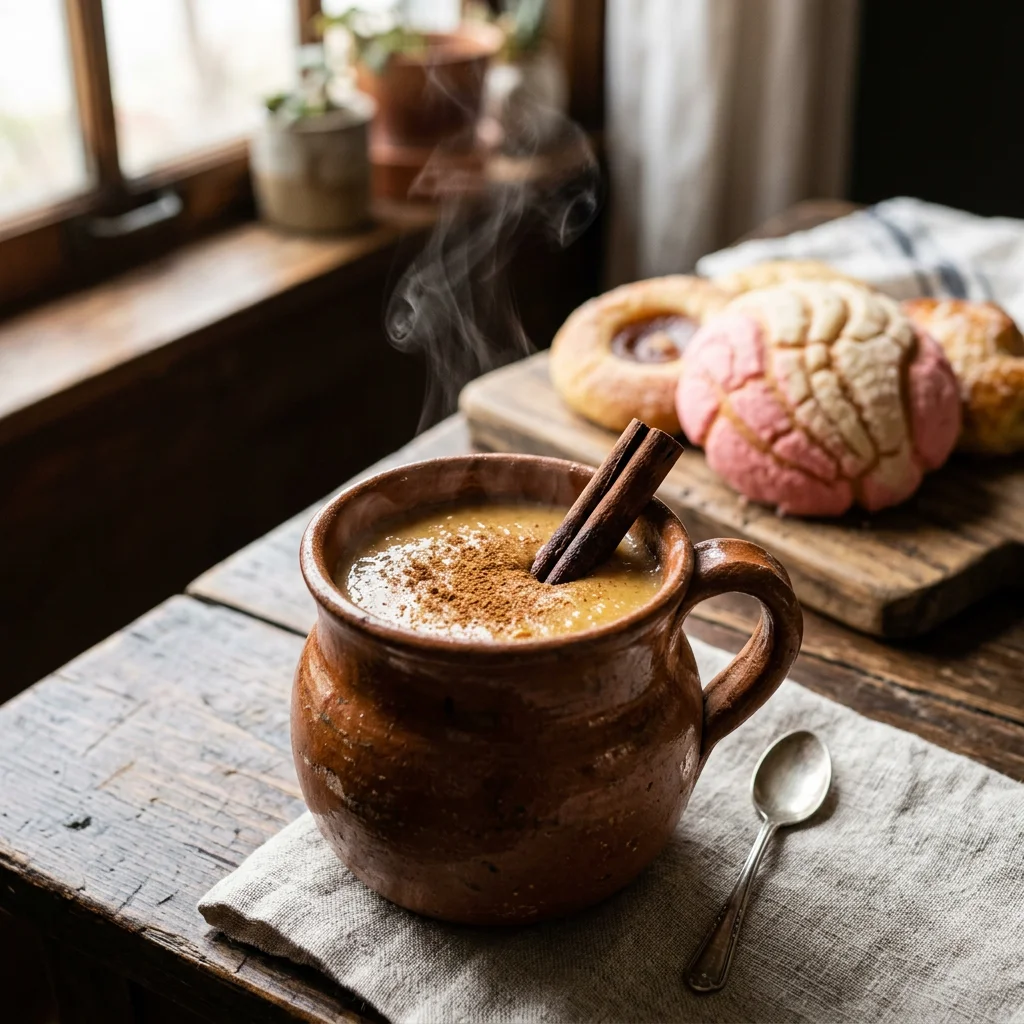
Overview
Atole is one of the oldest beverages in the Americas — a warm, thick, comforting drink made from masa (nixtamalized corn dough) or corn flour dissolved in water or milk, sweetened with piloncillo (unrefined cane sugar) and flavored with cinnamon, vanilla, or fruit. It has the consistency of a thin porridge, somewhere between a drink and a soup, and it fills you with the kind of warmth that radiates from the center of your chest outward. This is what Mesoamericans drank before coffee, before chocolate was sweetened, before anything European arrived on these shores. The drink dates back thousands of years to the earliest corn-cultivating civilizations of Mesoamerica. The Aztecs and Maya drank atole daily, and it was considered essential sustenance for laborers, nursing mothers, children, and the elderly. It remains deeply embedded in Mexican daily life — sold by street vendors in the predawn hours, served at family breakfasts, offered at Dia de los Muertos altars, and sipped from styrofoam cups outside metro stations on cold mornings. Ayurvedically, atole is a near-perfect grounding beverage. The nixtamalized corn provides sweet, warm, heavy nourishment. The cinnamon kindles agni. The piloncillo adds mineral-rich sweetness that nourishes rasa dhatu. And the warm, thick, smooth quality is profoundly Vata-pacifying — this is the kind of drink that settles anxiety and restlessness on contact. It functions almost like a liquid food, providing gentle, sustained energy without the spike and crash of stimulant beverages.
Strongly pacifies Vata. Can increase Kapha due to sweetness and heaviness. Generally neutral for Pitta in moderate amounts.
Ingredients
- 1 cup Masa harina (corn flour) (or 200g fresh masa)
- 2 cups Water
- 2 cups Milk (whole milk or plant milk)
- 100 g Piloncillo (grated, or substitute dark brown sugar)
- 1 large Cinnamon stick
- 1 tsp Vanilla extract
- 1 pinch Pinch of sea salt
Instructions
- In a bowl, whisk the masa harina with 1 cup of cold water until completely smooth, with no lumps. This is your slurry.
- In a medium saucepan, combine the remaining cup of water and the milk. Add the cinnamon stick and piloncillo. Heat over medium, stirring until the piloncillo dissolves.
- Once the milk mixture is warm and the piloncillo dissolved, slowly pour in the masa slurry while whisking constantly to prevent lumps from forming.
- Continue cooking over medium-low heat, stirring frequently, for 10-15 minutes. The atole will gradually thicken to the consistency of a thin porridge or thick hot chocolate.
- Add the vanilla extract and pinch of salt. Taste and adjust sweetness.
- Remove the cinnamon stick. Pour into mugs and serve warm. The atole will continue to thicken as it cools — if it becomes too thick, thin with a splash of warm milk.
Nutrition
These values are estimates calculated from the ingredient list and may vary based on brands, cooking methods, and serving size. Not a substitute for medical or dietary advice.
How This Recipe Affects Each Dosha
Vata
Outstanding for Vata. The warm, sweet, heavy, smooth qualities directly address every Vata imbalance. The cinnamon provides gentle agni support, and the overall preparation is deeply comforting for Vata's anxious, cold, restless tendencies. This is one of the best Vata-pacifying beverages in any tradition.
Pitta
Generally acceptable for Pitta. The sweet taste is soothing, and the corn is only mildly warming. The cinnamon and piloncillo are heating but not aggressively so in these amounts. Best in cooler weather or for Pitta types who run cold.
Kapha
The sweet, heavy, thick, warm qualities are precisely what increases Kapha. The starchy corn base and added sugar can promote congestion, weight gain, and sluggishness. Kapha types should drink atole sparingly, if at all, and consider the lighter versions.
Mildly supports agni through the warming quality of cinnamon and the overall heating virya. The sweet, heavy nature can slightly dampen agni in excess, which is why atole is best consumed in moderate amounts (one cup) rather than large quantities. The cinnamon is essential — it prevents the sweet corn from becoming too heavy on digestion.
Nourishes: Rasa (plasma), Mamsa (muscle), Meda (fat), Majja (nerve)
Adjustments by Constitution
For Vata Types
This beverage is already ideal for Vata. Add a pinch of ground cardamom or nutmeg for extra warmth. Use whole milk for maximum nourishing quality. A pat of butter stirred in (traditional in some regions) adds further grounding.
For Pitta Types
Use plant milk (oat or coconut) instead of dairy. Reduce the piloncillo by one-third. Omit the cinnamon stick and add a split vanilla bean instead for a purely sweet, cooling flavor. Serve at a warm but not hot temperature.
For Kapha Types
Use water instead of milk, or use a light plant milk like almond. Reduce the piloncillo to half and add a generous cinnamon stick plus a pinch of ground ginger. Make the consistency thinner — more like a broth than a porridge. Add a tiny pinch of black pepper.
Seasonal Guidance
Atole is a cold-weather beverage, most appropriate from October through March. In Mexico, it is synonymous with winter mornings and the Dia de los Muertos season (late October/early November). The warming, grounding quality is exactly what the body needs in cold weather — it functions as both nourishment and comfort. In spring, lighter versions with less sweetener and more cinnamon work as transitional morning drinks. Summer is not atole season — the heavy, warming quality conflicts with the body's need for cooling. Street vendors in Mexico shift from atole to cold aguas frescas as temperatures rise, a natural seasonal dietary rhythm.
Best time of day: Early morning, as a warming, nourishing start to the day, or late evening as a calming bedtime drink
Cultural Context
Atole is arguably the oldest continuously consumed beverage in the Americas. Archaeological evidence suggests it has been prepared for at least 4,000 years, and it was the daily drink of Aztec, Maya, and other Mesoamerican civilizations. The Aztec emperor Montezuma reportedly drank atole flavored with cacao (what we would now call champurrado). Today, atole remains central to Mexican daily life and ritual. It is served at Dia de los Muertos altars for the returning dead, given to new mothers for recovery, offered to children as gentle nourishment, and sold by tamaleras (tamale vendors) as the traditional accompaniment to tamales. The atole-and-tamales pairing is considered one of Mexico's foundational food combinations.
Deeper Context
Origins
Atole traces to pre-Columbian Mesoamerica — the Florentine Codex (compiled 1545-1590 by Bernardino de Sahagún) documents multiple atole varieties as everyday Aztec drinks. Pre-contact atole was water-based, sometimes combined with chili, amaranth, or chocolate. Spanish colonial period added milk, cinnamon, vanilla, and cane sugar (piloncillo). Modern Mexican atole comes in dozens of regional varieties: chocolate (champurrado), strawberry, oat, pecan, and rice. Day of the Dead (November 2) traditionally features atole on altars and shared with family.
Food as Medicine
Masa harina (nixtamalized corn) provides niacin, calcium (from the lime-water treatment), and sustained-release carbohydrate; piloncillo retains mineral content that refined sugar lacks; cinnamon supports blood-sugar modulation with modern clinical research validation; vanilla contains vanillin with mild calmative effect. The warm milk vehicle delivers fat-soluble vitamins and calcium. A nutritionally substantial traditional morning or evening beverage.
Ritual & Seasonal Role
Day of the Dead (Día de los Muertos, November 2) features atole on ofrendas (altars) and shared among families. Christmas season (including Las Posadas December 16-24) features atole prominently. Winter mornings across Mexican households. Champurrado (chocolate atole) is particularly associated with winter and Christmas. Classical Mexican postpartum drink.
Classical Pairings & Cautions
Tamales (the classic pairing — atole and tamales is the essential Mexican breakfast/late-night combination), pan dulce, conchas. Cautions: diabetic monitoring for sugar content; gluten-free by default (masa harina is corn-based); lactose sensitivity precludes dairy-based versions (water-based versions restore the original pre-contact format); corn allergies; Kapha aggravation in winter weight-gain phases.
Cross-Tradition View
How other medical and food-wisdom traditions read this dish. Each tradition names the same physiological reality in its own language — the agreements across them are where universal principles live.
Traditional Chinese Medicine
Masa harina is Spleen-Qi-tonifying; piloncillo (unrefined cane sugar) is Spleen-Qi-tonifying and contains molasses-related minerals; cinnamon warms the Kidney Yang and supports the middle burner; vanilla is Shen-calming; milk builds Yin. A comprehensive Spleen-Qi-and-Yin tonic with Shen-calming warming accents — TCM physicians would class this as appropriate morning restoration across constitutional types.
Greek Humoral
Hot-wet sanguine-melancholic balance. A Galenic morning or evening restoration drink — the Byzantine and medieval European tradition of warm milk-and-grain-and-spice drinks for convalescents and children matches atole's Mesoamerican role precisely.
Ayurveda
Heating virya, sweet vipaka. Pacifies Vata substantially through warmth and unctuousness. Aggravates Kapha mildly through the sweet-heavy combination. Pitta-neutral. The cinnamon provides classical Ayurvedic digestive and warming accent that enhances the dish's tridoshic accessibility.
Mesoamerican Aztec
Atole is pre-Columbian Mesoamerican beverage — appears prominently in the Florentine Codex (Bernardino de Sahagún's 16th-century documentation of Aztec life) as a daily Aztec drink. The modern milk and cinnamon additions are post-contact (European dairy and Asian-Silk-Road cinnamon arrived with Spanish trade); pre-contact atole was water-based, sometimes with chili, amaranth, or chocolate. Champurrado (chocolate atole) is the closest modern version to the pre-contact Aztec preparation.
Chef's Notes
The key to smooth atole is dissolving the masa in cold water first, then adding it to the warm liquid — adding dry masa directly to hot liquid creates stubborn lumps. Stir frequently as it thickens; the corn starch can stick to the bottom of the pan. The consistency should be drinkable but thick enough to coat the back of a spoon. Piloncillo has a deeper, more complex sweetness than white sugar, with notes of caramel and molasses — it is worth seeking out at a Mexican grocery. For champurrado (chocolate atole), add 60g of Mexican chocolate (such as Ibarra or Abuelita) to the milk mixture. For fruit atole, blend 1 cup of fresh strawberries or guava and stir in during the last 5 minutes of cooking.
Frequently Asked Questions
Is Atole (Warm Corn Beverage) good for my dosha?
Strongly pacifies Vata. Can increase Kapha due to sweetness and heaviness. Generally neutral for Pitta in moderate amounts. Outstanding for Vata. Generally acceptable for Pitta. The sweet, heavy, thick, warm qualities are precisely what increases Kapha.
When is the best time to eat Atole (Warm Corn Beverage)?
Early morning, as a warming, nourishing start to the day, or late evening as a calming bedtime drink Atole is a cold-weather beverage, most appropriate from October through March. In Mexico, it is synonymous with winter mornings and the Dia de los Muertos season (late October/early November). The war
How can I adjust Atole (Warm Corn Beverage) for my constitution?
For Vata types: This beverage is already ideal for Vata. Add a pinch of ground cardamom or nutmeg for extra warmth. Use whole milk for maximum nourishing quality. A p For Pitta types: Use plant milk (oat or coconut) instead of dairy. Reduce the piloncillo by one-third. Omit the cinnamon stick and add a split vanilla bean instead for
What are the Ayurvedic properties of Atole (Warm Corn Beverage)?
Atole (Warm Corn Beverage) has Sweet, Pungent (from cinnamon) taste (rasa), Heating energy (virya), and Sweet post-digestive effect (vipaka). Its qualities (gunas) are Heavy, Warm, Oily, Smooth. It nourishes Rasa (plasma), Mamsa (muscle), Meda (fat), Majja (nerve). Mildly supports agni through the warming quality of cinnamon and the overall heating virya. The sweet, heavy nature can slightly dampen agni in excess, which is why atole is best consumed in moderate amounts (one cup) rather than large quantities. The cinnamon is essential — it prevents the sweet corn from becoming too heavy on digestion.