Symbols
Sacred and esoteric symbols across traditions — their origins, hidden meanings, and enduring power.
Symbols are the oldest language of humanity — a way to encode meaning that transcends words. The Eye of Horus, the Ankh, the Ouroboros, the Flower of Life, the Sri Yantra — these forms have appeared across cultures separated by oceans and millennia, carrying layers of esoteric and exoteric meaning. Understanding symbols is understanding how the ancients saw the world and communicated what could not be spoken.
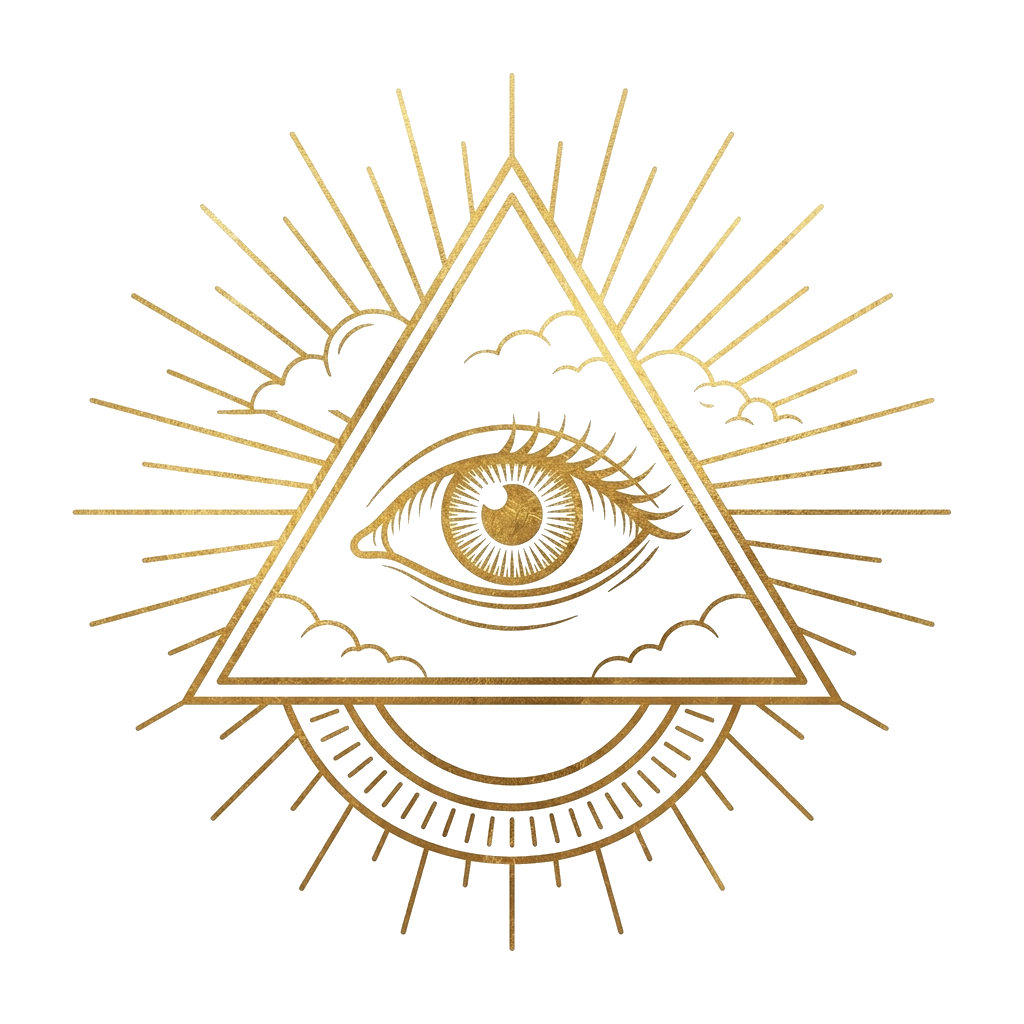
All-Seeing Eye
The Eye of Providence — a symbol with ancient Egyptian roots, Christian theological meaning, Masonic significance, and enduring conspiracy theories, representing divine omniscience and the awakened inner eye.
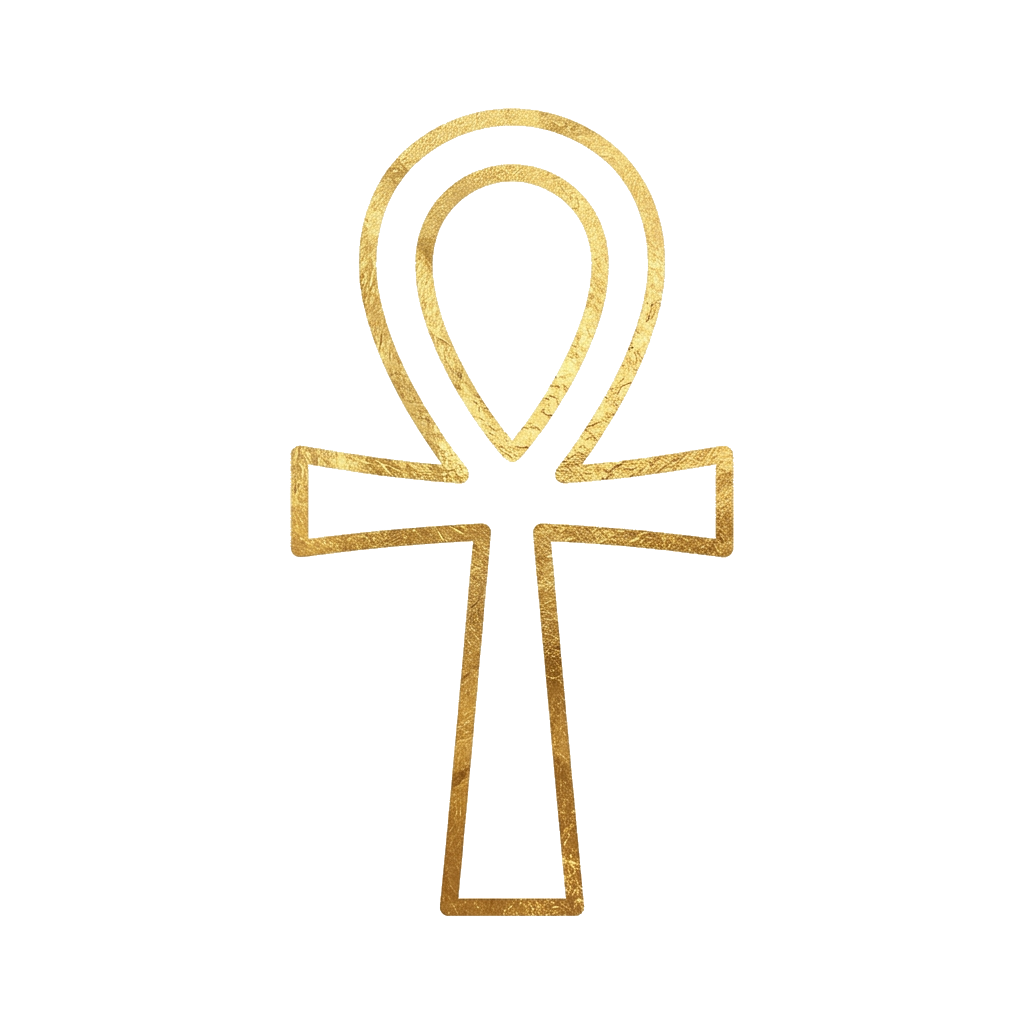
Ankh
The key of life — ancient Egypt's supreme symbol of eternal life, divine authority, and the union of opposites that generates existence.
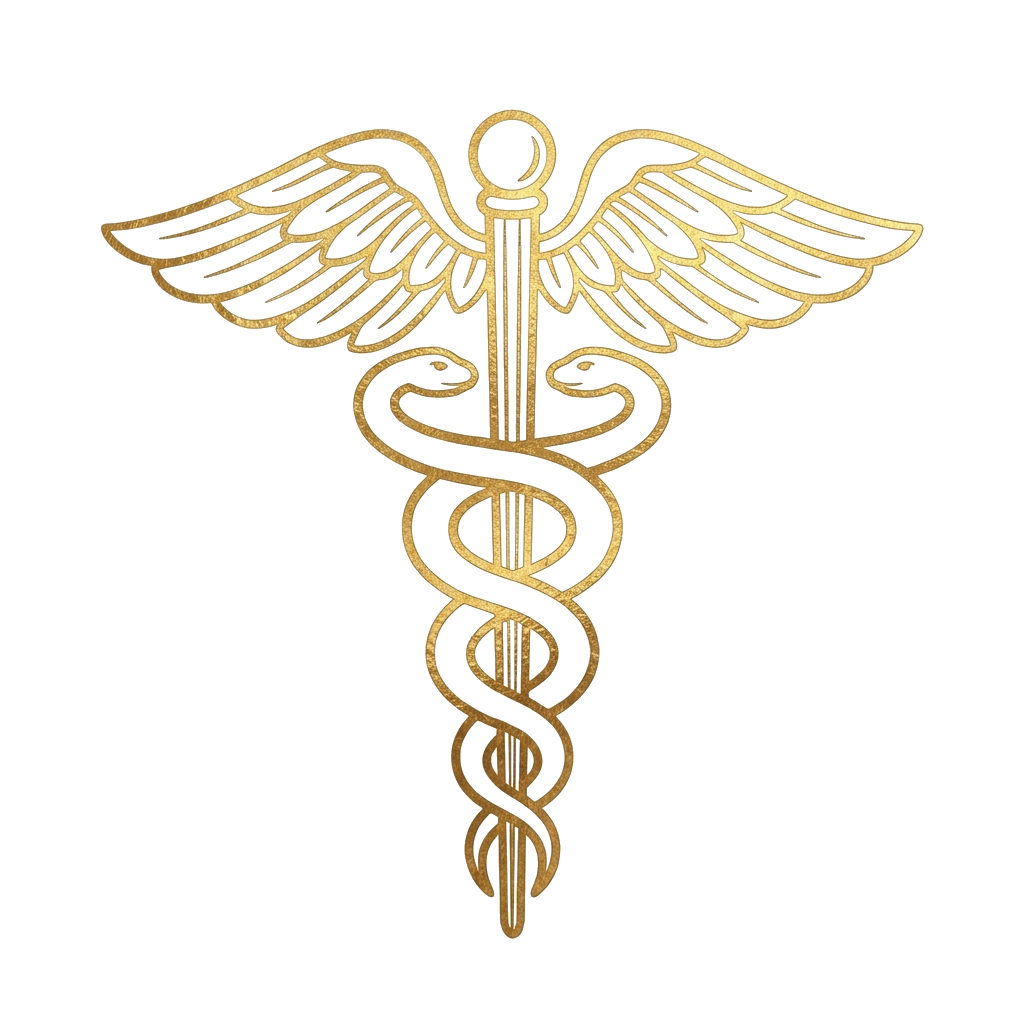
Caduceus
The twin-serpent staff of Hermes — an ancient symbol of mediation between opposites, cosmic balance, and the transformative power of communication, often confused with the Rod of Asclepius.
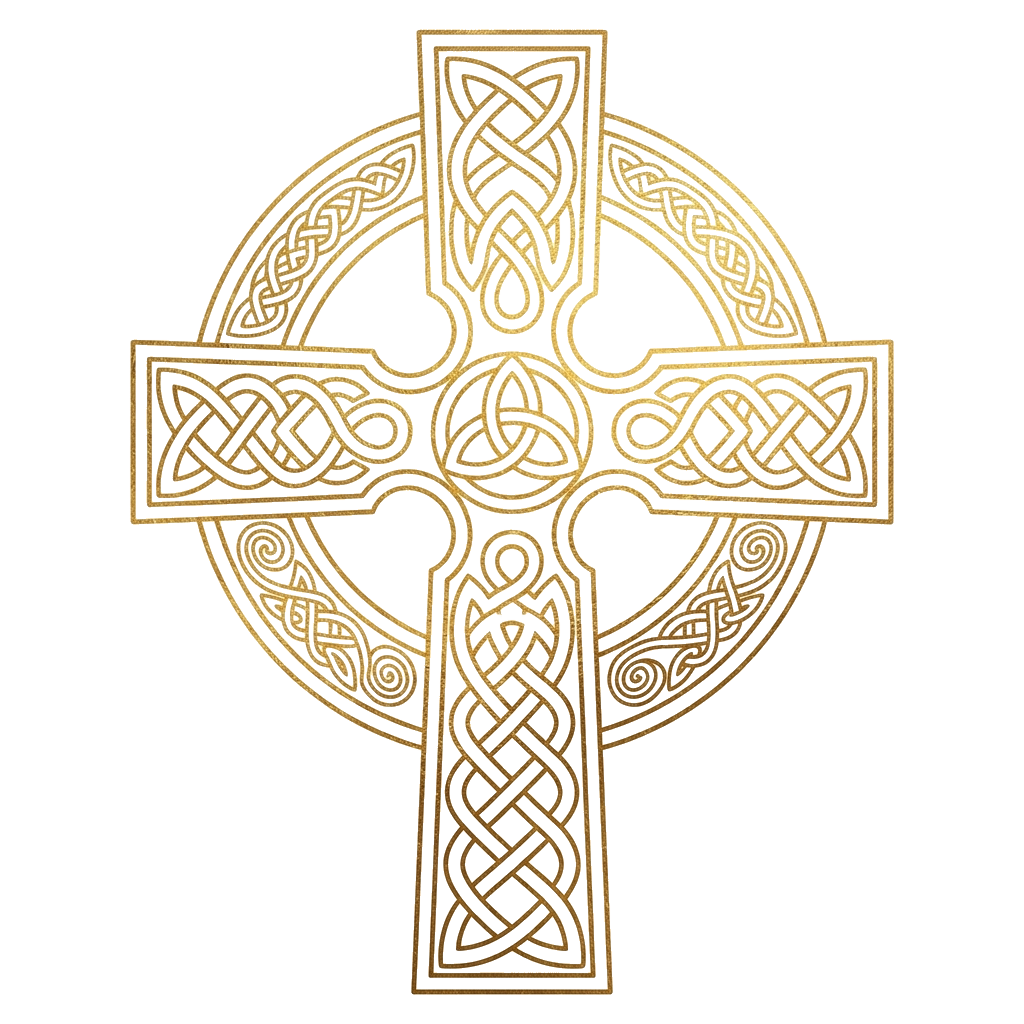
Celtic Cross
A ringed cross merging the Christian cross with the pre-Christian sun wheel — Ireland and Scotland's defining monument, bridging pagan solar worship and Christian salvation in a single form.
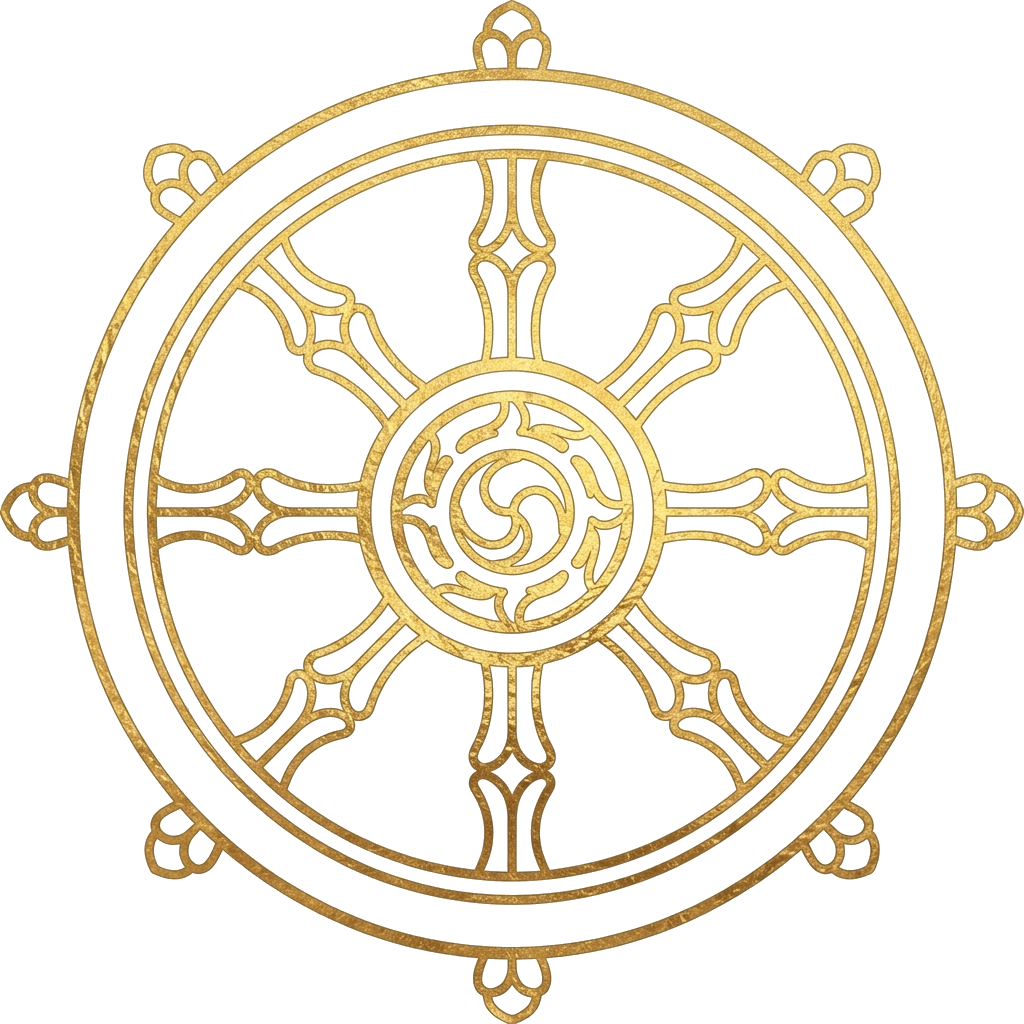
Dharma Wheel
The Dharmachakra — the wheel of the Buddha's teaching, with eight spokes representing the Noble Eightfold Path, set in motion at the First Sermon at Sarnath and turning still.
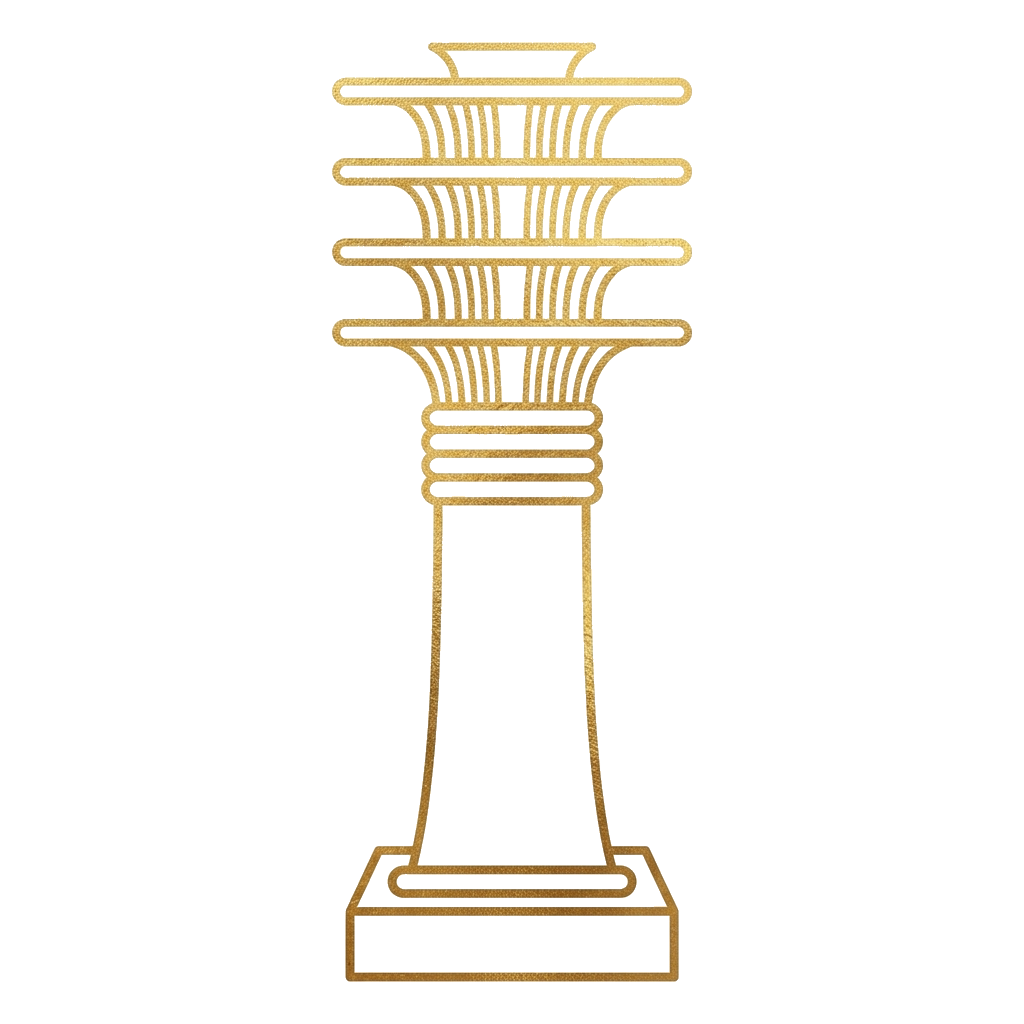
Djed Pillar
The backbone of Osiris — ancient Egypt's symbol of stability, endurance, and resurrection, raised in ritual to ensure the renewal of life and the triumph of order over chaos.
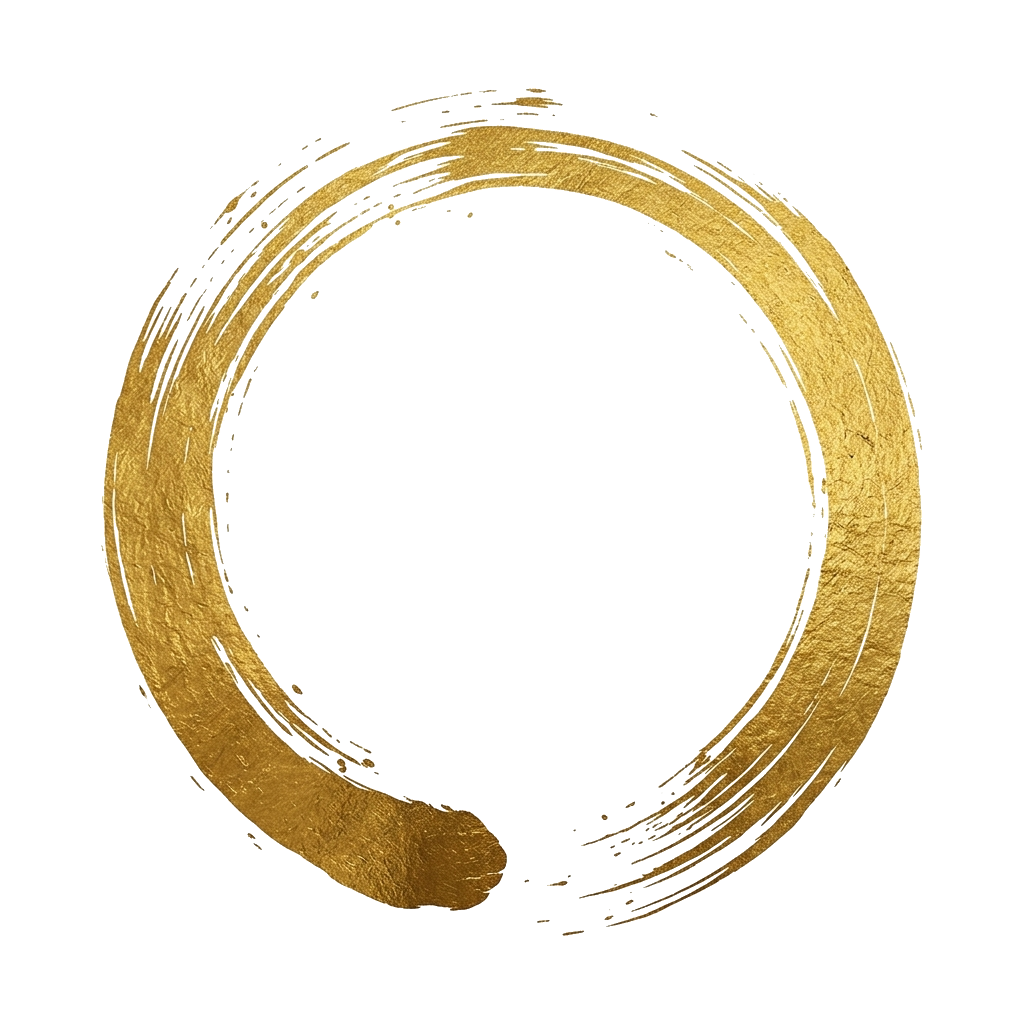
Enso
The Zen circle — a single brushstroke capturing the totality of enlightenment, emptiness, and the universe in one gesture that cannot be corrected or improved.
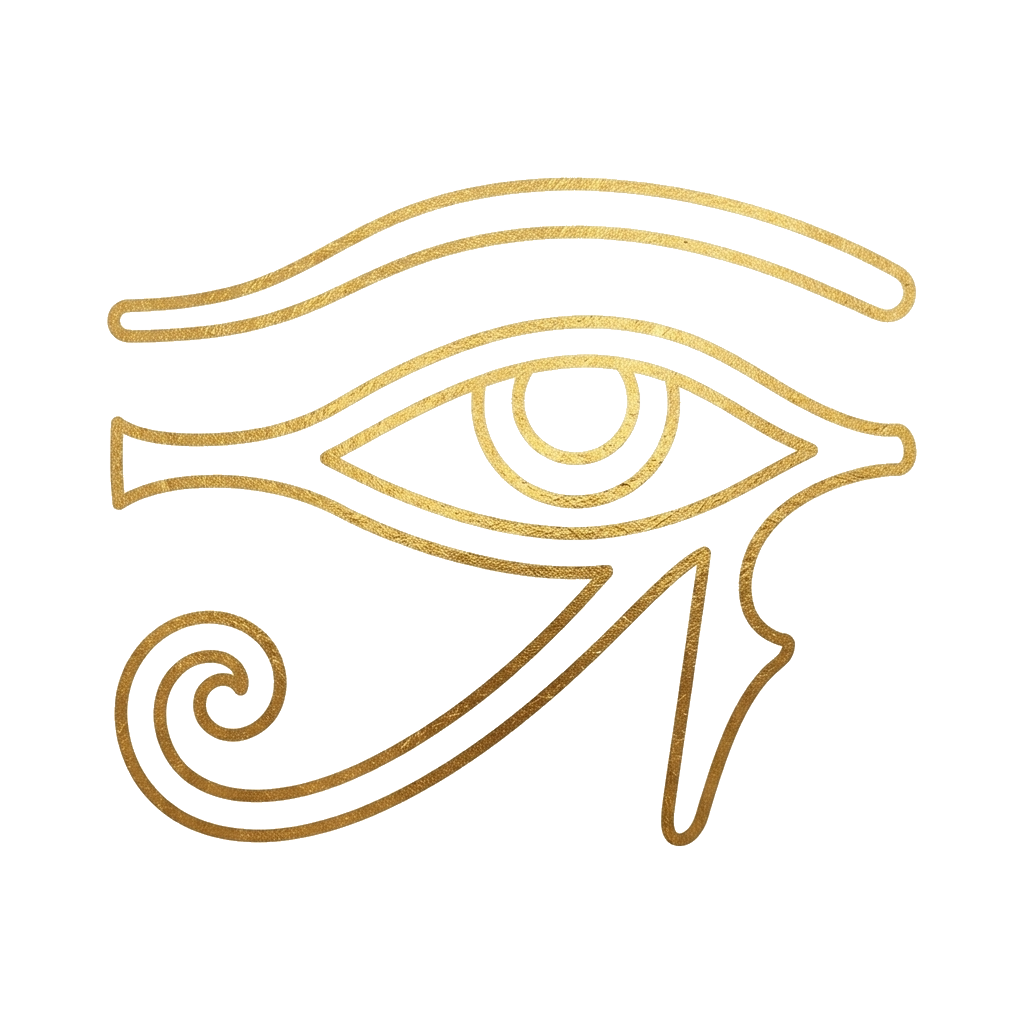
Eye of Horus
The Wadjet eye — ancient Egypt's most powerful protective symbol, encoding a mathematical system, a medical diagram, and a mythic narrative of loss, healing, and restored wholeness in a single image.
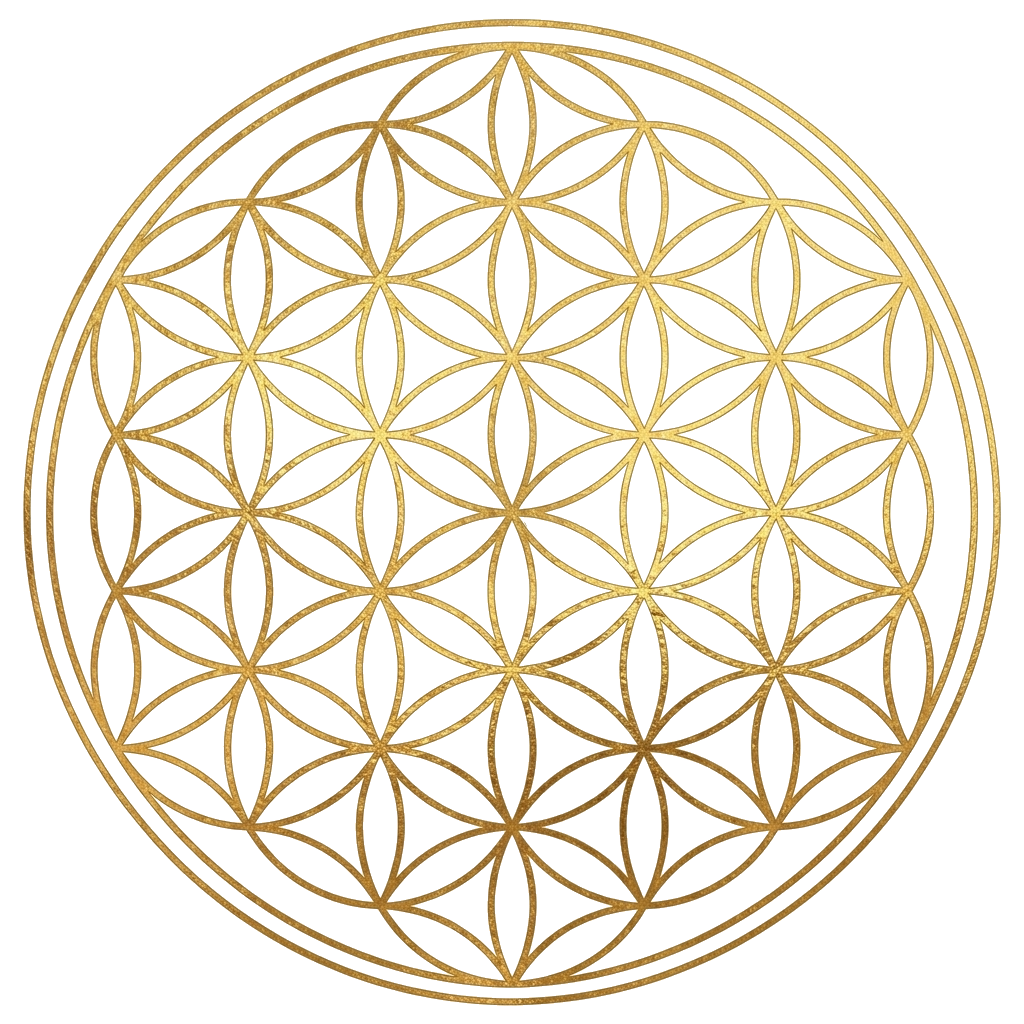
Flower of Life
A geometric pattern of 19 overlapping circles arranged in sixfold symmetry — found in temples from Egypt to China, encoding the mathematical blueprint from which all sacred geometry unfolds.
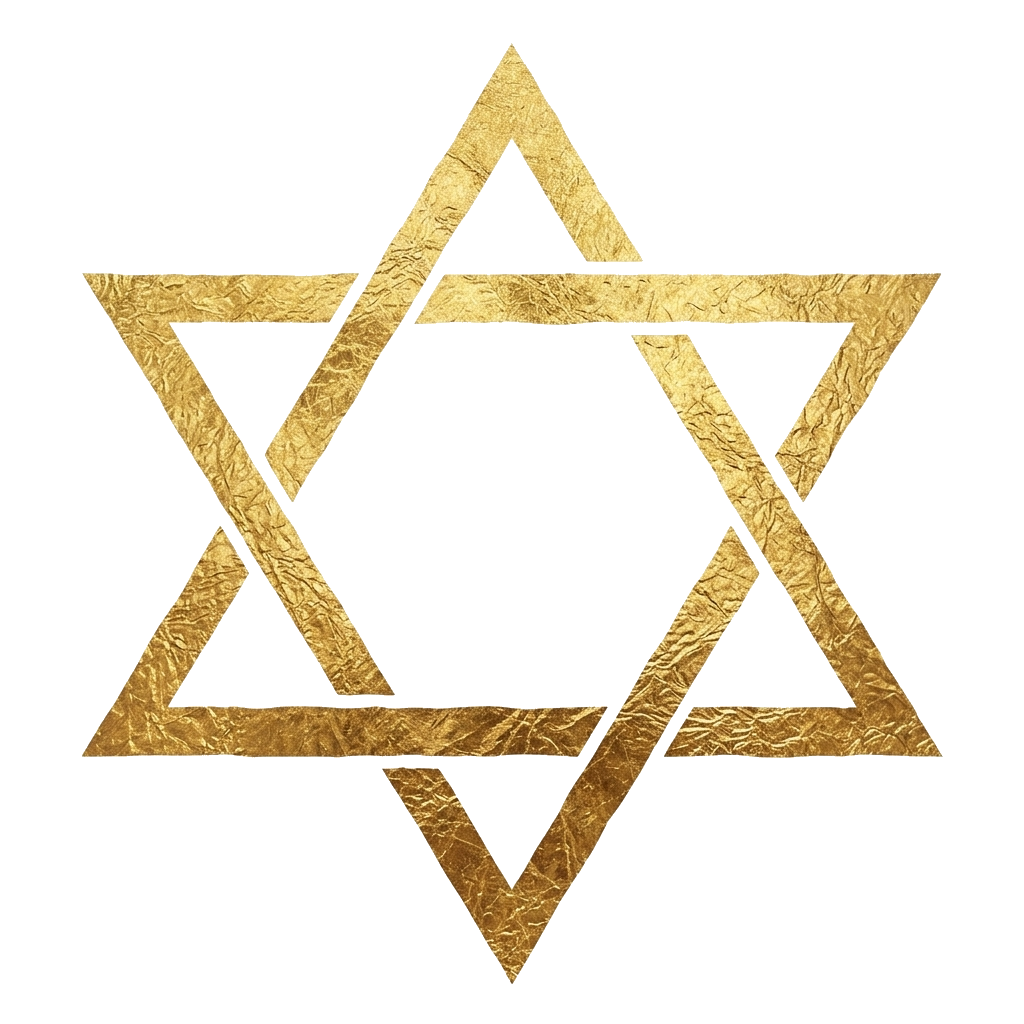
Hexagram
The six-pointed star formed by two interlocking triangles — known as the Star of David in Judaism and the Seal of Solomon in magical tradition, representing the union of fire and water, heaven and earth, macrocosm and microcosm.
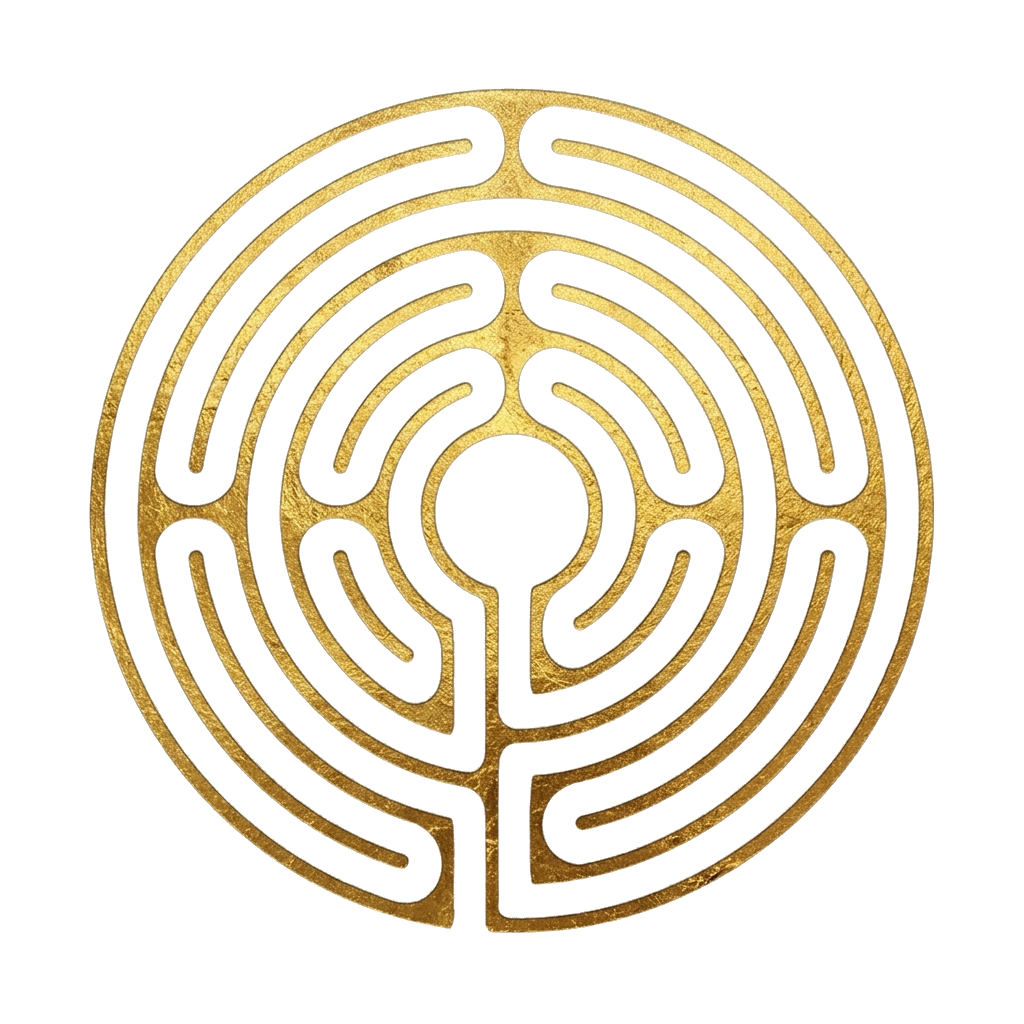
Labyrinth
The unicursal path to the center — not a maze with dead ends but a single winding route that draws the walker inward, found across civilizations as a symbol of pilgrimage, initiation, and the journey to the self.
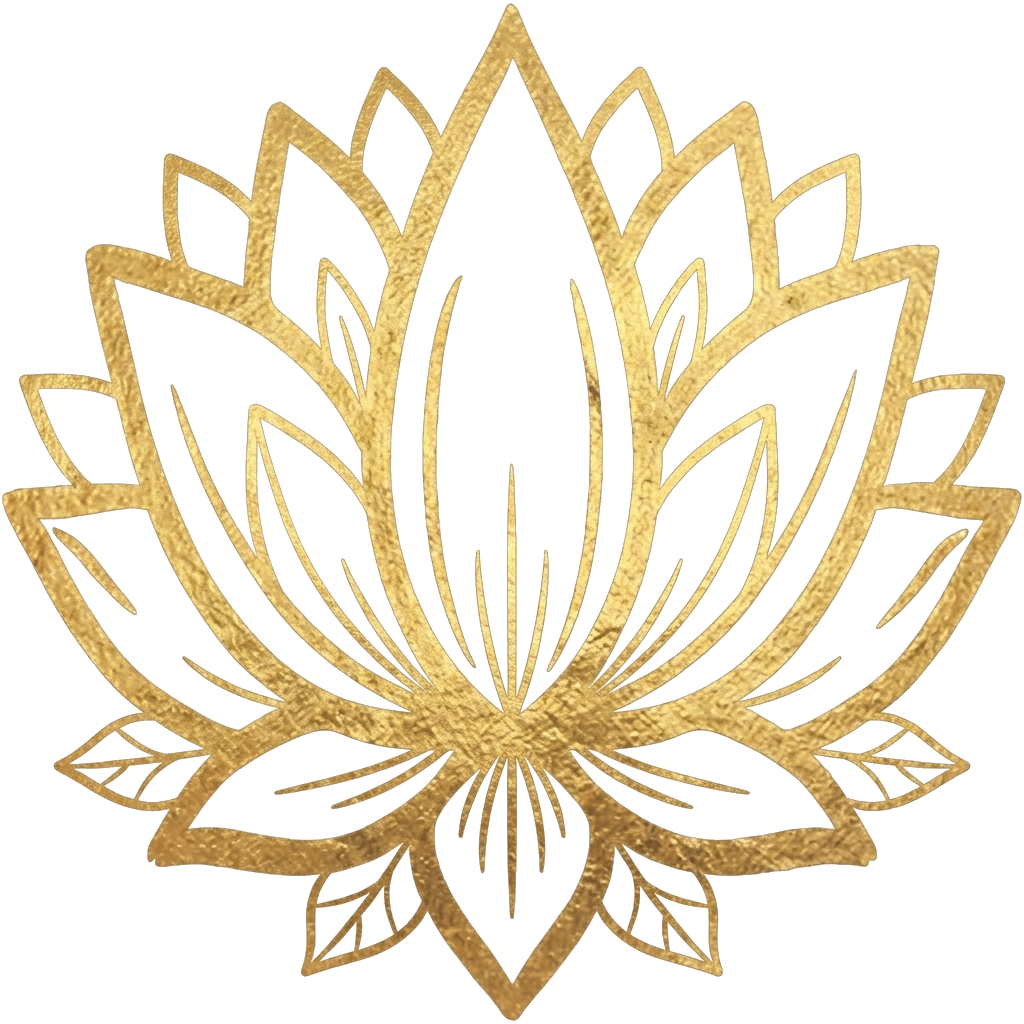
Lotus
The flower that grows from mud — humanity's most universal symbol of spiritual awakening, purity emerging from impurity, and the unfolding of consciousness from darkness into light.
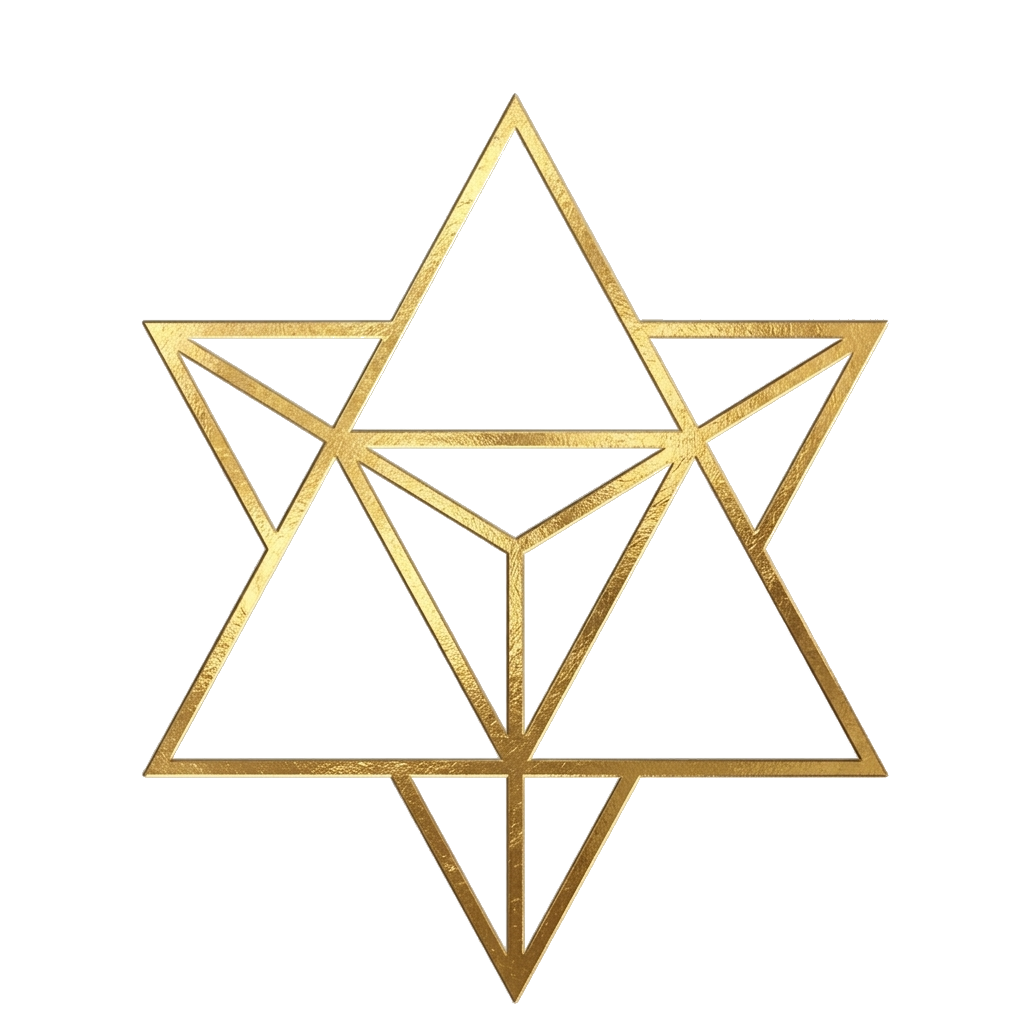
Merkaba
The chariot of light — two interlocking tetrahedra forming a three-dimensional Star of David, representing the divine light vehicle of ascension in Kabbalistic mysticism and modern sacred geometry.
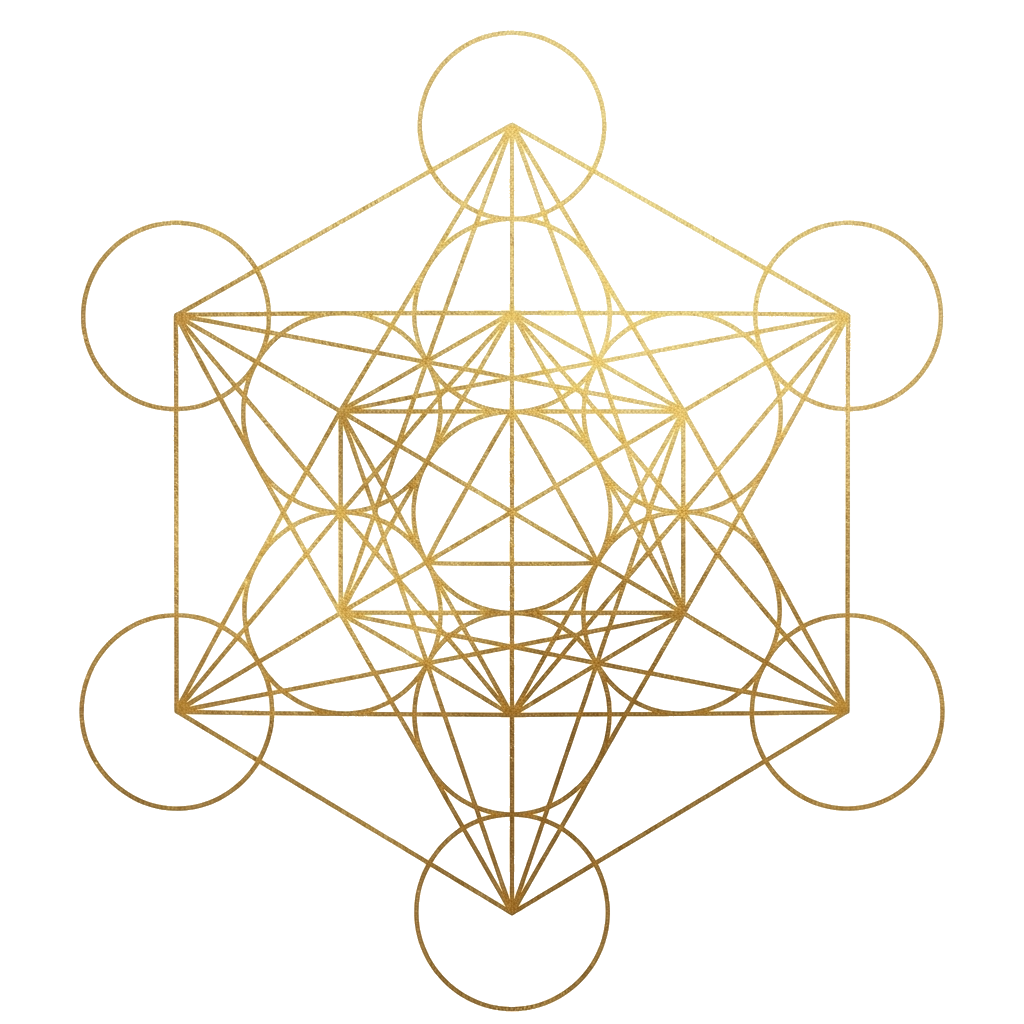
Metatron's Cube
A sacred geometric figure derived from the Fruit of Life — 13 circles connected by straight lines that contain all five Platonic solids, mapping the geometric blueprint underlying physical reality.
Om
The primordial sound of creation — the most sacred syllable in Hinduism, Buddhism, and Jainism, encoding the entire structure of consciousness and reality in a single vibration.
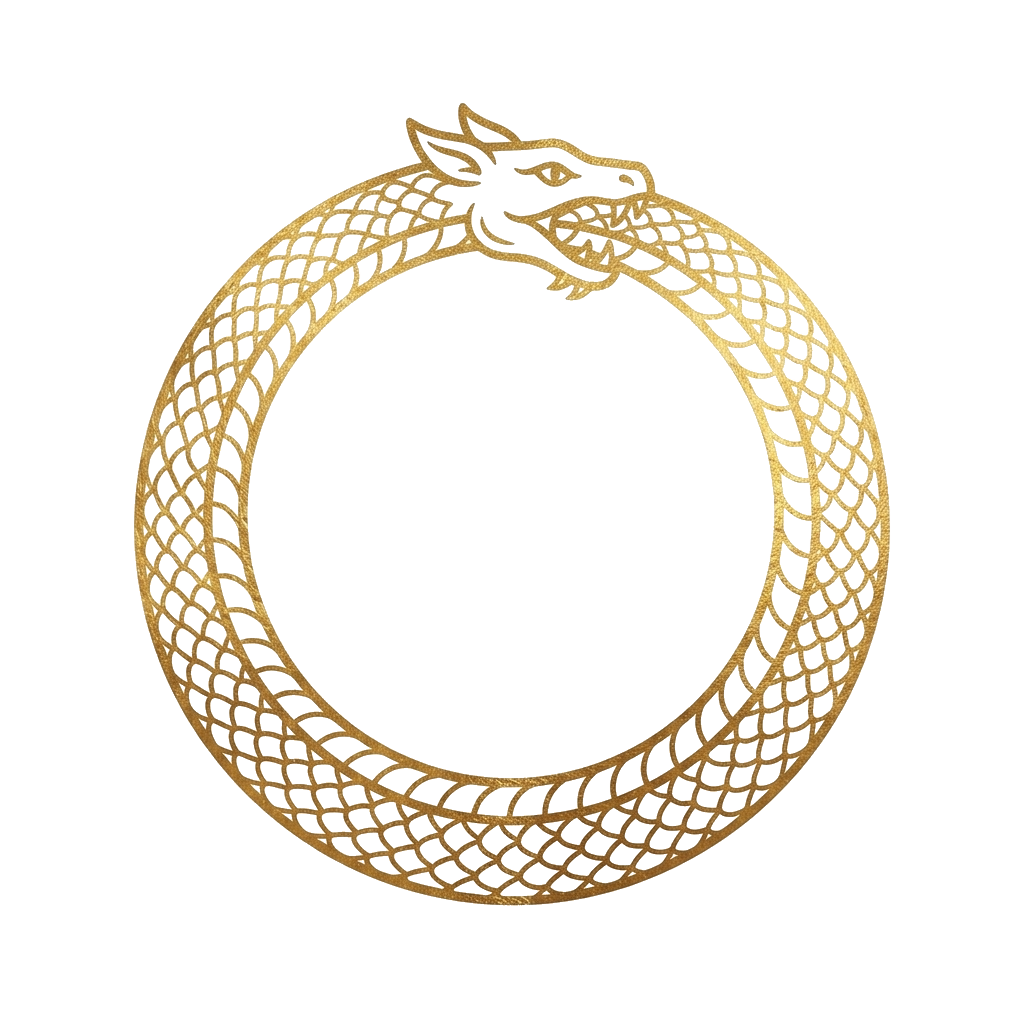
Ouroboros
The self-devouring serpent — humanity's oldest symbol of eternal return, self-renewal, and the unity of all opposites.
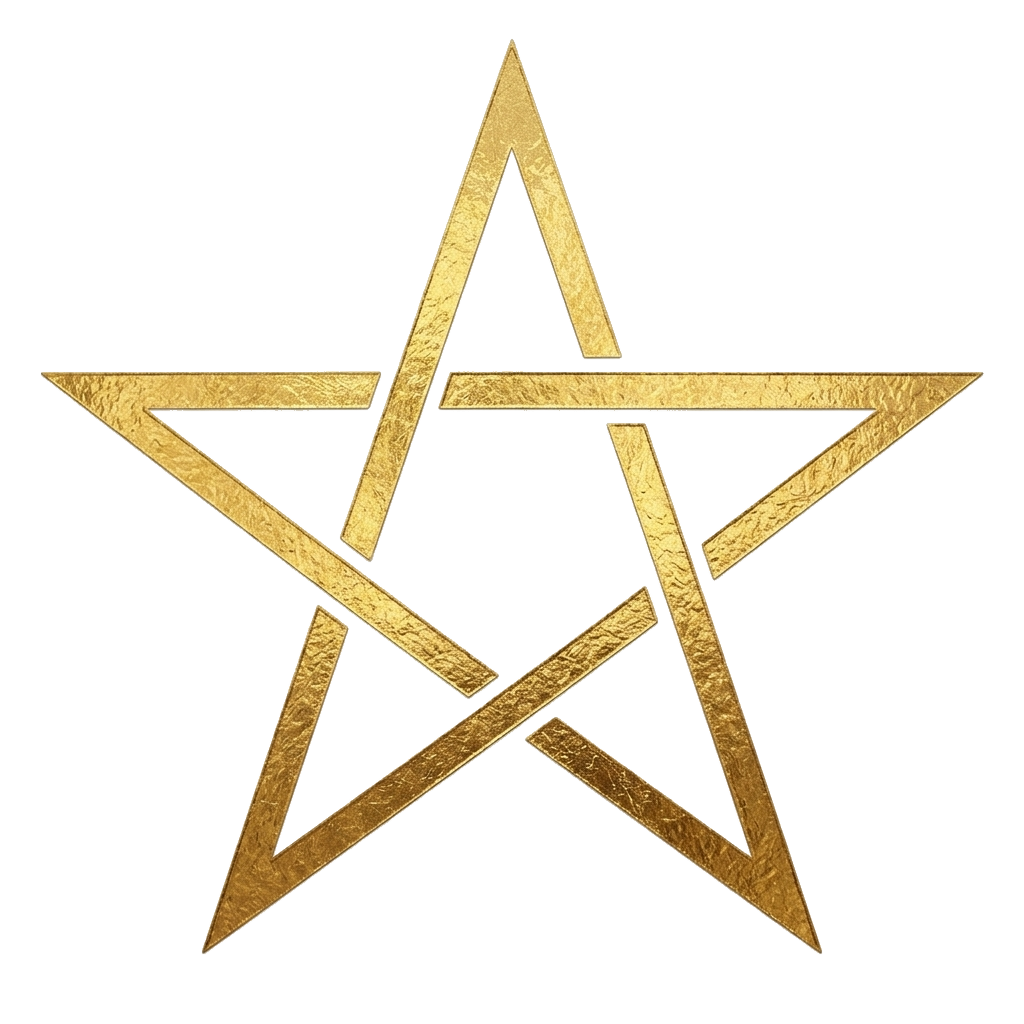
Pentagram
The five-pointed star — one of the most ancient and misunderstood symbols in human history, signifying the golden ratio, the five elements, the human microcosm, and the triumph of spirit over matter.
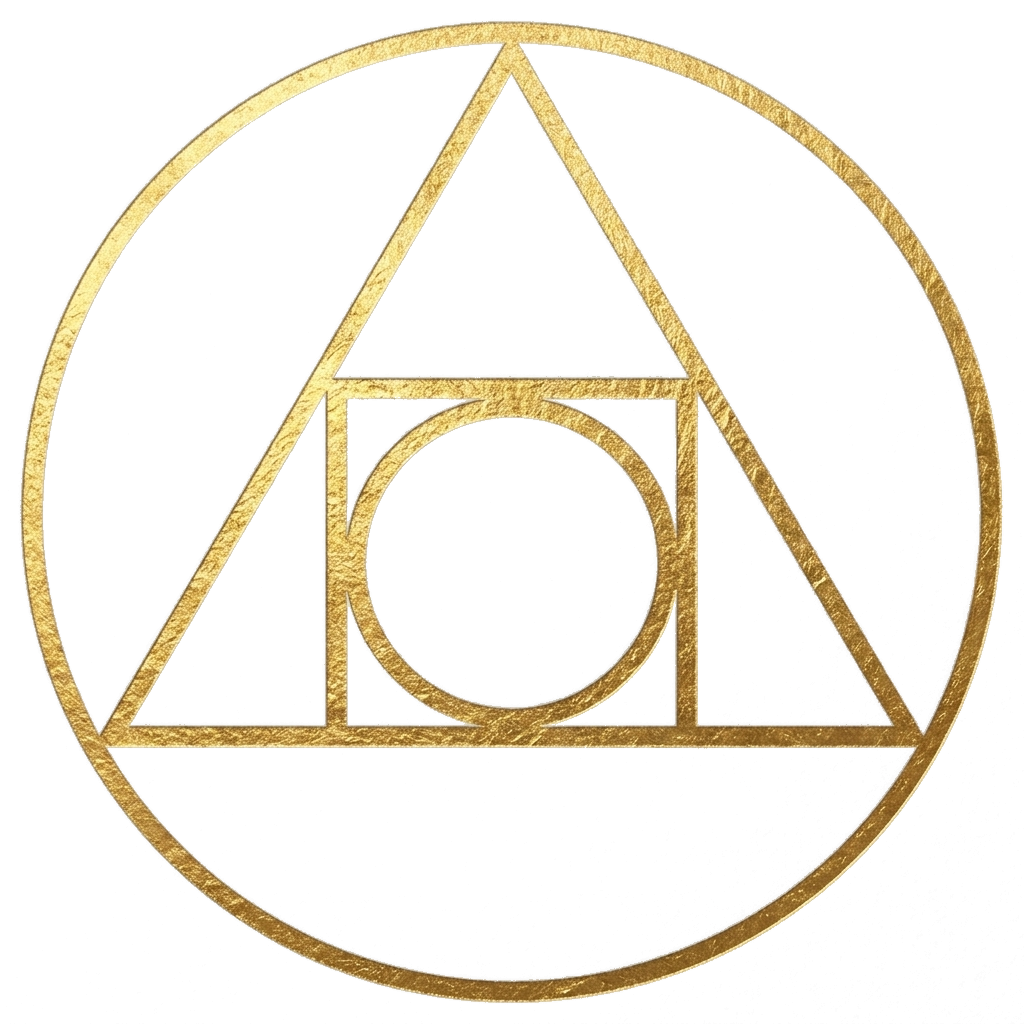
Philosopher's Stone
The lapis philosophorum — alchemy's supreme goal, the agent of universal transmutation that transforms base metal into gold, cures all disease, and confers spiritual perfection, representing the completion of the Great Work.
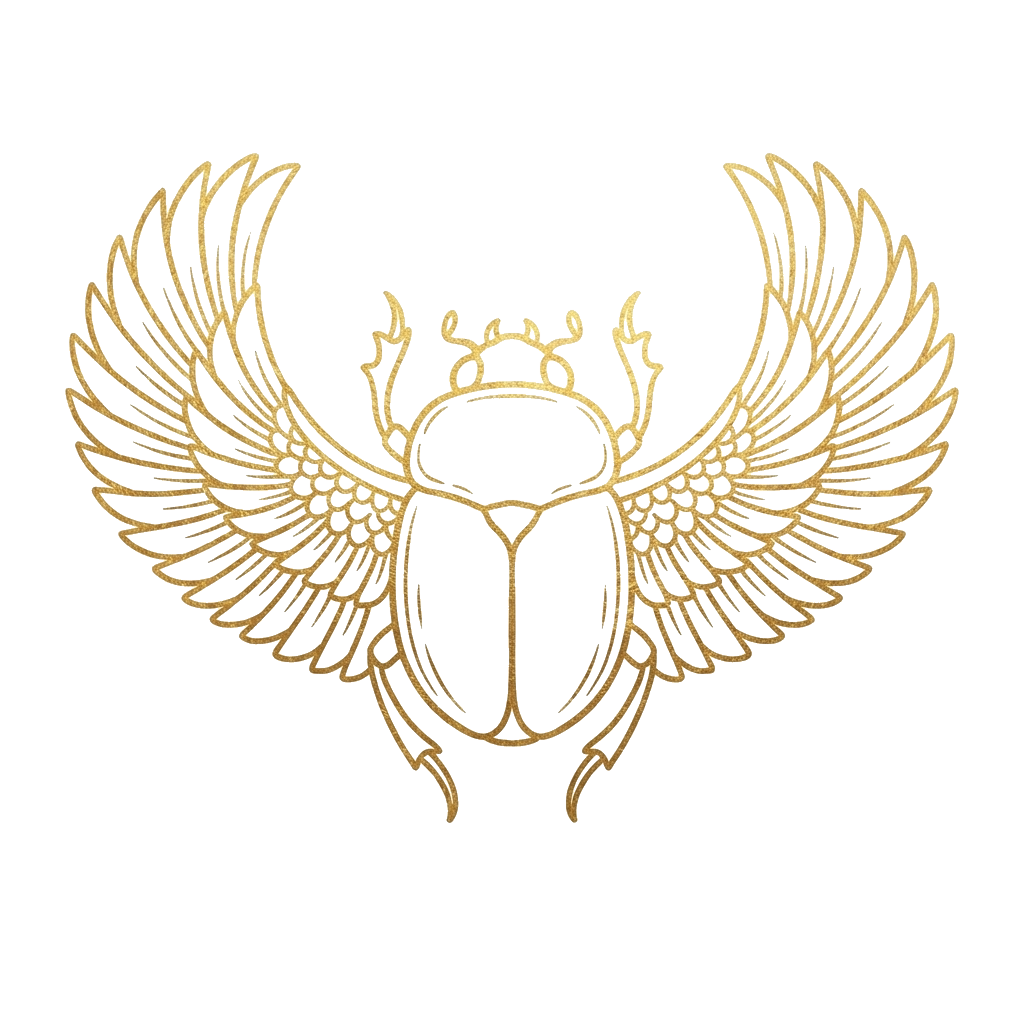
Scarab
The sacred dung beetle of ancient Egypt — embodiment of the sun god Khepri, symbol of spontaneous creation, transformation, and the daily renewal of existence.
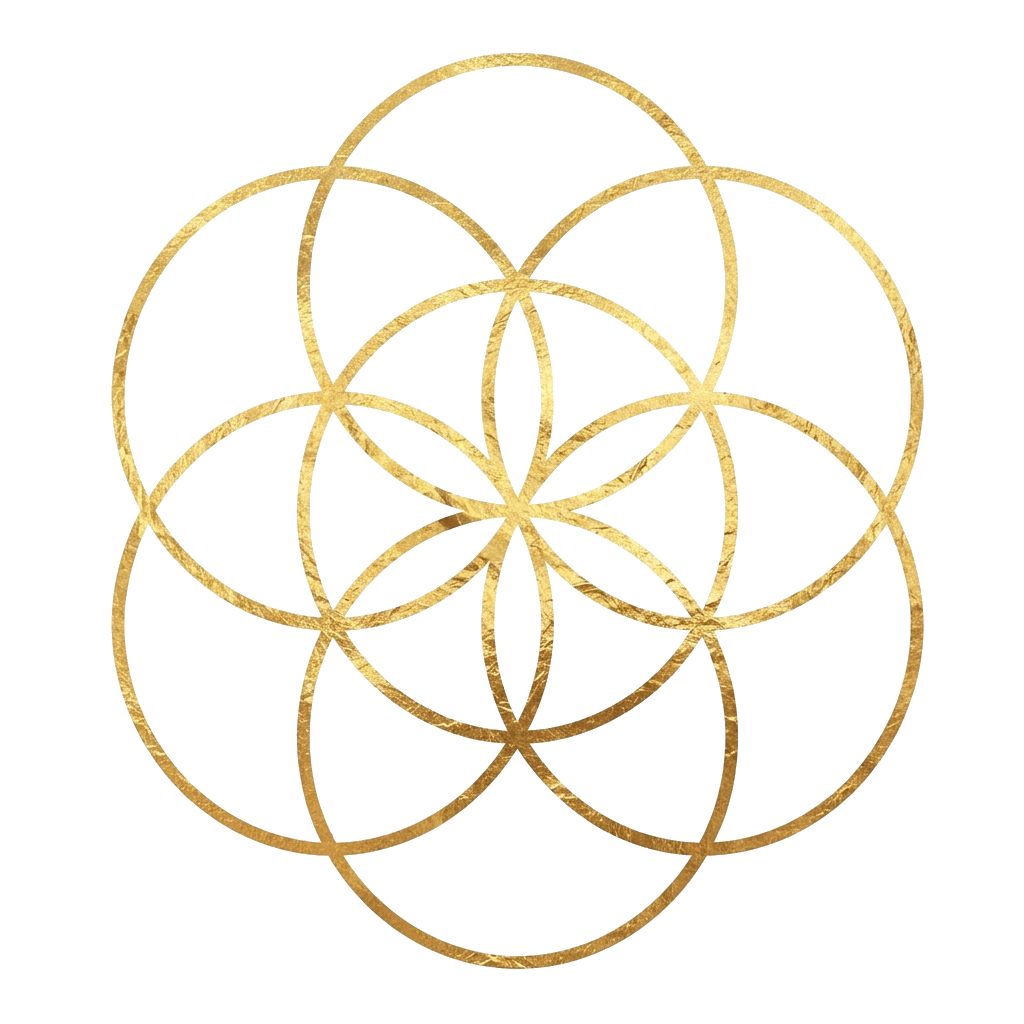
Seed of Life
Seven overlapping circles in sixfold symmetry — the genesis pattern from which the Flower of Life, Egg of Life, and all sacred geometric forms unfold, encoding the seven days of creation.
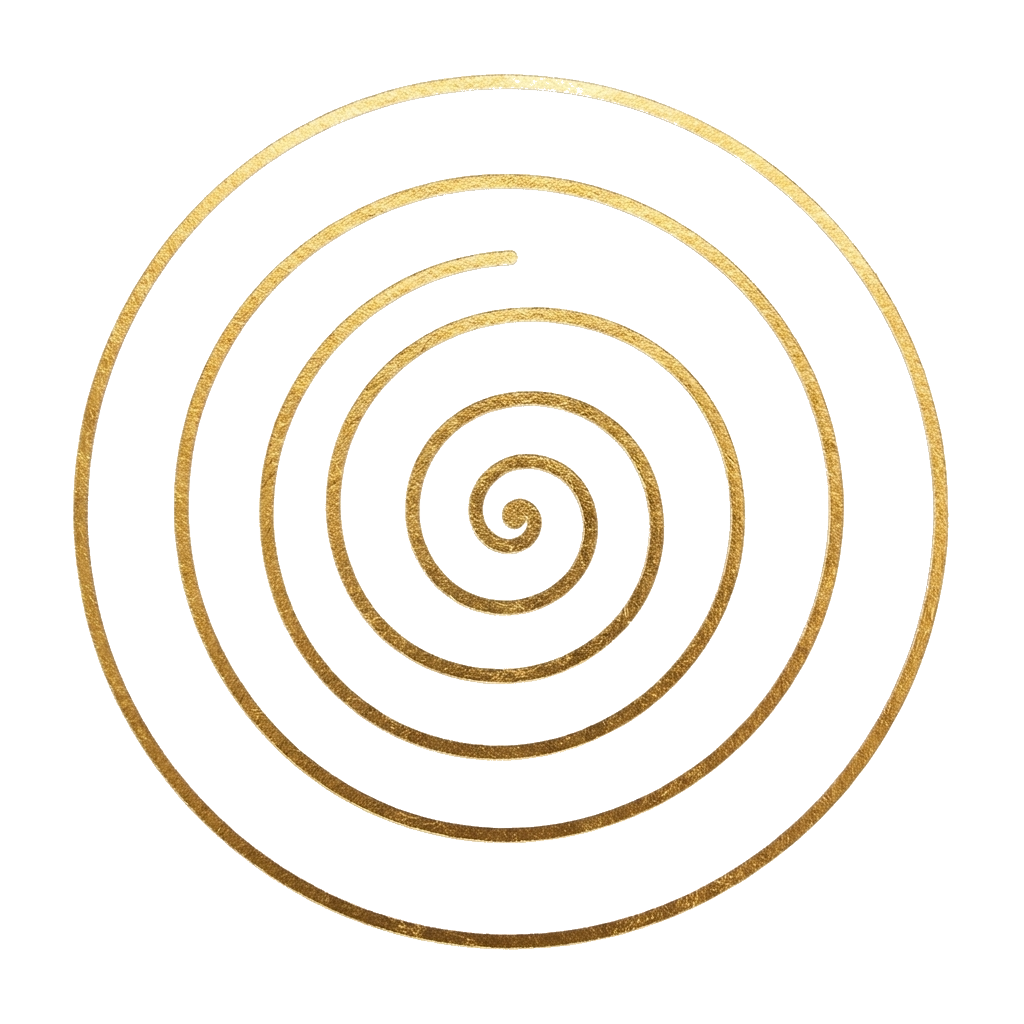
Spiral
The oldest and most universal decorative motif in human art — carved into Neolithic stones, encoded in galaxies and DNA, representing the fundamental pattern of growth, evolution, and return.
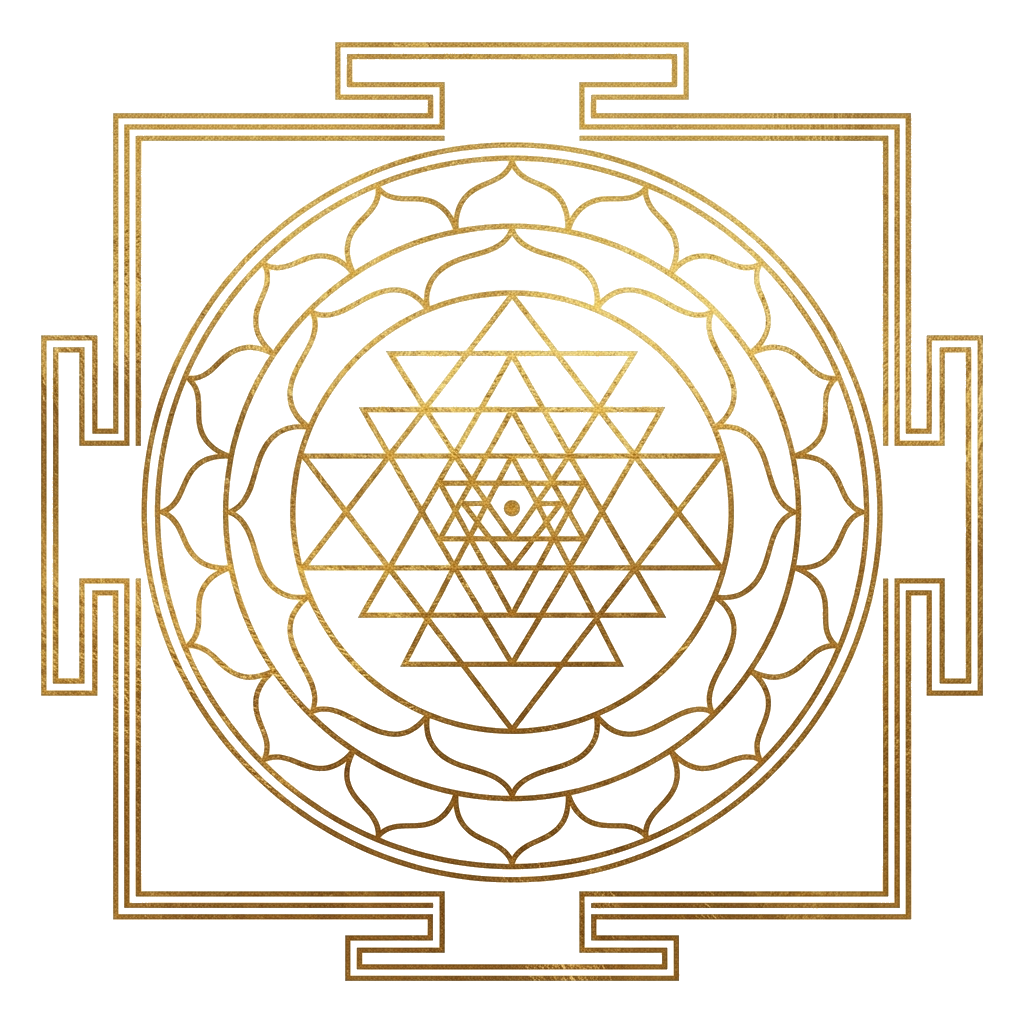
Sri Yantra
The queen of yantras — nine interlocking triangles forming 43 smaller triangles around a central bindu, mapping the entire process of cosmic creation and dissolution in sacred geometry.
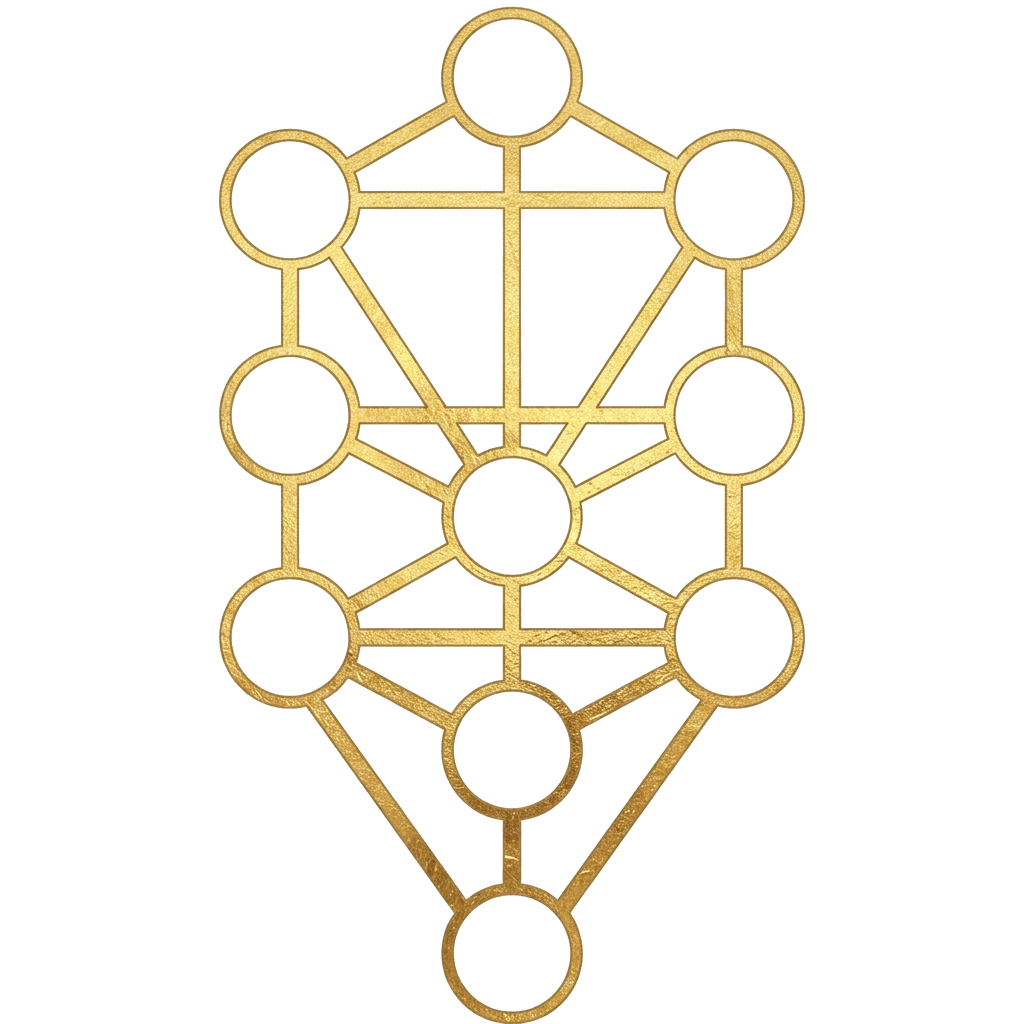
Tree of Life
The most universal sacred symbol in human civilization — appearing in every major culture as the axis connecting heaven, earth, and underworld, mapping the structure of reality and the path of the soul.
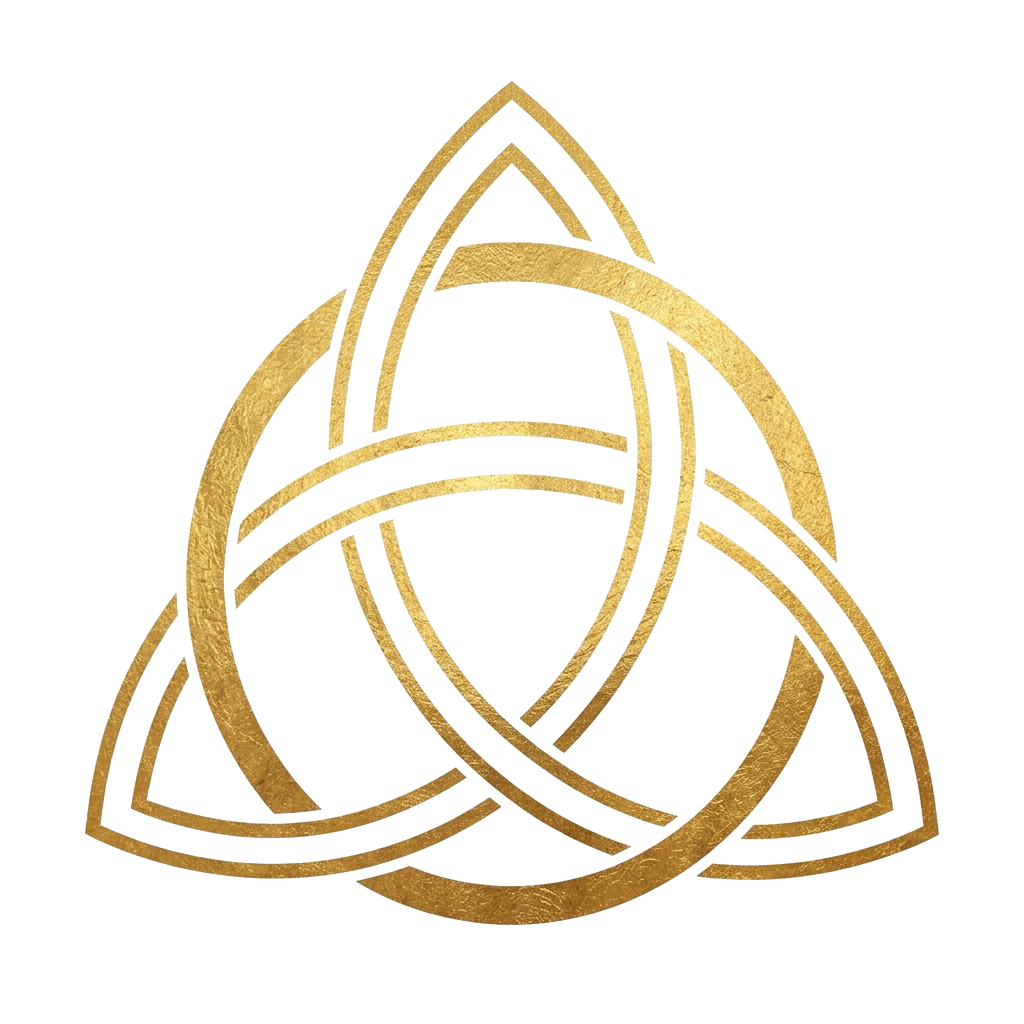
Triquetra
Three interlaced arcs forming a continuous knot — a Celtic and Christian symbol of threefold unity, from the triple goddess to the Holy Trinity, with no beginning and no end.
Valknut
Three interlocking triangles associated with the Norse god Odin — a symbol of the slain warriors, the transition between life and death, and the binding power of the Allfather.
Vegvisir
The Norse 'wayfinder' or 'signpost' — an Icelandic magical stave believed to help the bearer find their way through rough weather and unknown paths, even when the way is lost.
Vesica Piscis
The almond-shaped intersection of two equal circles — the geometric womb from which all sacred proportions emerge, encoding the square roots of 2, 3, and 5, and the mathematical foundation of Gothic cathedral design.
Winged Sun Disk
The supreme solar emblem of ancient Egypt, Mesopotamia, and Persia — wings of protection flanking the divine sun, marking the threshold between human and sacred space.
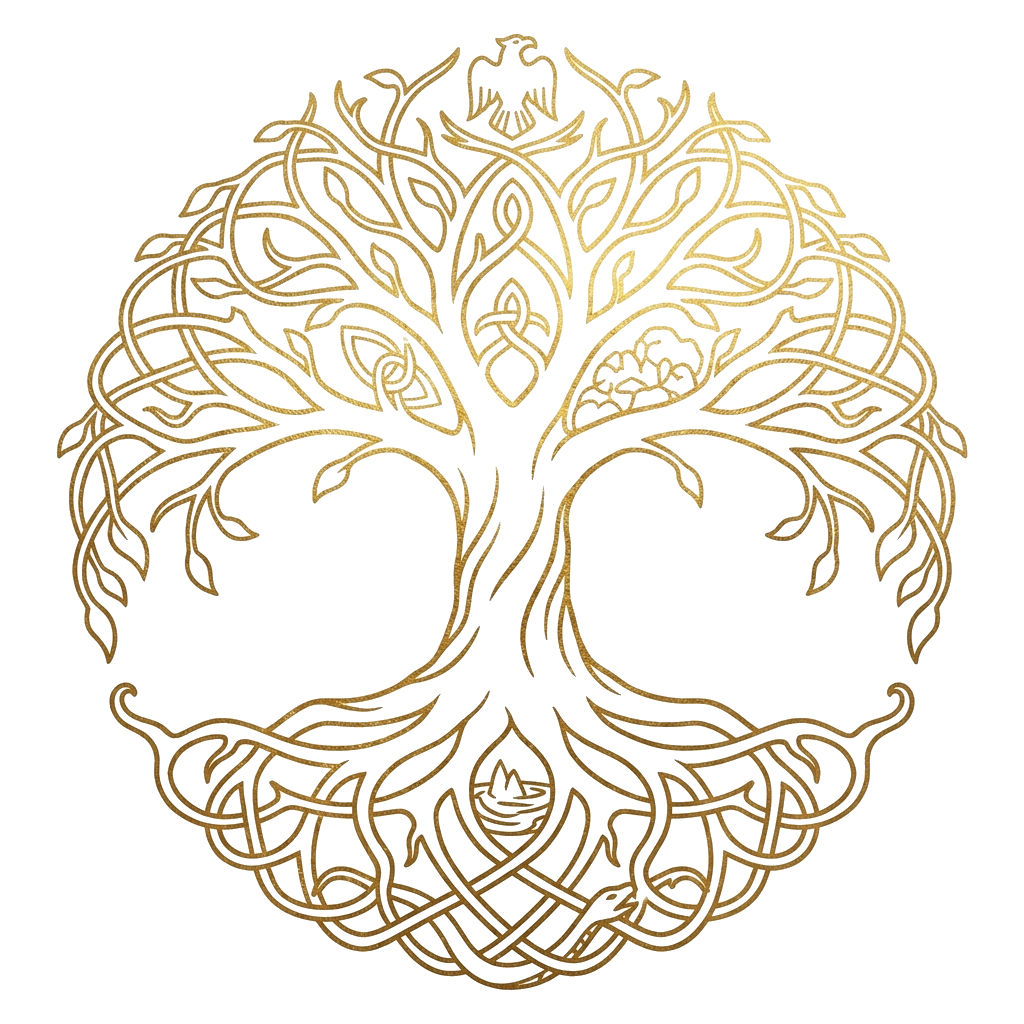
Yggdrasil
The World Tree of Norse cosmology — an immense ash tree connecting the nine worlds, sustained by three roots and three wells, housing an eagle, a serpent, and a squirrel who carries messages between them.
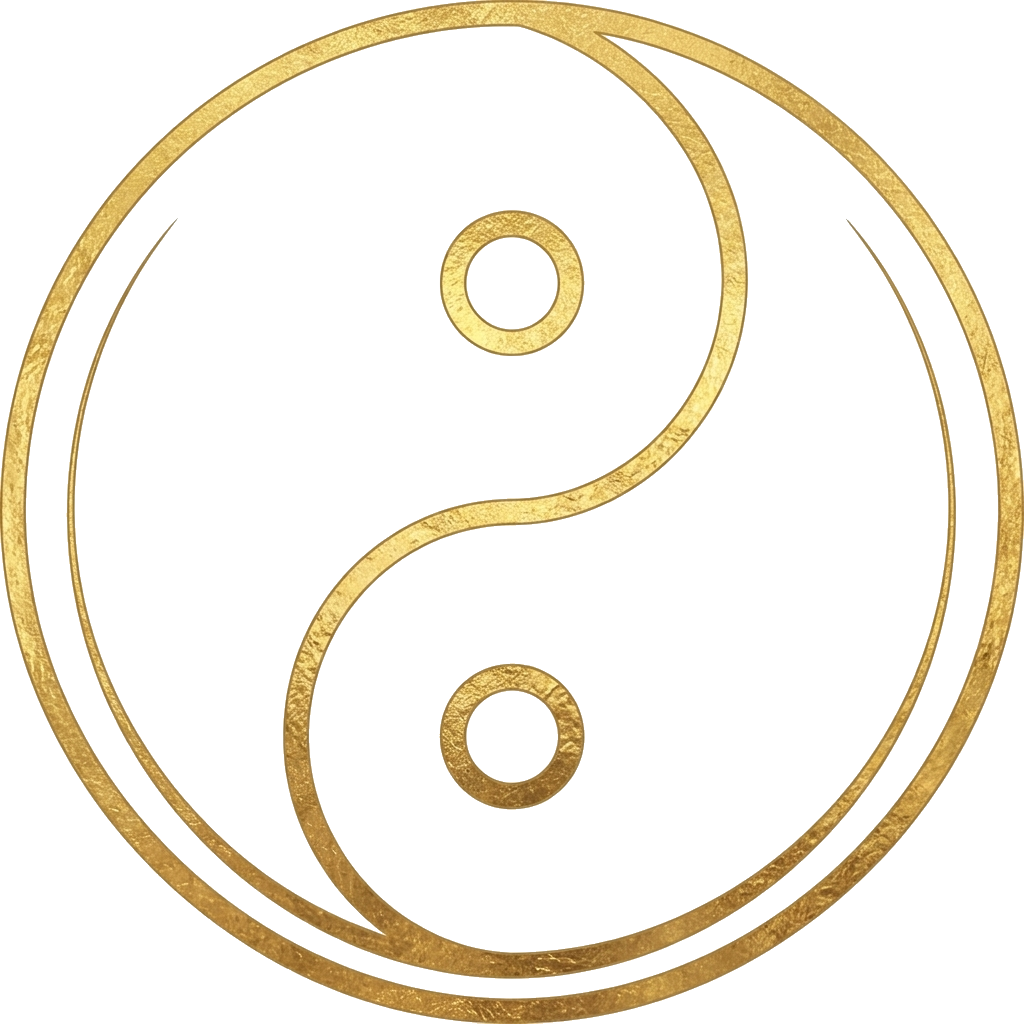
Yin-Yang
The Taijitu — the supreme symbol of Chinese philosophy, depicting the dynamic interplay of complementary opposites that generates and sustains all phenomena.