Zaalouk
Moroccan Recipe
Overview
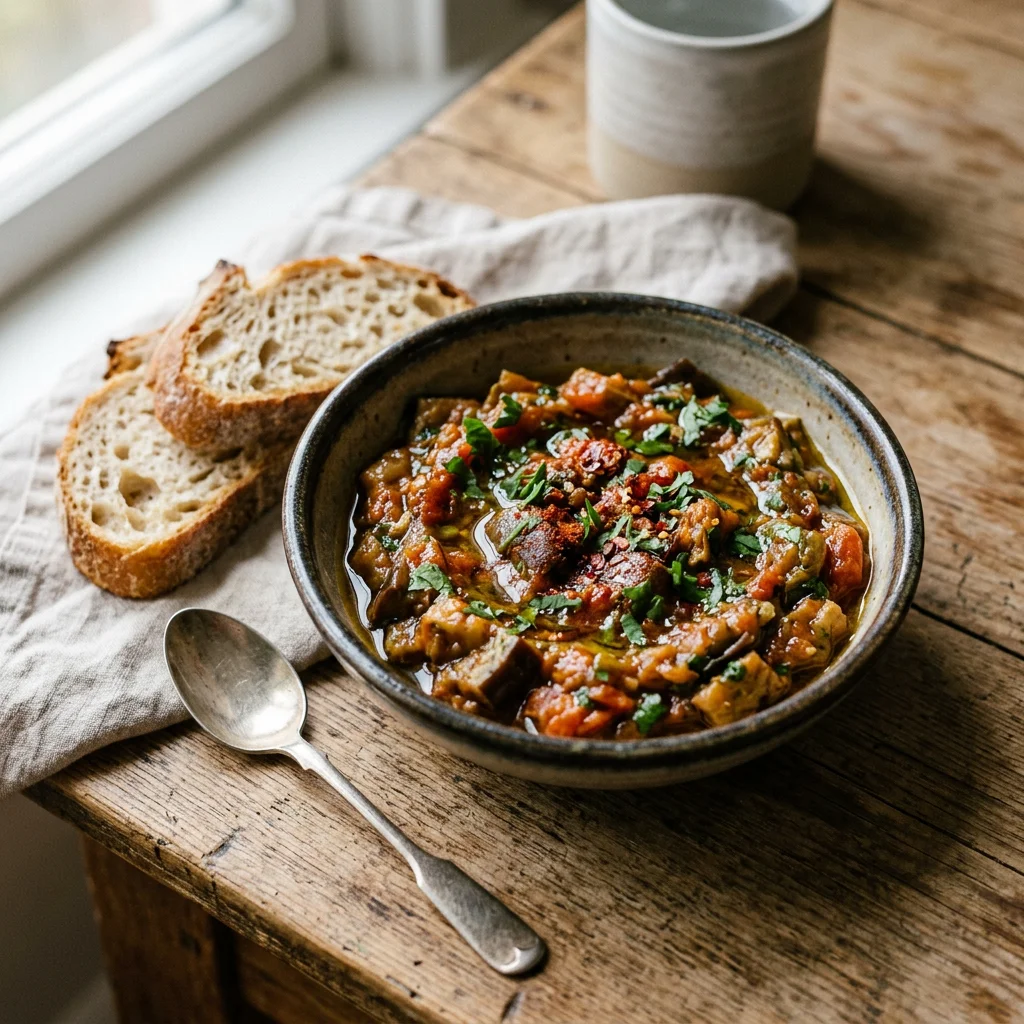
Zaalouk is Morocco's smoky, silky eggplant-tomato salad — a dish that exists somewhere between a dip, a side, and a salad, served at virtually every Moroccan table as part of the opening spread of small dishes. The eggplant is roasted or grilled until its flesh collapses into a smoky, creamy mass, then cooked down with tomatoes, garlic, and a careful blend of cumin and paprika until the two vegetables become nearly indistinguishable. The result is a deeply savory, smoky, slightly chunky spread that begs to be scooped up with warm bread. Zaalouk belongs to a family of Moroccan cooked salads — small dishes that begin every proper meal, much like mezze in Lebanese cuisine or antipasti in Italian. These salads are not afterthoughts but a deliberate first course designed to awaken the palate and stimulate digestion before the main tagine or couscous arrives. In a traditional Moroccan dining room, six or seven of these small plates might appear simultaneously: zaalouk, taktouka (roasted pepper salad), shredded carrot salad, beet salad, olives, and more. Ayurvedically, zaalouk represents an interesting study. Eggplant is one of the more complex nightshades — it absorbs oil voraciously (making it grounding and Vata-pacifying) and carries a bitter-astringent quality that supports detoxification. Cooking it thoroughly with tomatoes and spices, as zaalouk demands, transforms its raw rajasic energy into something warmer and more sattvic. The cumin and paprika kindle digestive fire, making this an ideal appetizer in the classical Ayurvedic sense — food that prepares the body to receive and process the main meal.
Mildly pacifies Vata due to the oily, warm qualities. Stimulates and balances Kapha through the pungent and bitter tastes. May moderately increase Pitta due to the nightshade vegetables and heating spices.
Ingredients
- 2 large Eggplant (about 800g total)
- 4 medium Tomatoes (roughly chopped)
- 4 cloves Garlic (minced)
- 4 tbsp Olive oil
- 1.5 tsp Ground cumin
- 1 tsp Sweet paprika
- 3 tbsp Fresh cilantro (finely chopped)
- 2 tbsp Fresh parsley (finely chopped)
- 1 tbsp Lemon juice
- 1 tsp Salt
- 1/2 tsp Smoked paprika (optional, for extra smokiness)
Instructions
- Roast the eggplants whole directly over a gas flame, turning with tongs every few minutes, until the skin is completely charred and the flesh has collapsed — about 15 minutes. Alternatively, halve the eggplants and roast cut-side down under a broiler until deeply blackened. The more char, the smokier the zaalouk.
- Transfer the roasted eggplants to a colander and let cool slightly. Peel away the charred skin (some dark bits left behind are fine — they add flavor). Roughly chop the flesh and let it drain for 5 minutes to release excess liquid.
- Heat the olive oil in a wide pan over medium heat. Add the garlic and stir for 30 seconds until fragrant. Add the chopped tomatoes, cumin, and sweet paprika. Cook, stirring occasionally, for 10 minutes until the tomatoes break down into a thick sauce.
- Add the chopped eggplant flesh to the tomato mixture. Stir and cook together for 10-15 minutes, mashing lightly with the back of a spoon, until the eggplant and tomato meld into a cohesive, slightly chunky mixture. The texture should be soft but not a smooth puree — some pieces should be visible.
- Remove from heat. Stir in the lemon juice, fresh cilantro, and parsley. Add the smoked paprika if using. Taste and adjust salt and lemon.
- Transfer to a shallow serving dish. Drizzle with a thread of olive oil. Serve warm or at room temperature with plenty of crusty bread for scooping.
Nutrition
These values are estimates calculated from the ingredient list and may vary based on brands, cooking methods, and serving size. Not a substitute for medical or dietary advice.
How This Recipe Affects Each Dosha
Vata
The generous olive oil and thorough cooking make zaalouk grounding and moistening for Vata. The cumin specifically addresses Vata's tendency toward gas and bloating. However, eggplant is a nightshade with some Vata-aggravating qualities when undercooked — the long cooking time here transforms it into something more suitable, though Vata types with sensitive digestion should eat it in moderate amounts.
Pitta
Eggplant and tomato are both nightshades with heating potential, and the cumin and paprika add warmth. This makes zaalouk moderately Pitta-aggravating. The lemon and fresh herbs provide some cooling balance, and the sweet rasa from the cooked-down vegetables helps. Pitta types can enjoy it as a side dish in small amounts, especially during cooler months.
Kapha
Zaalouk is one of the better cooked salads for Kapha. The bitter and pungent rasas help cut through Kapha's heaviness, the warming spices stimulate sluggish digestion, and the light quality of eggplant (despite its oil absorption) prevents the density that many cooked vegetable dishes carry. The key for Kapha is to moderate the olive oil.
The cumin and paprika kindle agni, making this an effective appetizer that prepares the digestive system for the main meal. The thorough cooking of the eggplant and tomatoes makes their nutrients readily available without requiring strong digestive fire to break them down. Serving zaalouk at the beginning of a meal follows the Ayurvedic principle of stimulating agni before introducing heavier foods.
Nourishes: Rasa (plasma), Rakta (blood)
Adjustments by Constitution
For Vata Types
Increase olive oil and drizzle argan oil at serving for extra unctuousness. Add a pinch of asafoetida during cooking to further reduce the gas-producing tendency of eggplant. Serve warm rather than at room temperature — cold food aggravates Vata. Add extra lemon juice for its appetite-stimulating sour rasa.
For Pitta Types
Reduce cumin and omit paprika entirely. Add a teaspoon of ground coriander for its cooling quality. Replace the lemon juice with a splash of orange blossom water for a gentler, more floral finish. Increase the fresh herbs generously and add fresh mint.
For Kapha Types
Reduce olive oil to 2 tablespoons and add a teaspoon of harissa for its pungent, Kapha-clearing heat. Increase the cumin and add a pinch of black pepper. Serve with raw vegetable crudites instead of bread to avoid the additional heaviness of wheat.
Seasonal Guidance
Best in late summer through autumn when eggplants and tomatoes are at their peak. During winter, the warming spices make it a welcome addition to any meal. In spring, lighten the dish with extra herbs and less oil. In summer, zaalouk can be served at room temperature as a refreshing side, but Pitta types should be mindful of the nightshade content during the hottest months.
Best time of day: As an appetizer before lunch or dinner. Traditionally served as part of the opening spread of cooked salads that begin every Moroccan meal.
Cultural Context
Zaalouk is one of the pillars of Moroccan salad culture — the collection of small cooked dishes that open every proper meal. In Morocco, these salads are not raw affairs but carefully cooked preparations, each with its own spice profile and texture. The tradition of beginning a meal with multiple small plates reflects a deep understanding of how food should be introduced to the body: first small, flavorful bites to awaken the appetite, then the main dish when the stomach is prepared. Zaalouk appears at everything from casual family dinners to elaborate wedding feasts, and it is one of the dishes that visiting guests will encounter on their very first evening in a Moroccan home.
Deeper Context
Origins
Zaalouk descends from Berber-Arab Maghrebi vegetable-meze tradition, with close cousins across the broader Mediterranean (Turkish patlican salatası, Lebanese baba ganoush, Greek melitzanosalata, Italian caponata). Eggplant domestication in Asia, spread through Arab agricultural transmission to North Africa and Iberia during the medieval period. The specific Moroccan cumin-and-paprika seasoning distinguishes zaalouk from regional cousins.
Food as Medicine
Eggplant contains nasunin (anthocyanin anti-oxidant with neuroprotective research support) and substantial fiber. The cooking breaks down cell walls and increases bioavailability. Cumin supports digestion. Olive oil polyphenols contribute cardiovascular-supporting compounds. A Mediterranean-diet-template meze preparation.
Ritual & Seasonal Role
Summer Moroccan meze. Year-round at restaurants. Featured at celebration meals as part of the salatate course. Ramadan iftar tables across Maghreb.
Classical Pairings & Cautions
Crusty bread (khobz), olives, additional cold salads (matbucha, carrot-cumin salad). Mint tea or chilled water. Cautions: nightshade sensitivity from eggplant and tomato; FODMAP issues from garlic (if included); Pitta aggravation in sensitive hot-weather contexts; olive-oil allergies are rare but documented.
Cross-Tradition View
How other medical and food-wisdom traditions read this dish. Each tradition names the same physiological reality in its own language — the agreements across them are where universal principles live.
Traditional Chinese Medicine
Eggplant is cool-sweet and Liver-clearing; tomato is cool-sour and moves Liver Qi; cumin is warm and supports digestion; olive oil is cool-moistening; cilantro is cool-pungent and clears Heat. A cool Liver-and-Heat-clearing preparation with mild warming correction — TCM physicians would class zaalouk as summer meze food with Liver-Qi-stagnation indications.
Greek Humoral
Cold-wet with hot-dry cumin correction. Galenic-suitable summer meze preparation — the eggplant-tomato-olive-oil architecture matches Mediterranean classical summer cookery across Morocco, Greece, Turkey, and Southern Italy.
Ayurveda
Heating virya, pungent vipaka. Mild Pitta aggravation through the nightshade combination (eggplant and tomato). Kapha-reducing through the cooking. Vata-mixed — cooked eggplant is Vata-neutral, but the cold-served presentation aggravates.
Moroccan Meze
Zaalouk is classical Moroccan cold-served meze — part of the salatate (salads) course that precedes the tagine or couscous main. Mediterranean-meze tradition shares similar eggplant-tomato-salad preparations (baba ganoush, Turkish patlican salatası, Greek melitzanosalata) reflecting 1,000+ years of cross-Mediterranean Islamic-Byzantine-Maghrebi culinary exchange. Zaalouk specifically uses Moroccan cumin-forward seasoning that distinguishes it from the regional cousins.
Chef's Notes
The char is everything in zaalouk — do not skip the roasting step or try to shortcut with boiled eggplant. The smokiness from direct flame contact is what gives the dish its character. If you lack a gas stove, a grill or the broiler setting in your oven works well. Zaalouk improves as it sits — make it a few hours ahead and let the flavors deepen at room temperature. It keeps in the refrigerator for 4-5 days and can be served cold, warm, or at room temperature. Some cooks add a pinch of harissa for heat or a drizzle of argan oil at serving for a nutty, luxurious finish.
Frequently Asked Questions
Is Zaalouk good for my dosha?
Mildly pacifies Vata due to the oily, warm qualities. Stimulates and balances Kapha through the pungent and bitter tastes. May moderately increase Pitta due to the nightshade vegetables and heating spices. The generous olive oil and thorough cooking make zaalouk grounding and moistening for Vata. Eggplant and tomato are both nightshades with heating potential, and the cumin and paprika add warmth. Zaalouk is one of the better cooked salads for Kapha.
When is the best time to eat Zaalouk?
As an appetizer before lunch or dinner. Traditionally served as part of the opening spread of cooked salads that begin every Moroccan meal. Best in late summer through autumn when eggplants and tomatoes are at their peak. During winter, the warming spices make it a welcome addition to any meal. In spring, lighten the dish with extra herbs
How can I adjust Zaalouk for my constitution?
For Vata types: Increase olive oil and drizzle argan oil at serving for extra unctuousness. Add a pinch of asafoetida during cooking to further reduce the gas-produci For Pitta types: Reduce cumin and omit paprika entirely. Add a teaspoon of ground coriander for its cooling quality. Replace the lemon juice with a splash of orange bl
What are the Ayurvedic properties of Zaalouk?
Zaalouk has Sweet, Bitter, Pungent, Sour taste (rasa), Heating energy (virya), and Pungent post-digestive effect (vipaka). Its qualities (gunas) are Warm, Oily, Light. It nourishes Rasa (plasma), Rakta (blood). The cumin and paprika kindle agni, making this an effective appetizer that prepares the digestive system for the main meal. The thorough cooking of the eggplant and tomatoes makes their nutrients readily available without requiring strong digestive fire to break them down. Serving zaalouk at the beginning of a meal follows the Ayurvedic principle of stimulating agni before introducing heavier foods.