Wonton Soup
Chinese Recipe
Overview
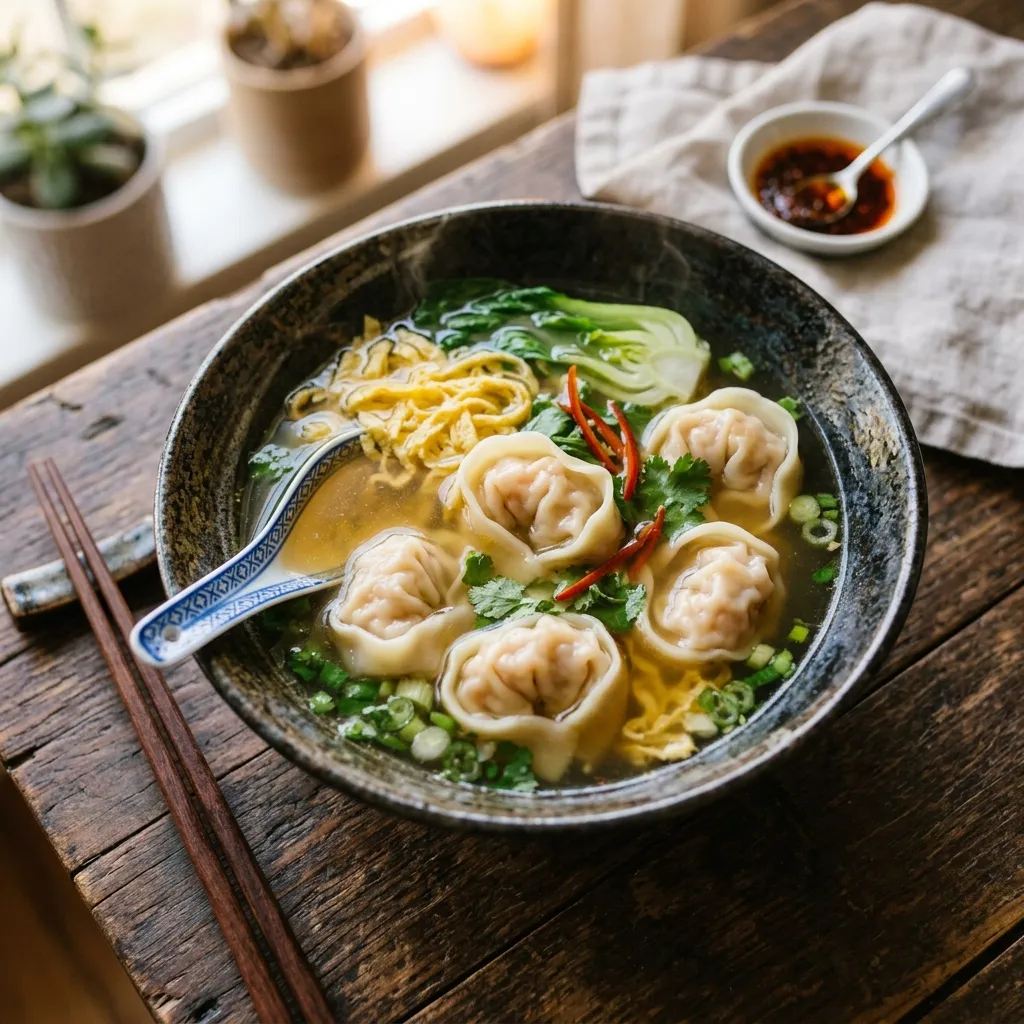
Wonton soup (hun tun tang) is a Cantonese cornerstone — delicate pork-and-shrimp dumplings floating in a clear, deeply flavored broth. The word "wonton" derives from Cantonese "wan tan," meaning "cloud swallow," a poetic description of the dumplings' appearance as they billow and fold in the soup like clouds being swallowed by the sky. The dish dates back to the Tang Dynasty (618-907 CE) and has been central to Cantonese breakfast and snack culture for centuries. The wonton filling combines ground pork with raw shrimp, ginger, scallion, sesame oil, soy sauce, and white pepper, producing a mixture that is both savory and slightly sweet from the shrimp's natural sugars. The wrappers are thinner than dumpling skins — almost translucent when cooked — creating a delicate parcel that barely contains its filling. The broth, often made from pork bones and dried shrimp, provides a clean, savory backdrop that does not compete with the wontons. Ayurvedically, wonton soup is a lighter Chinese preparation than many stir-fried dishes. The clear broth is warming and easy to digest. The thin wheat wrappers provide gentle carbohydrate energy without the heaviness of noodles. The pork-shrimp filling delivers protein with moderate heating quality. The ginger and white pepper in the filling actively support digestion.
A well-balanced preparation that warms and nourishes without excessive heaviness. Calms Vata through warmth, liquid, and gentle oleation. Mildly increases Pitta through ginger and white pepper. Light enough for Kapha in moderate portions.
Clear broth-based wonton soup is a traditional Chinese recovery food — served to those convalescing from illness, postpartum mothers, and anyone with weakened digestion. The warm, light, protein-rich preparation nourishes without taxing agni.
Ingredients
- 250 g Ground pork
- 150 g Raw shrimp (peeled, deveined, and finely chopped)
- 40 pieces Wonton wrappers (thin, square)
- 1 tbsp Fresh ginger (grated)
- 3 stalks Scallions (finely minced, plus extra for garnish)
- 1 tbsp Soy sauce (for filling)
- 1 tsp Sesame oil (for filling)
- 1/2 tsp White pepper
- 1 tsp Cornstarch
- 6 cups Chicken or pork broth (high quality, clear)
- 1 tbsp Light soy sauce (for broth)
- to taste Salt
- 1 tbsp Dried shrimp (optional, for broth depth)
- 4 small Baby bok choy (halved)
Instructions
- Prepare the filling: combine the ground pork, chopped shrimp, ginger, minced scallions, soy sauce, sesame oil, white pepper, and cornstarch in a bowl. Stir vigorously in one direction for 2-3 minutes until the mixture becomes sticky and cohesive — this develops the protein structure that gives wontons their bouncy texture.
- Set up a wrapping station: have the filling, wonton wrappers, and a small bowl of water ready. Place about 2 teaspoons of filling in the center of a wrapper. Dip your finger in water and moisten two adjacent edges. Fold the wrapper diagonally into a triangle, pressing the edges firmly to seal and expel air. Then bring the two bottom corners of the triangle together, overlapping slightly, and press to seal — this creates the classic wonton shape. Repeat until all filling is used.
- Bring the broth to a simmer in a large pot. If using dried shrimp, add them now and simmer for 5 minutes to infuse flavor. Season the broth with light soy sauce and salt.
- In a separate large pot, bring water to a boil. Cook the wontons in batches of 10-12, boiling for 3-4 minutes until they float and the wrappers become translucent. Do not cook wontons directly in the broth — the starch from the wrappers will cloud it.
- While the wontons cook, blanch the bok choy halves in the boiling water for 1-2 minutes until bright green and just tender.
- Divide the cooked wontons and bok choy among serving bowls. Ladle the hot broth over them. Garnish with sliced scallions and a few drops of sesame oil.
- Serve immediately while the wontons are tender and the broth is steaming hot.
Nutrition
These values are estimates calculated from the ingredient list and may vary based on brands, cooking methods, and serving size. Not a substitute for medical or dietary advice.
How This Recipe Affects Each Dosha
Vata
Wonton soup is excellent for Vata. The warm, liquid broth is deeply soothing for Vata's dry, cold, light qualities. The ginger and white pepper kindle digestion gently. The pork-shrimp filling provides protein without excessive heaviness. The thin wonton wrappers add gentle carbohydrate without the density of thick noodles. This is a comforting, centering meal for Vata.
Pitta
The broth is mild enough for Pitta, and the shrimp adds a touch of sweetness. Ginger and white pepper create mild heat — manageable for most Pitta types. The overall lightness of the dish avoids the heaviness that aggravates Pitta digestion. A good choice for Pitta in cooler months.
Kapha
Clear broth-based soups are among the better food forms for Kapha — warm, liquid, and light. The thin wonton wrappers add minimal heaviness compared to noodle soups. The ginger and white pepper provide digestive stimulation. Kapha types benefit from making the broth slightly spicier and keeping the wonton count moderate.
Gently supports agni through the warming broth, ginger, and white pepper without overwhelming it. The clear, liquid nature of the soup makes nutrients readily available for absorption. One of the more agni-friendly Chinese preparations.
Nourishes: Rasa (plasma), Rakta (blood), Mamsa (muscle)
Adjustments by Constitution
For Vata Types
Add a drizzle of extra sesame oil to each bowl and include wilted leafy greens like spinach. Use slightly more ginger in the filling. Serve with a side of steamed rice for extra grounding. The classic preparation already suits Vata well.
For Pitta Types
Replace pork with ground chicken for less internal heat. Reduce ginger and omit white pepper, substituting fennel seed in the filling. Add cooling vegetables like zucchini or napa cabbage to the broth. Garnish with fresh cilantro instead of scallion.
For Kapha Types
Add chili oil and extra white pepper to the broth. Include vegetables like mushrooms, cabbage, and water chestnuts in the soup. Reduce the number of wontons per bowl and increase the vegetable proportion. Use a lighter broth base made from chicken rather than pork bones.
Seasonal Guidance
Wonton soup is appropriate across three seasons. In autumn and winter, the warming broth and ginger fight cold and damp. In spring, the lightness of clear broth avoids Kapha-aggravating heaviness. Summer is the only season where the warm soup may feel excessive — switch to chilled wontons with dipping sauce during the hottest months.
Best time of day: Lunch or light dinner. In Cantonese tradition, wonton noodle soup is also a classic late-morning snack or dim sum item.
Cultural Context
Wonton noodle soup is the foundation of Hong Kong's dai pai dong (open-air food stall) culture. The city's most celebrated wonton shops — Mak's Noodle, Tsim Chai Kee, Lau Sum Kee — are generational businesses where recipes are closely guarded. Hong Kong-style wontons are specifically distinguished by a high shrimp-to-pork ratio, fresh alkaline egg noodles, and a broth made from shrimp shells, dried flounder, and pork bones. In Sichuan, wontons take a different form entirely — served in chili oil as "hong you chao shou" (red oil dumplings), demonstrating how the same basic preparation diverges across Chinese regional cuisines.
Deeper Context
Origins
Cantonese dim sum tradition has wonton-making dating back several centuries, but the dumpling-in-broth format itself (hundun) originates in northern China over 2,000 years ago. Regional variations include Shanghai xiaolongbao's broth-filled dumplings, Beijing jiaozi, Harbin versions, and the Cantonese wonton of global restaurant fame. US Chinese-takeout culture adopted Cantonese wontons via mid-20th-century immigration waves.
Food as Medicine
Chicken broth provides the universal-restorative function documented across global medical traditions (see chicken noodle soup). Ginger addresses nausea and cold-digestion. Shrimp contributes iodine, selenium, and complete protein. Pork is Yin-building in TCM terms. A classical convalescent preparation with substantial therapeutic depth despite its restaurant ubiquity.
Ritual & Seasonal Role
Winter solstice (Dongzhi) southern Chinese tradition features dumpling soups as warming seasonal food. Lunar New Year dumpling eating (northern Chinese) has parallels but favors jiaozi over wontons. Year-round in Cantonese dim sum and daily cookery. Not strictly ceremonial, but winter-associated.
Classical Pairings & Cautions
Steamed rice, stir-fried vegetables, soy sauce or chili oil for dipping. Cautions: shellfish allergies are severe and common (major contraindication for the shrimp content); gluten intolerance precludes wheat wonton wrappers (rice-paper substitutions work imperfectly); sodium load from commercial broth; religious pork restrictions.
Cross-Tradition View
How other medical and food-wisdom traditions read this dish. Each tradition names the same physiological reality in its own language — the agreements across them are where universal principles live.
Greek Humoral
Hot-wet. A Galenic convalescent food par excellence — the broth-and-dumpling format has direct parallels in Greek and Byzantine cookery (tzatziki-filled pasta predecessors). Sanguine-building and appropriate across temperaments in winter, with the shrimp-pork balance providing diverse protein sources for restoration.
Japanese Kanpo
Japanese wonton (wanton or suigyoza) continues the tradition in slightly modified form. Shared Kanpo-TCM understanding of Qi-and-Yin-building broth-and-dumpling therapy. The Japanese version typically uses lighter dashi-based broth rather than chicken stock, but retains the convalescent-food positioning that spans East Asian medical traditions.
Unani Tibb
Dumpling-in-broth preparations are classical Indo-Persian cuisine as well — manti, aushak, samosa-shorba adjacents all reflect similar logic across the Silk Road. Shrimp is complicated in Unani due to halal considerations (most scholars permit it, some restrict). The preparation technique and therapeutic use closely parallel classical Indo-Persian hakim convalescent soups.
Ayurveda
Warming virya, sweet vipaka. Pacifies Vata through warmth and broth unctuousness. Pitta mixed — the pork aggravates, the ginger balances. Kapha mildly aggravated through the wheat wrapper and pork fat. Without dairy present, the dish avoids classical Ayurvedic viruddha ahara concerns.
Chef's Notes
The key to silky wontons is the filling's texture — stir it in one direction until it turns pasty and slightly springy, which creates the characteristic bouncy bite. Mixing haphazardly produces crumbly filling. Use the thinnest wonton wrappers you can find; thick dumpling skins create a chewy, heavy wonton. Freeze uncooked wontons in a single layer on a sheet pan, then transfer to bags — they cook directly from frozen in boiling water, adding 1 minute to the cook time. This makes wonton soup a faster weeknight meal than most people realize. The broth quality is critical since it has nowhere to hide; use homemade stock or a high-quality commercial bone broth.
Frequently Asked Questions
Is Wonton Soup good for my dosha?
A well-balanced preparation that warms and nourishes without excessive heaviness. Calms Vata through warmth, liquid, and gentle oleation. Mildly increases Pitta through ginger and white pepper. Light enough for Kapha in moderate portions. Wonton soup is excellent for Vata. The broth is mild enough for Pitta, and the shrimp adds a touch of sweetness. Clear broth-based soups are among the better food forms for Kapha — warm, liquid, and light.
When is the best time to eat Wonton Soup?
Lunch or light dinner. In Cantonese tradition, wonton noodle soup is also a classic late-morning snack or dim sum item. Wonton soup is appropriate across three seasons. In autumn and winter, the warming broth and ginger fight cold and damp. In spring, the lightness of clear broth avoids Kapha-aggravating heaviness. Sum
How can I adjust Wonton Soup for my constitution?
For Vata types: Add a drizzle of extra sesame oil to each bowl and include wilted leafy greens like spinach. Use slightly more ginger in the filling. Serve with a sid For Pitta types: Replace pork with ground chicken for less internal heat. Reduce ginger and omit white pepper, substituting fennel seed in the filling. Add cooling veg
What are the Ayurvedic properties of Wonton Soup?
Wonton Soup has Sweet, Salty, Pungent taste (rasa), Warming energy (virya), and Sweet post-digestive effect (vipaka). Its qualities (gunas) are Light, Warm, Oily (mild), Liquid. It nourishes Rasa (plasma), Rakta (blood), Mamsa (muscle). Gently supports agni through the warming broth, ginger, and white pepper without overwhelming it. The clear, liquid nature of the soup makes nutrients readily available for absorption. One of the more agni-friendly Chinese preparations.