Soupe au Pistou
French Recipe
Overview
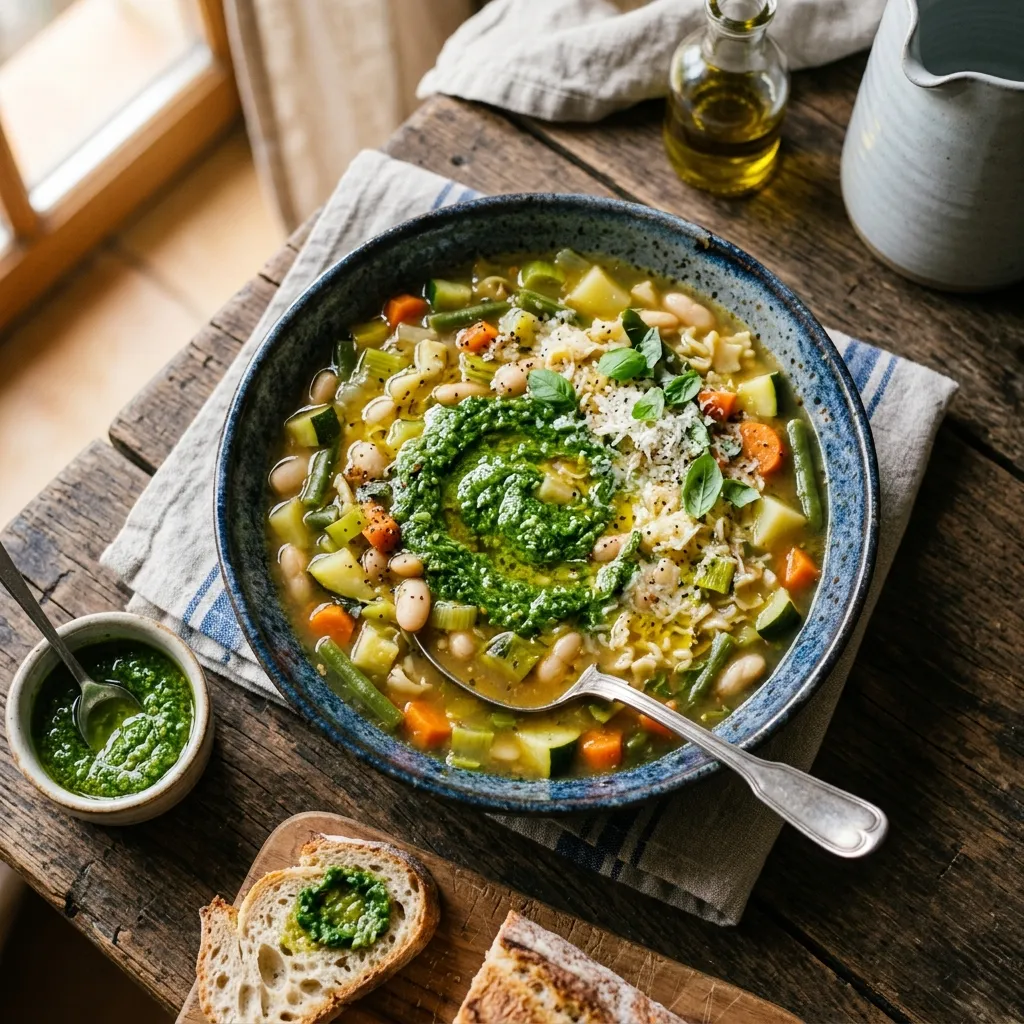
Soupe au pistou is Provence's answer to Italian minestrone — a chunky summer vegetable soup finished with pistou, the Provençal cousin of Genovese pesto. The word 'pistou' comes from the Provençal 'pistar,' meaning to crush or pound, describing the mortar-and-pestle preparation of the fresh basil, garlic, and olive oil paste that transforms the soup from simple broth into something aromatic and complex. Unlike pesto, traditional pistou contains no pine nuts and no Parmesan — only basil, garlic, olive oil, and sometimes tomato. The soup's vegetable base shifts with the season: in summer, it features fresh shell beans (cranberry, borlotti, or flageolet), zucchini, green beans, and tomatoes. In early fall, the balance shifts toward potatoes, dried beans, and hardier squash. The pasta — typically small shapes like broken spaghetti or ditalini — adds substance without overwhelming the vegetables. The pistou is stirred in at the table, not during cooking, preserving the raw basil's volatile oils and bright green color. Ayurvedically, soupe au pistou is one of the most balanced soups in the French repertoire. The vegetable diversity provides a broad range of rasas and nutrients. The warm broth supports digestion while the vegetables provide fiber and micronutrients. The pistou — raw basil, garlic, and olive oil — serves as a potent digestive stimulant added just before consumption, when its prana (life force) and agni-stimulating properties are at their peak.
Soupe au pistou is one of the more tridoshic French preparations. The warm broth and olive oil pacify vata. The vegetable lightness and variety support kapha. The raw basil-garlic pistou stimulates pitta slightly but is moderated by the overall sweetness and warmth of the soup base.
The raw pistou serves as a digestive catalyst that improves assimilation of the soup's nutrients. The combination of fresh basil and garlic has carminative (gas-reducing) and circulatory-stimulating properties. This soup is useful during seasonal transitions when digestion is adapting to changing temperatures and food availability.
Ingredients
- 1 cup Dried white beans (soaked overnight, or 1 can (15 oz) drained)
- 2 medium Zucchini (diced)
- 8 ounces Green beans (cut into 1-inch pieces)
- 2 large Ripe tomatoes (diced, or 1 can diced)
- 1 large Potato (peeled and diced)
- 1 large Yellow onion (diced)
- 1 large Carrot (diced)
- 1 medium Leek (white and light green parts, sliced)
- 1/2 cup Small pasta (ditalini, broken spaghetti, or elbow)
- 8 cups Water or vegetable broth
- 1.5 teaspoons Salt
- 1/2 teaspoon Black pepper
- 2 cups Fresh basil leaves (packed, for pistou)
- 4 cloves Garlic (for pistou)
- 1/2 cup Extra-virgin olive oil (for pistou, plus 2 tablespoons for soup)
- 1/2 teaspoon Salt for pistou
Instructions
- If using dried beans: drain the soaked beans, place in a pot, and cover with fresh water by 3 inches. Simmer for 40-50 minutes until tender. Drain and set aside. If using canned beans, simply drain and rinse.
- Heat 2 tablespoons of olive oil in a large pot over medium heat. Add the diced onion, leek, and carrot. Cook for 6-7 minutes until softened, stirring occasionally. These aromatics form the flavor foundation — do not rush this step.
- Add the water or broth, diced potato, and tomatoes. Bring to a boil, then reduce to a steady simmer. Cook for 10 minutes until the potato is nearly tender.
- Add the green beans, zucchini, cooked white beans, and pasta. Continue simmering for 10-12 minutes until the pasta is al dente and all vegetables are tender. The soup should be thick with vegetables, not brothy — add more liquid only if it becomes too thick to ladle.
- While the soup finishes, prepare the pistou: pound the garlic with 1/2 teaspoon of salt in a mortar and pestle until it forms a paste. Add the basil leaves in batches, pounding and grinding until you have a rough, thick green paste. Slowly drizzle in the olive oil while continuing to pound, creating an emulsion. Alternatively, pulse everything in a food processor — the texture will be less rustic but the flavor is comparable.
- Season the soup with salt and pepper. Taste carefully — the pistou will add garlic intensity and salt, so the soup base should be slightly under-seasoned.
- Ladle the soup into bowls. Place a generous spoonful of pistou on top of each serving — do not stir it into the pot, as heat destroys the basil's volatile oils and color. Diners should stir the pistou into their own bowls.
- Serve immediately with crusty bread for dipping. Pass the remaining pistou and a bottle of olive oil at the table for those who want additional richness.
Nutrition
These values are estimates calculated from the ingredient list and may vary based on brands, cooking methods, and serving size. Not a substitute for medical or dietary advice.
How This Recipe Affects Each Dosha
Vata
The warm, well-cooked vegetables in a nourishing broth make this soup good for vata. The white beans provide grounding protein when fully cooked. The olive oil adds necessary snigdha quality. The pistou's garlic and basil are warming and circulatory-stimulating in ways that benefit vata's cold, sluggish tendencies. The potato adds additional grounding earth-element energy. The main vata concern is the variety of vegetables and the gas-producing potential of beans — both can challenge variable vata digestion. The pasta rounds out the dish with additional substance.
Pitta
For pitta, this soup is generally favorable. The predominantly sweet, cooked vegetables are calming. The warm broth is less heating than rich meat stocks. However, the pistou — with its raw garlic and concentrated basil — is the most pitta-increasing element. Garlic is one of the stronger pitta aggravators, and in the raw, pounded form of pistou, its heating quality is at maximum. Pitta types should use pistou sparingly rather than liberally. The tomatoes add additional mild pitta increase. Overall, the soup base is pitta-calming; the pistou is pitta-increasing.
Kapha
This is an excellent kapha soup. The vegetable-forward composition is light and stimulating. The warm broth provides hydration without heaviness. The pistou's garlic and basil are both kapha-reducing through their pungent, heating, and circulatory-stimulating properties. The bitter quality of basil is directly kapha-pacifying. The lightness of the broth counteracts kapha's tendency toward stagnation. The main kapha concerns are the potato and white beans, which add heaviness, and the pasta, which increases earth-element density.
The raw garlic and basil pistou is a significant agni stimulant, delivered at the moment of eating when it has the greatest impact on digestive readiness. The warm broth supports gentle digestive opening, while the pistou provides the ignition. This two-phase approach — warm broth preparing the way, followed by raw aromatics activating agni — is remarkably effective for improving digestion of the vegetable and bean content.
Nourishes: rasarakta
Adjustments by Constitution
For Vata Types
Increase the olive oil to 3 tablespoons in the soup base for additional unctuousness. Add 1/2 teaspoon of cumin seeds when sautéing the aromatics to reduce the beans' gas-producing tendency. Increase the potato to 2 for additional grounding. Use broken spaghetti rather than tubular pasta — it is easier for vata to digest. Ensure the soup is served very hot. Add a squeeze of lemon juice to each bowl to aid digestion.
For Pitta Types
Reduce the garlic in the pistou to 1 clove and add a handful of fresh mint leaves to the basil. Replace the tomatoes with diced fennel for cooling sweetness without acidity. Add cilantro to the pistou alongside the basil. Skip the black pepper in the soup. Use coconut oil instead of olive oil in the soup base (keep olive oil in the pistou for flavor). Add cucumber and zucchini for additional cooling vegetables.
For Kapha Types
Omit the potato and pasta entirely — the soup should be a pure vegetable broth with beans and greens. Add kale, chard, or mustard greens to the soup for bitter and astringent tastes. Increase the garlic in the pistou to 6 cloves for maximum kapha-cutting pungency. Reduce the olive oil in the pistou to 1/4 cup. Add 1/4 teaspoon of cayenne to the soup. Use red lentils instead of white beans for a lighter, faster-cooking legume that is less kapha-increasing.
Seasonal Guidance
Soupe au pistou is designed for late summer when fresh basil is abundant and the vegetable garden overflows with zucchini, green beans, and tomatoes. It remains appropriate through early fall as the weather cools but fresh herbs persist. In winter, fresh basil is scarce and the soup's relatively light nature provides insufficient warmth for the coldest months.
Best time of day: Lunch or early dinner. The soup is substantial enough for a main course but light enough for evening consumption without disturbing sleep. The pistou's raw garlic may cause digestive disturbance if eaten too close to bedtime.
Cultural Context
Soupe au pistou is Provençal soul food — the dish that appears at every family table when the summer garden peaks. The mortar and pestle (pilon) used to make pistou is a sacred kitchen tool in Provence, often passed down through generations. The soup embodies the Provençal philosophy of cooking: start with extraordinary fresh ingredients, treat them simply, and let their natural flavors dominate. The connection to Italian minestrone and pesto reflects the historical and cultural ties between Provence and Liguria, separated only by the Maritime Alps. Both traditions share an olive oil-based cuisine built on vegetables, herbs, and garlic.
Deeper Context
Origins
Soupe au pistou descends from Genoese minestrone with pesto (Italian minestrone alla genovese), which entered Provençal cookery through 19th-century Ligurian economic migration across the border into Nice and Marseille. The French pistou is closer to the medieval Genoese preparation (without pine nuts and cheese) than the modern Italian pesto is. Nice's Italian-influenced cookery blurs the national boundary — Nice was Italian (Kingdom of Sardinia, then Piedmont) until 1860.
Food as Medicine
Basil carries classical Mediterranean folk-medicine reputation for digestive support, anti-inflammatory action, and mood support. Garlic and olive oil together form the foundational Mediterranean-diet pairing with extensive modern research for cardiovascular and metabolic benefit. White beans provide complete protein when paired with grain; the summer-vegetable base delivers substantial phytonutrient diversity.
Ritual & Seasonal Role
Summer dish par excellence — prepared when garden basil reaches peak. Late July through September in Provence. Provençal family-meal tradition, rural mas (farmhouse) cookery, and village-festival food. Not religiously ceremonial but tightly tied to Provençal regional identity and to the Provençal-Italian cultural continuity of the Riviera.
Classical Pairings & Cautions
Crusty bread, a glass of Bandol rosé. A slice of aged Parmesan or Pecorino served on the side (despite pistou's cheese-less formulation). Cautions: basil allergies are rare but present; garlic and allium-family allergies; FODMAP issues from garlic and white beans; legume gas in weak agni; pistou made with pine nuts (modern variations) triggers tree-nut allergies.
Cross-Tradition View
How other medical and food-wisdom traditions read this dish. Each tradition names the same physiological reality in its own language — the agreements across them are where universal principles live.
Traditional Chinese Medicine
Basil is warm-aromatic and disperses Qi stagnation; garlic is dispersing; white beans build Kidney essence; zucchini is cool-sweet and Spleen-Qi-supporting; olive oil is cool-moistening. A Qi-dispersing Yin-building summer soup — TCM physicians would class this as appropriate for summer Liver-Qi stagnation with underlying Yin deficiency.
Greek Humoral
Hot-wet corrected by cold-wet vegetable body. Galenic Mediterranean summer dietetics — the warming pistou paste is the corrective element that prevents the phlegmatic vegetable base from generating dampness. Balanced across temperaments in appropriate summer quantities.
Ayurveda
Heating virya, pungent vipaka. Mixed dosha picture — the pistou aggravates Pitta substantially; the vegetables and olive oil balance this partially; the white beans pacify Vata through density. A summer-acceptable dish with Pitta caution.
Provençal-Genoese
Pistou is the French cousin of Italian pesto — the Genoese-Ligurian basil-garlic-olive-oil tradition crossed the Italian-French border with 19th-century Ligurian migration into Nice and Provence. French pistou lacks the pine nuts and cheese of Italian pesto, making it closer to the original medieval Ligurian preparation before 17th-century pine-nut addition. The dish reflects the cross-Mediterranean food continuity that predates modern national borders.
Chef's Notes
The pistou must be made fresh — there is no substitute for the fragrance of just-pounded basil and garlic. Make it while the soup simmers so it is at peak freshness when served. If you make the pistou in a food processor, process in short pulses to avoid heating the basil, which turns it dark and bitter. The soup base is intentionally simple so that the pistou can be the star. Use the best olive oil you have for the pistou — this is where its quality shows most. Leftover soup should be stored without pistou mixed in; add fresh pistou when reheating.
Frequently Asked Questions
Is Soupe au Pistou good for my dosha?
Soupe au pistou is one of the more tridoshic French preparations. The warm broth and olive oil pacify vata. The vegetable lightness and variety support kapha. The raw basil-garlic pistou stimulates pitta slightly but is moderated by the overall sweetness and warmth of the soup base. The warm, well-cooked vegetables in a nourishing broth make this soup good for vata. For pitta, this soup is generally favorable. This is an excellent kapha soup.
When is the best time to eat Soupe au Pistou?
Lunch or early dinner. The soup is substantial enough for a main course but light enough for evening consumption without disturbing sleep. The pistou's raw garlic may cause digestive disturbance if eaten too close to bedtime. Soupe au pistou is designed for late summer when fresh basil is abundant and the vegetable garden overflows with zucchini, green beans, and tomatoes. It remains appropriate through early fall as the w
How can I adjust Soupe au Pistou for my constitution?
For Vata types: Increase the olive oil to 3 tablespoons in the soup base for additional unctuousness. Add 1/2 teaspoon of cumin seeds when sautéing the aromatics to r For Pitta types: Reduce the garlic in the pistou to 1 clove and add a handful of fresh mint leaves to the basil. Replace the tomatoes with diced fennel for cooling swe
What are the Ayurvedic properties of Soupe au Pistou?
Soupe au Pistou has madhura,katu,tikta taste (rasa), ushna energy (virya), and katu post-digestive effect (vipaka). Its qualities (gunas) are laghu,snigdha. It nourishes rasa,rakta. The raw garlic and basil pistou is a significant agni stimulant, delivered at the moment of eating when it has the greatest impact on digestive readiness. The warm broth supports gentle digestive opening, while the pistou provides the ignition. This two-phase approach — warm broth preparing the way, followed by raw aromatics activating agni — is remarkably effective for improving digestion of the vegetable and bean content.