Papa a la Huancaina
Peruvian Recipe
Overview
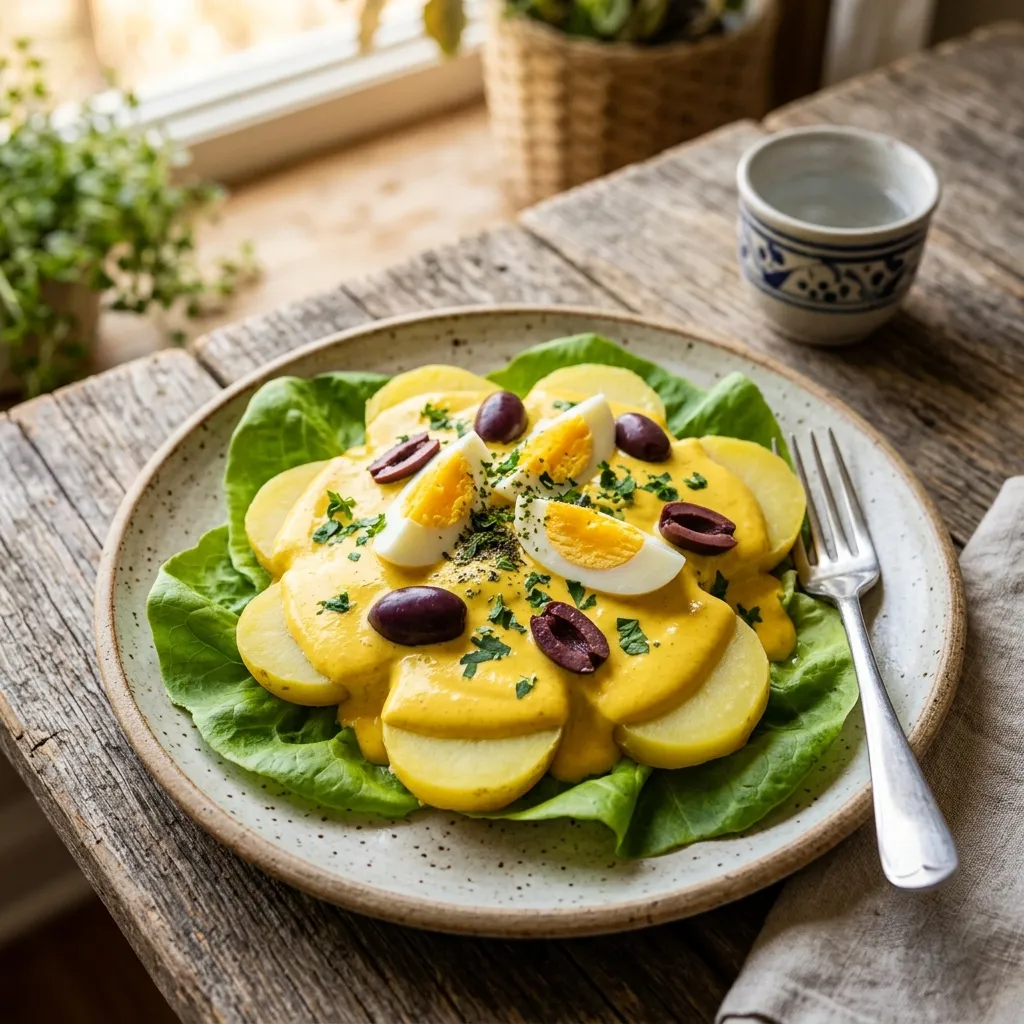
Papa a la huancaina is boiled yellow potatoes draped in a bright orange-yellow cheese sauce made from aji amarillo peppers, queso fresco, evaporated milk, and crackers, served cold on a bed of lettuce with boiled egg and black olives. The sauce — huancaina sauce — is the heart of the dish: creamy, mildly spicy, and rich with a vivid color that comes entirely from the aji amarillo pepper. It is Peru's most popular cold appetizer. The sauce is built in a blender. Fresh or jarred aji amarillo peppers, queso fresco (or feta as a substitute), evaporated milk, saltine crackers, garlic, and oil are blended until completely smooth. The result is a thick, pourable sauce with a gentle heat, tangy cheese flavor, and extraordinary color. It is poured generously over sliced boiled potatoes — ideally the Peruvian yellow potato (papa amarilla), which has a waxy, buttery texture unlike any North American variety. Ayurvedically, this is a cool-to-neutral dish — the potatoes are sweet and grounding, the cheese adds sweet and sour qualities, and the aji amarillo provides a warming pungent counterpoint that prevents the overall preparation from becoming too cold and heavy. The evaporated milk and crackers add sweet, building quality. As a cold preparation, it is most appropriate in warm weather when the body tolerates unheated food.
The sweet, heavy potato base and creamy cheese sauce increase Kapha. The aji amarillo provides mild Pitta stimulation. Overall a grounding, building dish that can settle Vata when served at room temperature.
Ingredients
- 4 medium Yellow potatoes (Yukon Gold if papa amarilla unavailable)
- 2 tbsp Aji amarillo paste
- 150 g Queso fresco (or feta cheese, crumbled)
- 1/2 cup Evaporated milk
- 6 pieces Saltine crackers
- 1 clove Garlic
- 3 tbsp Vegetable oil
- 1/2 tsp Salt
- 4 large Lettuce leaves (for serving)
- 2 whole Hard-boiled eggs (halved)
- 8 pieces Black olives (Botija or Kalamata)
Instructions
- Boil the potatoes in salted water until tender when pierced with a knife, about 18-20 minutes. Drain, let cool, and peel. Slice into rounds about 1cm (1/2 inch) thick.
- Combine the aji amarillo paste, queso fresco, evaporated milk, crackers, garlic, vegetable oil, and salt in a blender. Blend on high for 1-2 minutes until completely smooth and pourable. If too thick, add a tablespoon of milk.
- Taste the sauce and adjust — it should be mildly spicy, creamy, and tangy. Add more aji for heat or more cheese for richness.
- Arrange lettuce leaves on a serving platter. Layer the potato slices over the lettuce in an overlapping pattern.
- Pour the huancaina sauce generously over the potatoes, allowing it to pool on the plate.
- Garnish with halved boiled eggs and black olives. Serve at room temperature or slightly chilled.
Nutrition
These values are estimates calculated from the ingredient list and may vary based on brands, cooking methods, and serving size. Not a substitute for medical or dietary advice.
How This Recipe Affects Each Dosha
Vata
The sweet, heavy, smooth quality of potatoes and cheese sauce can be grounding for Vata, but the cool serving temperature works against Vata's need for warmth. The aji amarillo helps by adding a warming element. Best for Vata when served at room temperature rather than cold.
Pitta
The aji amarillo, garlic, and salty cheese add mild Pitta stimulation, but the overall cooling effect of the cold preparation and sweet potato base keeps this manageable for Pitta types. The smooth, creamy sauce is soothing rather than aggravating.
Kapha
Heavy, sweet, oily, and smooth — this dish checks every Kapha-increasing box. Potatoes, cheese, milk, oil, and crackers create dense nourishment that Kapha types should limit to small portions. The aji provides the only Kapha-reducing element.
The aji amarillo provides mild agni stimulation, but the cold, heavy, sweet base of potatoes and cheese tends to dampen digestive fire. Best preceded by something pungent (a sip of leche de tigre, for instance) to prime digestion.
Nourishes: Rasa (plasma), Mamsa (muscle), Medas (fat)
Adjustments by Constitution
For Vata Types
Serve the potatoes warm rather than cold. Add a pinch of cumin and extra aji amarillo to the sauce for warming quality. Include a warm cup of ginger tea alongside to offset the cool nature of the preparation.
For Pitta Types
Reduce aji amarillo to 1 tablespoon. Replace garlic with a pinch of fennel. Add extra milk to the sauce for a milder, more cooling effect. The standard cold serving temperature is ideal for Pitta.
For Kapha Types
Replace half the potato with steamed cauliflower or broccoli. Use light coconut milk instead of evaporated milk. Increase aji amarillo for stronger digestive stimulation. Serve as a small side dish, not a main course.
Seasonal Guidance
Best in warm weather when cold preparations are welcome and the body tolerates heavy, unheated food. The cooling nature suits Pitta season. Avoid as a main dish in winter when cold, heavy food suppresses agni.
Best time of day: Lunch appetizer or side dish. Too heavy and cold for dinner, when digestive fire is waning.
Cultural Context
Papa a la huancaina is named for the city of Huancayo in the Peruvian highlands, though its exact origins are debated. One story credits it to women who sold food to railroad workers building the line between Lima and Huancayo in the late 1800s. The dish celebrates Peru's extraordinary potato heritage — over 3,000 native varieties grow in the Andes, and Peru is the potato's original homeland. Huancaina sauce has transcended its original dish and now appears across Peruvian cuisine as a universal condiment — drizzled over boiled eggs, spooned onto sandwiches, and served alongside grilled meats.
Deeper Context
Origins
Papa a la Huancaina takes its name from Huancayo — the central Peruvian Andes city in Junín region. Legend traces the dish to 19th-century railway construction workers who were served Andean yellow potato with rich chile-cheese sauce during the building of the Central Railway (1870-1908, one of the highest railways in the world). The dish became Peruvian national identity food during the 20th century. The aji amarillo and queso fresco combination is distinctly Peruvian-Andean.
Food as Medicine
Peruvian yellow potato provides carotenoids (the yellow pigmentation), resistant starch, and sustained-release carbohydrate. Aji amarillo contributes capsaicin and antioxidant carotenoids. Queso fresco adds calcium and fermentation-related compounds. A nutritionally balanced cold-plate preparation.
Ritual & Seasonal Role
Year-round Peruvian appetizer and side dish. Featured at Peruvian celebration meals and at Limeño Sunday family lunches. Not religiously ceremonial but deeply tied to Peruvian national cuisine identity.
Classical Pairings & Cautions
Hard-boiled eggs, black olives, lettuce, Inca Kola. Cautions: nightshade sensitivity from potato; lactose sensitivity from queso fresco and evaporated milk; capsaicin aggravation; gluten content in crackers (gluten-free crackers work for binding the sauce); Peruvian yellow potato may be difficult to source outside Peru.
Cross-Tradition View
How other medical and food-wisdom traditions read this dish. Each tradition names the same physiological reality in its own language — the agreements across them are where universal principles live.
Traditional Chinese Medicine
Yellow potato is sweet-neutral and Spleen-Qi-tonifying; aji amarillo is hot-pungent and disperses cold; queso fresco is Yin-building; evaporated milk is Yin-building; crackers provide Spleen-Qi support. A Qi-and-Yin-building preparation with dispersing-spice accent.
Greek Humoral
Neutral to mildly warming. Galenic-suitable cold-plate preparation — the potato-and-cheese-sauce architecture matches classical Mediterranean potato-and-dairy combinations.
Ayurveda
Neutral virya, sweet vipaka. Pacifies Pitta through potato-cheese cooling base. Mild Kapha aggravation. Vata mixed — cold presentation aggravates, unctuous sauce pacifies.
Andean Huancayo
Papa a la Huancaina is Andean cuisine specifically from Huancayo — the city in the central Peruvian Andes (Junín region) that names the dish. Legend traces the dish to 19th-century railway construction workers who were served potatoes with a rich chile sauce in Huancayo. Peruvian yellow potato (papa amarilla, native Andean variety) is essential to authentic preparation. The dish represents Andean-Criollo fusion.
Chef's Notes
The saltine crackers in the sauce are not a shortcut — they are traditional and provide the exact starchy body the sauce needs without making it gluey. Use real queso fresco if available; feta is saltier and tangier, so reduce the added salt when substituting. The sauce should be pourable, not stiff — closer to a thick salad dressing than a dip. Papa amarilla (Peruvian yellow potato) has a naturally buttery, creamy texture that Yukon Gold approximates. Leftovers: the sauce keeps refrigerated for 3 days and can be used as a dip, sandwich spread, or sauce for other vegetables.
Frequently Asked Questions
Is Papa a la Huancaina good for my dosha?
The sweet, heavy potato base and creamy cheese sauce increase Kapha. The aji amarillo provides mild Pitta stimulation. Overall a grounding, building dish that can settle Vata when served at room temperature. The sweet, heavy, smooth quality of potatoes and cheese sauce can be grounding for Vata, but the cool serving temperature works against Vata's need for warmth. The aji amarillo, garlic, and salty cheese add mild Pitta stimulation, but the overall cooling effect of the cold preparation and sweet potato base keeps this manageable for Pitta types. Heavy, sweet, oily, and smooth — this dish checks every Kapha-increasing box.
When is the best time to eat Papa a la Huancaina?
Lunch appetizer or side dish. Too heavy and cold for dinner, when digestive fire is waning. Best in warm weather when cold preparations are welcome and the body tolerates heavy, unheated food. The cooling nature suits Pitta season. Avoid as a main dish in winter when cold, heavy food suppres
How can I adjust Papa a la Huancaina for my constitution?
For Vata types: Serve the potatoes warm rather than cold. Add a pinch of cumin and extra aji amarillo to the sauce for warming quality. Include a warm cup of ginger t For Pitta types: Reduce aji amarillo to 1 tablespoon. Replace garlic with a pinch of fennel. Add extra milk to the sauce for a milder, more cooling effect. The standar
What are the Ayurvedic properties of Papa a la Huancaina?
Papa a la Huancaina has Sweet, Pungent, Sour, Salty taste (rasa), Neutral energy (virya), and Sweet post-digestive effect (vipaka). Its qualities (gunas) are Heavy, Oily, Smooth, Cool. It nourishes Rasa (plasma), Mamsa (muscle), Medas (fat). The aji amarillo provides mild agni stimulation, but the cold, heavy, sweet base of potatoes and cheese tends to dampen digestive fire. Best preceded by something pungent (a sip of leche de tigre, for instance) to prime digestion.