Oatmeal with Berries
American Recipe
Overview
Oatmeal entered the American breakfast canon in the 1850s when Ferdinand Schumacher began selling steel-cut oats from his German Mills American Oatmeal Factory in Akron, Ohio. Prior to industrial processing, oats were primarily animal feed in the United States — Schumacher's innovation was marketing them as human food. The Quaker Oats Company, founded in 1901, cemented oatmeal's place in American kitchens through aggressive advertising and the iconic round canister. Today, oatmeal topped with fresh berries represents the health-conscious branch of American breakfast culture. In Ayurvedic terms, oats are sweet in rasa with a heating virya, heavy and moist in guna — qualities that make them deeply nourishing for vata but potentially aggravating for kapha when consumed daily. The addition of berries introduces astringent and sour rasas that partially balance the heavy sweetness of the oats. Blueberries, strawberries, and raspberries each bring different energetic profiles: blueberries are cooling and astringent, strawberries are warming and sweet-sour, raspberries are cooling and astringent-sweet. The distinction between steel-cut, rolled, and instant oats matters both culinarily and digestively. Steel-cut oats retain the most fiber and require 20-30 minutes of cooking, producing a chewy, nutty porridge. Rolled oats cook in 5 minutes and yield a creamier texture. Instant oats are pre-cooked and dried — they reconstitute quickly but produce a paste-like consistency and spike blood sugar faster due to their higher glycemic index. For both flavor and digestive benefit, rolled oats offer the best balance of convenience and quality.
Oatmeal with berries is highly pacifying for vata — the heavy, moist, warm qualities are precisely what vata needs. Pitta tolerates this dish well due to the sweet rasa and the cooling nature of the berries, though daily consumption may be too heavy. Kapha is aggravated by the dense, moist, sweet qualities of oatmeal, even with the balancing astringency of berries.
Oatmeal prepared with ghee and warming spices supports recovery from vata-type digestive issues including constipation and irregular appetite. The soluble fiber feeds beneficial gut bacteria and the mucilaginous quality soothes inflamed intestinal lining. This preparation is used in Ayurvedic dietary therapy for patients recovering from illness who need gentle, nourishing food that rebuilds strength without taxing digestion.
Ingredients
- 1 cup rolled oats
- 1 1/2 cups water
- 1/2 cup whole milk (or plant milk of choice)
- 1/4 teaspoon salt
- 1/2 teaspoon cinnamon
- 1/2 cup blueberries (fresh or frozen)
- 1/4 cup strawberries (sliced)
- 1 tablespoon honey or maple syrup (to taste)
- 1 teaspoon ghee or butter (optional but recommended)
Instructions
- Combine the water, milk, and salt in a medium saucepan. Bring to a gentle boil over medium-high heat.
- Stir in the rolled oats and reduce heat to medium-low. Add the cinnamon and stir to distribute evenly.
- Cook for 4-5 minutes, stirring occasionally, until the oats have absorbed most of the liquid and reached your desired consistency. For creamier oatmeal, add an extra splash of milk during the last minute.
- If using frozen berries, add the blueberries during the last 2 minutes of cooking so they warm through and release some of their juice into the oatmeal. Fresh berries should be added after cooking.
- Remove from heat and stir in the ghee or butter. The fat improves both flavor and nutrient absorption — oats contain beta-glucan fiber that benefits from a small amount of dietary fat for optimal assimilation.
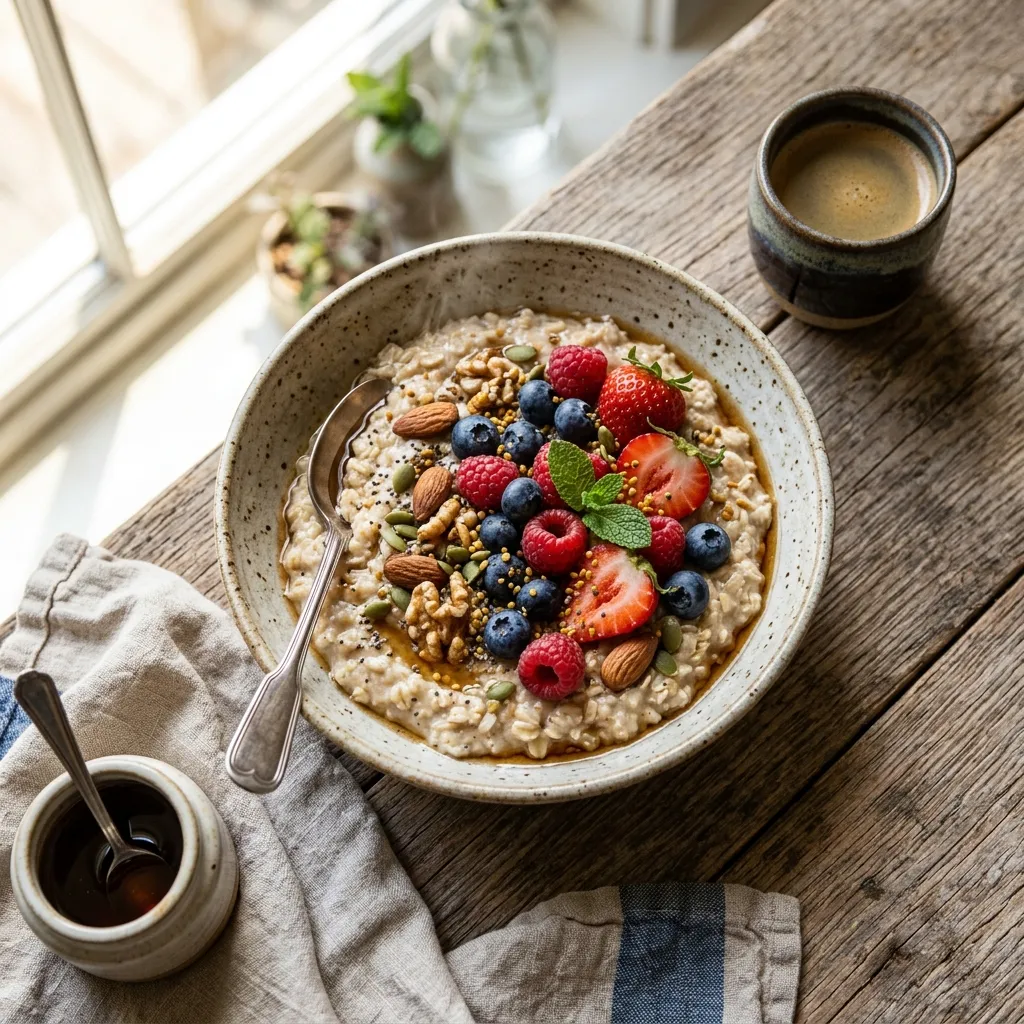
- Divide between two bowls. Top with fresh berries, arranging them over the surface.
- Drizzle with honey (add after the oatmeal has cooled slightly — Ayurveda advises against heating honey above 104°F/40°C) or maple syrup.
- Serve immediately. Oatmeal thickens as it sits — if it becomes too dense, stir in a splash of warm milk to loosen.
Nutrition
These values are estimates calculated from the ingredient list and may vary based on brands, cooking methods, and serving size. Not a substitute for medical or dietary advice.
How This Recipe Affects Each Dosha
Vata
Oatmeal is a near-ideal vata breakfast. The heavy, warm, moist qualities counter every aspect of vata's light, cold, dry nature. The sweet rasa and sweet vipaka nourish depleted tissues, and the soluble fiber provides steady energy without sharp blood sugar fluctuations. Adding ghee increases the unctuousness that vata craves. The warming spices support the erratic digestive fire common in vata imbalance. Berries add vitamin C and antioxidants without disrupting the grounding quality of the meal.
Pitta
The sweet rasa of oats is cooling for pitta's sharp, hot quality, and the berries — particularly blueberries — add further cooling astringency. This makes oatmeal with berries a reasonable pitta breakfast, especially when prepared without excessive cinnamon or heating spices. The heavy guna grounds pitta's intensity. However, the heating virya of oats means this is better as an occasional meal rather than a daily staple for strongly pitta individuals. Watch the sweetener — honey is heating while maple syrup is more cooling.
Kapha
Oatmeal is problematic for kapha constitutions when eaten regularly. The heavy, moist, dense, sweet qualities mirror kapha's own attributes, leading to increased congestion, heaviness, and lethargy. The sticky quality of cooked oats particularly increases kapha's tendency toward sluggish digestion and excess mucus. Kapha types who enjoy oatmeal should eat it no more than twice a week, always with modifications to reduce its density. The berries provide some beneficial astringency, but they cannot fully offset the kapha-increasing base.
Oatmeal's heavy and dense qualities require moderate agni to digest. The soluble beta-glucan fiber slows gastric emptying, which supports steady energy but can feel heavy for those with weak digestion. Adding warming spices like cinnamon and ginger supports digestive fire and prevents the stagnation that plain oatmeal can cause. Cooking the oats thoroughly — no al dente porridge — is essential for proper digestibility.
Nourishes: Rasa (plasma), Mamsa (muscle), Meda (fat), Asthi (bone)
Adjustments by Constitution
For Vata Types
Cook with full-fat milk instead of water for maximum unctuousness. Add 1/2 teaspoon of cardamom and a pinch of ground ginger along with the cinnamon. Stir in a generous tablespoon of ghee and top with chopped dates or raisins for additional sweet, grounding nourishment. Warm the berries gently before adding — cold toppings on hot food create conflicting temperatures that disturb vata digestion. A tablespoon of almond butter stirred in adds protein and healthy fat.
For Pitta Types
Replace cinnamon with cardamom, which is cooling and aromatic. Use coconut milk instead of dairy milk for additional cooling effect. Favor blueberries and raspberries over strawberries, as they are more astringent and less sour. Sweeten with maple syrup rather than honey — maple is cooling while honey is heating. Add a tablespoon of shredded coconut and a few fresh mint leaves for extra pitta-pacifying qualities. Skip the ghee and use coconut oil if desired.
For Kapha Types
Cook oats with water only — no milk. Use 1/4 less oats per serving to reduce density. Add 1 teaspoon of grated fresh ginger, extra cinnamon, and a pinch of clove to strongly stimulate agni. Skip sweetener entirely or use a very small amount of raw honey stirred in after the oatmeal has cooled below 104°F. Top heavily with berries for astringent rasa and add a tablespoon of pumpkin seeds for crunch and protein. The lighter, drier modifications make this tolerable for kapha as an occasional meal.
Seasonal Guidance
Oatmeal is best during autumn and winter when the body needs warmth, density, and grounding. During spring, it can increase seasonal kapha accumulation and contribute to sinus congestion and lethargy — switch to lighter grain breakfasts or apply strong kapha modifications. Summer is acceptable if prepared simply with cooling berries and minimal sweetener.
Best time of day: Eat between 7-9 AM when digestive fire is building. Oatmeal provides sustained energy through the morning without the rapid spike and crash of sugary cereals. Avoid eating oatmeal late at night, as the heavy qualities are difficult to digest when agni is low.
Cultural Context
Oats have been cultivated for roughly 3,000 years, originating as a weed among wheat and barley fields in the Fertile Crescent before being domesticated in their own right. Scottish and Irish immigrants brought oat-eating traditions to America, but oats remained marginal until Ferdinand Schumacher's marketing efforts in the 1850s. The Quaker Oats Company transformed oatmeal from a regional ethnic food into a national breakfast staple. The health food movement of the 1980s-90s elevated oatmeal further when FDA-approved heart health claims linked soluble fiber to cholesterol reduction. The modern 'overnight oats' trend began around 2012, introducing a no-cook preparation to a new generation.
Deeper Context
Origins
Oats were domesticated in Bronze Age Europe approximately 3,000 years ago, later than wheat and barley and originally as a weed-grain in other cereal crops before cultivation. The Scottish Highland porridge tradition developed over the medieval period into its current form; Samuel Johnson's dictionary (1755) defined oats as food eaten by people in Scotland and horses in England, a jab that became a point of Scottish cultural pride. American introduction came via Scottish-Irish immigrants; Quaker Oats (founded 1877) standardized American breakfast oatmeal.
Food as Medicine
Oats carry classical British Isles medicinal reputation for convalescents, diabetics (oat beta-glucan genuinely modulates glucose response), and heart patients. Blueberry anthocyanins have been extensively validated by modern research for cardiovascular and cognitive benefit. Cinnamon has documented blood-sugar-modulating effects in modern clinical studies. The combination sits at the intersection of three separate therapeutic traditions all pointing in the same direction.
Ritual & Seasonal Role
Scottish New Year's Day (Hogmanay) breakfast tradition includes porridge. Robert Burns' night (January 25) features oat-based dishes. American winter and autumn breakfast with spring and summer peaks in berry availability. Pediatric first-solid-food across multiple cultures — oatmeal is often the earliest grain introduced to infants. A breakfast of unusual cross-cultural consistency.
Classical Pairings & Cautions
Milk or cream, honey or brown sugar, walnuts or almonds, additional seasonal fruit. Cautions: gluten cross-contamination in non-certified oats — celiac patients must use certified gluten-free oats; berry allergies (blueberries are rarely allergenic but some tree-fruit cross-reactions exist); diabetic patients should monitor the glycemic effect of added sweeteners; tree-nut allergies exclude the classical garnishes.
Cross-Tradition View
How other medical and food-wisdom traditions read this dish. Each tradition names the same physiological reality in its own language — the agreements across them are where universal principles live.
Traditional Chinese Medicine
Oats are sweet-neutral-warming, tonify Spleen and Kidney Qi, and regulate the Stomach. Blueberries are cool-sour-sweet, move Liver Qi and build Yin fluids. Cinnamon warms the middle and supports Kidney Yang. Ghee is warm-moistening. A grounded Spleen-and-Kidney tonic appropriate for morning meals across the year, particularly during cold seasons and for Yang-deficient constitutions.
Greek Humoral
Oats sit in the hot-wet Galenic quadrant when cooked — nourishing and moistening. Blueberries cool-wet; cinnamon hot-dry; ghee hot-wet. Averages to hot-wet sanguine-building. Appropriate across seasons with peak in cool weather. A Galenic physician would have prescribed this specific combination for students, scholars, and thin-nervous types needing steady blood.
Ayurveda
Heating virya, sweet vipaka. Oats are Vata-pacifying when cooked with adequate fat; the ghee and cinnamon amplify this effect. A Vata-supportive breakfast and one of the few Western grain preparations explicitly compatible with classical Ayurvedic morning-meal guidelines. Mildly Kapha-aggravating through heaviness — Kapha types should reduce portion and increase cinnamon.
Celtic / Scottish Highland
Oats are the Celtic grain. Scottish porridge and brose (its earlier form) have been the Highland breakfast for a thousand years. Cranachan (oats, whisky, raspberries, cream) is the Scottish ritual dessert that echoes the oatmeal-and-berries combination. The Gaelic-speaking oat tradition spans Ireland, Scotland, and the Isle of Man, with distinct regional variations in coarseness, fat content, and seasonal berry pairings.
Chef's Notes
Soaking oats overnight in the cooking water dramatically improves digestibility by beginning to break down phytic acid, which binds minerals and inhibits absorption. Simply combine oats and water in the pot the night before, cover, and refrigerate. In the morning, add milk, salt, and cinnamon, then cook as directed — the oats will be ready in 2-3 minutes instead of 5. For a richer flavor, toast the dry oats in the pan with ghee for 2 minutes before adding liquid. Steel-cut oats can be substituted — increase water to 3 cups and cook time to 25-30 minutes.
Frequently Asked Questions
Is Oatmeal with Berries good for my dosha?
Oatmeal with berries is highly pacifying for vata — the heavy, moist, warm qualities are precisely what vata needs. Pitta tolerates this dish well due to the sweet rasa and the cooling nature of the berries, though daily consumption may be too heavy. Kapha is aggravated by the dense, moist, sweet qualities of oatmeal, even with the balancing astringency of berries. Oatmeal is a near-ideal vata breakfast. The sweet rasa of oats is cooling for pitta's sharp, hot quality, and the berries — particularly blueberries — add further cooling astringency. Oatmeal is problematic for kapha constitutions when eaten regularly.
When is the best time to eat Oatmeal with Berries?
Eat between 7-9 AM when digestive fire is building. Oatmeal provides sustained energy through the morning without the rapid spike and crash of sugary cereals. Avoid eating oatmeal late at night, as the heavy qualities are difficult to digest when agni is low. Oatmeal is best during autumn and winter when the body needs warmth, density, and grounding. During spring, it can increase seasonal kapha accumulation and contribute to sinus congestion and lethargy
How can I adjust Oatmeal with Berries for my constitution?
For Vata types: Cook with full-fat milk instead of water for maximum unctuousness. Add 1/2 teaspoon of cardamom and a pinch of ground ginger along with the cinnamon. For Pitta types: Replace cinnamon with cardamom, which is cooling and aromatic. Use coconut milk instead of dairy milk for additional cooling effect. Favor blueberries
What are the Ayurvedic properties of Oatmeal with Berries?
Oatmeal with Berries has Sweet, Astringent, Sour taste (rasa), Heating energy (virya), and Sweet post-digestive effect (vipaka). Its qualities (gunas) are Heavy, Moist, Dense. It nourishes Rasa (plasma), Mamsa (muscle), Meda (fat), Asthi (bone). Oatmeal's heavy and dense qualities require moderate agni to digest. The soluble beta-glucan fiber slows gastric emptying, which supports steady energy but can feel heavy for those with weak digestion. Adding warming spices like cinnamon and ginger supports digestive fire and prevents the stagnation that plain oatmeal can cause. Cooking the oats thoroughly — no al dente porridge — is essential for proper digestibility.