Manti
Turkish Recipe
Overview
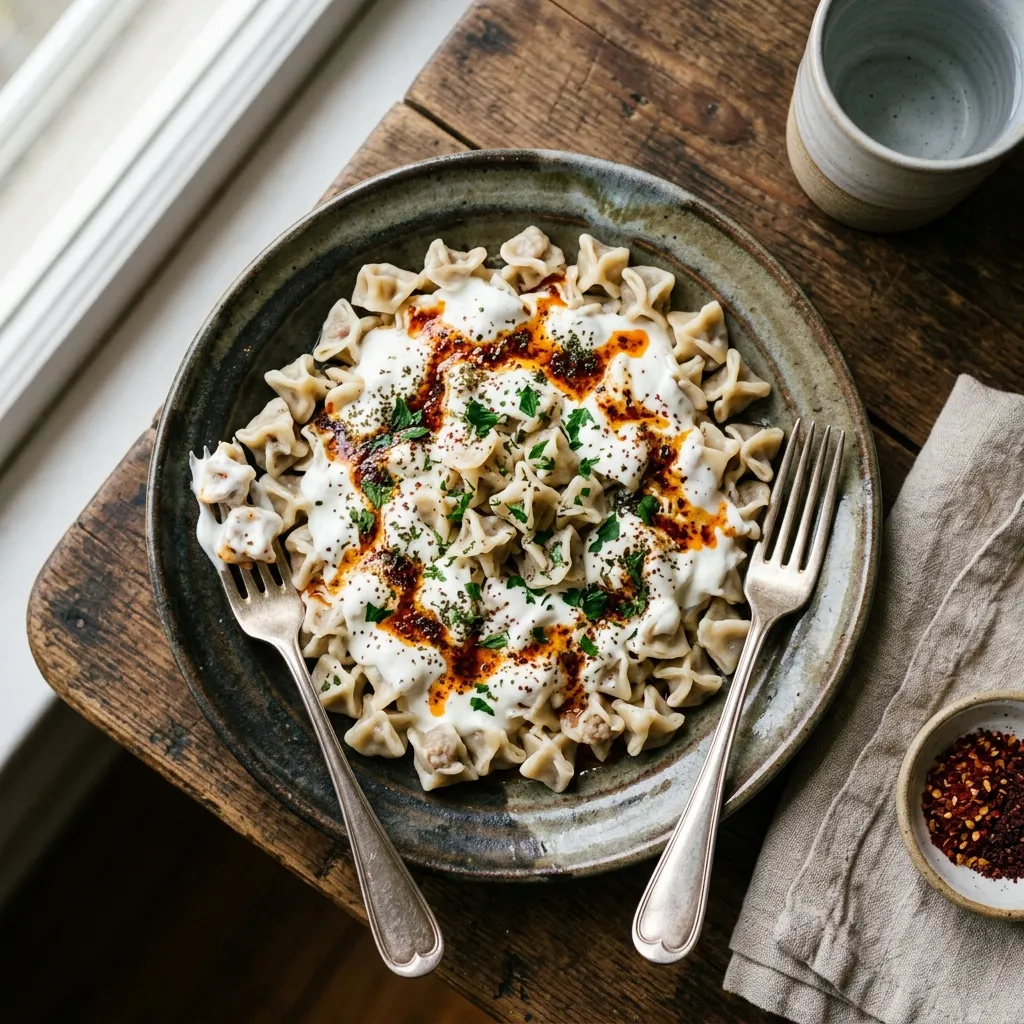
Manti are tiny Turkish dumplings — each about the size of a fingertip — filled with spiced ground lamb or beef, boiled or baked, then served under a double sauce of garlicky yogurt and paprika-spiked melted butter. The city of Kayseri in central Anatolia is the acknowledged capital of manti, where the skill of a cook is measured by how many dumplings fit on a single spoon. The smaller the manti, the greater the prestige. Making manti is labor-intensive and traditionally communal. Women of a household roll thin sheets of dough, cut them into tiny squares, place a pinch of seasoned meat in the center of each, and pinch the corners together to form a small purse or boat shape. A single batch for a family dinner might involve folding 200 or more dumplings — work that goes faster with conversation and company. The dumplings are boiled until tender, then arranged on a plate and buried under cold yogurt beaten with raw garlic, finished with melted butter bloomed with red pepper flakes. In Ayurvedic analysis, manti combines wheat dough, animal protein, dairy, garlic, and heating spices — creating a deeply nourishing, grounding, and heavy dish. The yogurt-garlic sauce adds a sour-pungent element that stimulates digestion, while the butter finishes the dish with oleation. This is a cold-weather, high-energy food that demands strong agni to process fully.
Grounding and deeply nourishing. Pacifies Vata through warmth, oleation, and substantial nourishment. Can aggravate Pitta due to garlic, spices, and sour yogurt. Increases Kapha through heaviness and combination of wheat, meat, and dairy.
Deeply nourishing and building — traditionally served to those recovering from illness or exhaustion during cold months. The combination of animal protein, dairy, and wheat provides concentrated energy and tissue-building nutrition.
Ingredients
- 2 cups All-purpose flour
- 1 large Eggs
- 1/2 cup Water
- 1.5 tsp Salt
- 200 g Ground lamb (or beef)
- 1 small Onion (very finely grated)
- 1/2 tsp Black pepper
- 1/2 tsp Cumin
- 1.5 cups Plain yogurt (full-fat, at room temperature)
- 3 cloves Garlic (minced to a paste)
- 3 tbsp Butter
- 1 tsp Aleppo pepper flakes
- 1 tsp Dried mint
- 1/2 tsp Sumac (optional, for garnish)
Instructions
- Make the dough: combine flour, egg, water, and 1/2 teaspoon salt in a bowl. Knead for 8-10 minutes until smooth and elastic. Wrap in plastic and rest for 30 minutes.
- Prepare the filling: mix the ground meat with grated onion, remaining salt, black pepper, and cumin until thoroughly combined. The mixture should be cohesive but not wet.
- Divide the dough into 4 pieces. Roll each piece very thin — about 1mm thickness — on a lightly floured surface. Cut into 2cm (3/4 inch) squares.
- Place a tiny pinch of filling (about 1/4 teaspoon) in the center of each square. Bring two opposite corners together and pinch, then bring the other two corners up and pinch all four points together at the top, forming a small purse. Repeat until all squares are filled.
- Bring a large pot of salted water to a gentle boil. Drop the manti in batches, stirring gently to prevent sticking. Cook for 8-10 minutes until the dough is tender and the meat is cooked through. Drain, reserving 1/2 cup of cooking water.
- While the manti cook, prepare the sauces. Beat the yogurt with the garlic paste and a pinch of salt until smooth. If too thick, thin with a tablespoon of the reserved cooking water.
- In a small pan, melt the butter over medium heat. When foaming, add the Aleppo pepper flakes and dried mint. Swirl for 10 seconds until fragrant and brick-red.
- Arrange the drained manti on a serving platter. Spoon the garlic yogurt generously over the top. Drizzle the hot pepper butter over the yogurt. Sprinkle with sumac if using. Serve immediately.
Nutrition
These values are estimates calculated from the ingredient list and may vary based on brands, cooking methods, and serving size. Not a substitute for medical or dietary advice.
How This Recipe Affects Each Dosha
Vata
This is one of the more Vata-pacifying dishes in Turkish cuisine. The combination of warm cooked wheat, protein-rich meat filling, oleating butter, and sour yogurt addresses nearly every Vata imbalance — cold, dryness, lightness, and instability. The garlic and cumin prevent the heaviness from stagnating digestion.
Pitta
The garlic, sour yogurt, and Aleppo pepper create a heating combination that can aggravate Pitta. The meat adds additional heat. Pitta types can enjoy this occasionally in cooler weather but should be cautious during summer or periods of inflammation.
Kapha
The combination of wheat dough, red meat, yogurt, and butter creates significant heaviness that Kapha constitutions struggle to process. This is a deeply building, anabolic food — the opposite of what Kapha typically needs. Eat in small portions and only when very hungry.
The garlic, cumin, and pungent spices stimulate agni, but the heavy combination of wheat, meat, and dairy requires strong digestive fire to process fully. This is a dish for robust agni — those with weak digestion should eat small portions.
Nourishes: Rasa (plasma), Rakta (blood), Mamsa (muscle), Medas (fat), Asthi (bone)
Adjustments by Constitution
For Vata Types
The standard preparation is well-suited for Vata. Add a pinch of asafoetida to the meat filling for extra digestive support. Ensure the yogurt is at room temperature and increase the butter in the finishing sauce slightly.
For Pitta Types
Replace garlic in the yogurt with fresh dill and mint. Use chicken or turkey instead of lamb for the filling. Omit the Aleppo pepper and use sweet paprika in the butter. Add a squeeze of lime juice over the finished dish for cooling.
For Kapha Types
Replace the butter sauce with a drizzle of olive oil spiked with extra black pepper. Use the yogurt sauce sparingly. Add dry ginger and extra cumin to the meat filling. Eat a smaller portion (8-10 dumplings) alongside a green salad with vinegar dressing.
Seasonal Guidance
A cold-weather dish by tradition and by Ayurvedic logic. The heavy, warming, building qualities are exactly what the body craves during the coldest months. Too heavy for summer and too dense for spring, when the body needs lighter fare to clear winter accumulation.
Best time of day: Lunch or early dinner when digestive fire is strong enough to handle the dense combination of dough, meat, and dairy
Cultural Context
Manti likely descended from the dumplings of Central Asia, carried west by Turkic peoples during their migrations into Anatolia. Similar dumplings exist across the Turkic world — from Uzbek chuchvara to Uyghur manta to Mongolian buuz. The Kayseri version, with its emphasis on miniature size and yogurt-butter double sauce, is distinctly Anatolian. Making manti remains a communal activity in Turkish households, particularly during holidays and family gatherings, where generations of women work side by side at a flour-dusted table. The dish is considered a test of culinary skill and patience.
Deeper Context
Origins
Manti descends from Turkic Central Asian dumpling tradition with roots in Mongolian-Silk-Road cultural exchange. Uzbek, Kazakh, and Kyrgyz manti preparations preserve earlier forms. Turkish Anatolian adaptation, particularly in Kayseri (central Anatolia), developed the tiny-dumpling tradition — 'forty Kayseri manti should fit on a spoon' captures regional culinary pride. The shared Turkic dumpling tradition extends to Mongolian buuz, Korean mandu, Chinese jiaozi, and Nepalese momo, reflecting broad Silk Road culinary unity.
Food as Medicine
Complete-meal dumpling preparation: lamb protein, yogurt probiotic, butter fat, garlic allium. A substantial working-and-celebration food with genuine nutritional depth.
Ritual & Seasonal Role
Year-round Turkish home cooking. Wedding meals across Anatolian Turkish culture. Family gatherings. Multigenerational preparation tradition — the manti-folding technique is passed from grandmothers to granddaughters.
Classical Pairings & Cautions
Ayran or Turkish tea. Cautions: religious lamb restrictions rare; gluten intolerance precludes wheat wrappers; lactose sensitivity from yogurt and butter; FODMAP garlic issues; Pitta aggravation from Aleppo pepper.
Cross-Tradition View
How other medical and food-wisdom traditions read this dish. Each tradition names the same physiological reality in its own language — the agreements across them are where universal principles live.
Traditional Chinese Medicine
Lamb is warming and builds Blood and Yang; yogurt is Yin-building and Liver-soothing; garlic is warm-pungent; butter is warm-moistening; Aleppo pepper is warm-pungent and disperses. A comprehensive Yang-Blood-and-Yin-balancing preparation — TCM physicians would class manti as classical restoration food.
Greek Humoral
Hot-wet sanguine-building. A Galenic-suitable dumpling preparation.
Ayurveda
Heating virya, sweet vipaka. Pacifies Vata substantially. Mild Kapha aggravation through butter-yogurt combination. Pitta mildly aggravated through lamb-garlic heat.
Turkic Central Asian & Anatolian
Manti is Turkic Central Asian origin — classical Uzbek, Kazakh, Kyrgyz manti preparations preserve the earlier forms before Turkish Anatolian adaptation. Kayseri in central Anatolia is the Turkish epicenter of manti tradition — the saying 'forty Kayseri manti should fit on a spoon' captures the regional pride in making them small. The shared Turkic dumpling tradition spans Mongolian buuz, Korean mandu, Chinese jiaozi, Nepalese momo, reflecting Silk Road culinary exchange.
Chef's Notes
The filling amount per dumpling must be tiny — overfilled manti burst during cooking and the proportion of dough to meat becomes wrong. In Kayseri, cooks say that 40 manti should fit on one spoon — aim for small. The yogurt must be at room temperature; cold yogurt on hot dumplings creates an unpleasant temperature contrast. If short on time, make larger dumplings — the dish will taste the same, you'll just lose bragging rights. Manti freeze beautifully on a parchment-lined tray before cooking; transfer to bags once frozen solid.
Frequently Asked Questions
Is Manti good for my dosha?
Grounding and deeply nourishing. Pacifies Vata through warmth, oleation, and substantial nourishment. Can aggravate Pitta due to garlic, spices, and sour yogurt. Increases Kapha through heaviness and combination of wheat, meat, and dairy. This is one of the more Vata-pacifying dishes in Turkish cuisine. The garlic, sour yogurt, and Aleppo pepper create a heating combination that can aggravate Pitta. The combination of wheat dough, red meat, yogurt, and butter creates significant heaviness that Kapha constitutions struggle to process.
When is the best time to eat Manti?
Lunch or early dinner when digestive fire is strong enough to handle the dense combination of dough, meat, and dairy A cold-weather dish by tradition and by Ayurvedic logic. The heavy, warming, building qualities are exactly what the body craves during the coldest months. Too heavy for summer and too dense for sprin
How can I adjust Manti for my constitution?
For Vata types: The standard preparation is well-suited for Vata. Add a pinch of asafoetida to the meat filling for extra digestive support. Ensure the yogurt is at r For Pitta types: Replace garlic in the yogurt with fresh dill and mint. Use chicken or turkey instead of lamb for the filling. Omit the Aleppo pepper and use sweet pap
What are the Ayurvedic properties of Manti?
Manti has Sweet, Sour, Pungent, Salty taste (rasa), Heating energy (virya), and Sweet post-digestive effect (vipaka). Its qualities (gunas) are Heavy, Oily, Warm. It nourishes Rasa (plasma), Rakta (blood), Mamsa (muscle), Medas (fat), Asthi (bone). The garlic, cumin, and pungent spices stimulate agni, but the heavy combination of wheat, meat, and dairy requires strong digestive fire to process fully. This is a dish for robust agni — those with weak digestion should eat small portions.