Green Curry
Thai Recipe
Overview
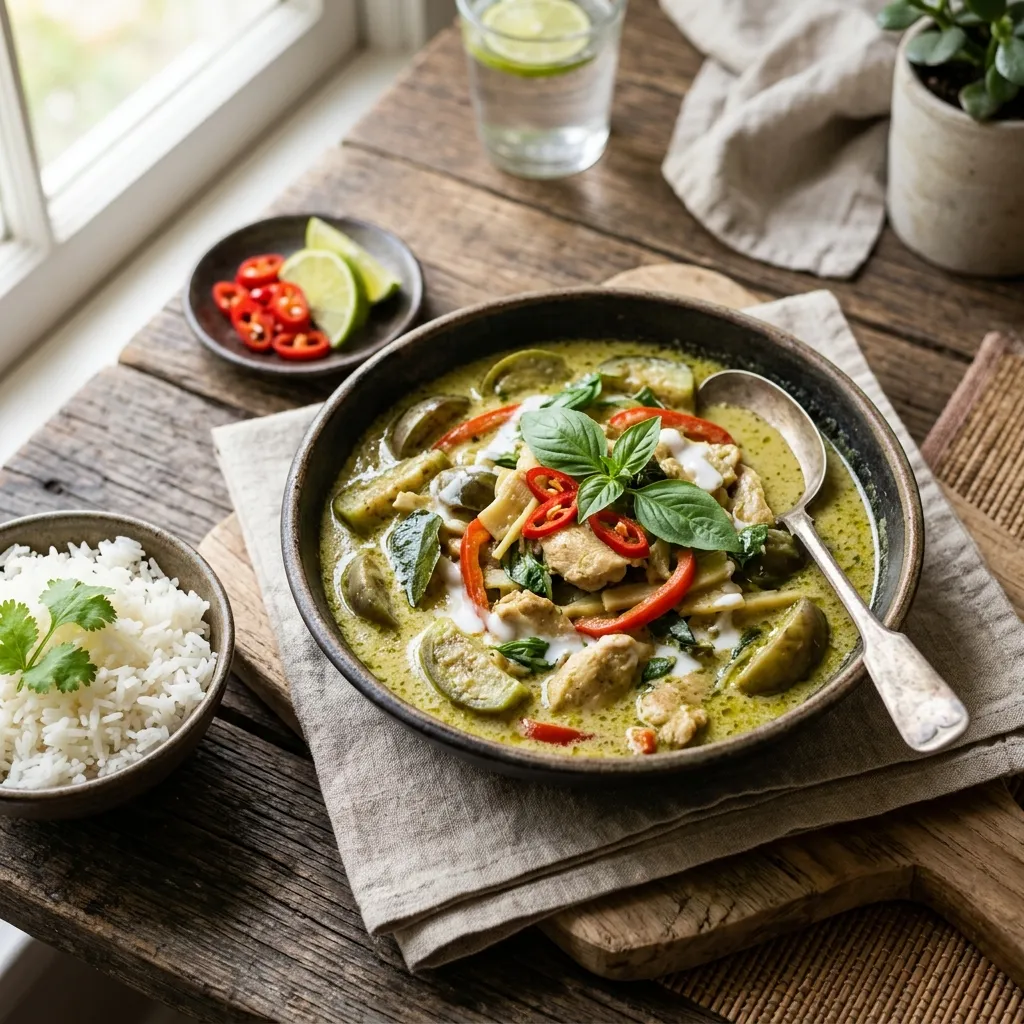
Thai green curry (gaeng khiao wan) is a coconut milk-based curry built on a paste of fresh green chilies, lemongrass, galangal, kaffir lime, shrimp paste, and Thai basil. The name translates to "sweet green curry" — "wan" means sweet, referring not to sugar but to the rounded, fragrant sweetness of the coconut milk that tempers the green chili heat. The color comes from fresh green bird's eye and serrano chilies, distinguishing it from red curry (dried red chilies) and yellow curry (turmeric-heavy). Green curry emerged as a distinct preparation in the central Thai culinary tradition, particularly Bangkok court cuisine, where the mortar-and-pestle preparation of curry paste was elevated to an art form. The traditional technique pounds each ingredient sequentially — fibrous aromatics first, soft ingredients last — to produce a paste so fine that individual components become indistinguishable. Modern cooks use food processors, trading some texture for convenience. Ayurvedically, green curry is intensely heating due to the chilies, galangal, and shrimp paste. Coconut milk provides a cooling, sweet counterbalance, creating a push-pull of fire and sweetness that stimulates agni powerfully. Thai basil (horapa) adds a camphor-like pungency distinct from Italian basil. This is medicine disguised as indulgence — the spice blend mobilizes circulation, clears congestion, and drives stagnation from the channels.
Strongly pacifies Kapha and Vata through intense heat and pungent spices. May significantly aggravate Pitta due to green chilies, galangal, and overall heating profile.
Thai green curry's intense spice profile makes it medicinal for congestion, sinus blockage, and sluggish digestion. The combination of galangal, lemongrass, and chili acts as a natural decongestant and circulatory stimulant.
Ingredients
- 3 tbsp Green curry paste (homemade or quality store-bought)
- 400 ml Coconut milk (full-fat, one can)
- 500 g Chicken thighs (boneless, sliced thin)
- 6 pieces Thai eggplant (quartered, or substitute regular eggplant cubed)
- 1 cup Bamboo shoots (sliced, drained if canned)
- 1 cup Thai basil (leaves only, packed)
- 4 leaves Kaffir lime leaves (torn, center vein removed)
- 2 tbsp Fish sauce
- 1 tbsp Palm sugar (grated, or substitute brown sugar)
- 2 pieces Fresh red chili (sliced, for garnish)
- 1 tbsp Vegetable oil
- 2 cups Jasmine rice (cooked, for serving)
Instructions
- Scoop the thick cream from the top of the coconut milk can into a wok or deep pan over medium-high heat. Reserve the thinner liquid underneath separately.
- Once the coconut cream begins to bubble and the oil separates (you will see clear fat pooling on the surface — this is called "cracking" the coconut cream), add the green curry paste. Fry in the coconut oil for 2-3 minutes, stirring constantly, until extremely fragrant and the paste darkens slightly.
- Add the sliced chicken and stir to coat in the paste. Cook for 3-4 minutes until the chicken is sealed on all sides.
- Pour in the reserved thin coconut milk. Add kaffir lime leaves and bring to a gentle simmer. Do not boil vigorously — coconut milk separates and turns grainy at a rolling boil.
- Add the Thai eggplant and bamboo shoots. Simmer for 10-12 minutes until the eggplant is tender and the chicken is cooked through.
- Season with fish sauce and palm sugar. Taste and adjust — Thai curries balance salty (fish sauce), sweet (palm sugar), and spicy (paste) in equal measure. None should dominate.
- Remove from heat and stir in the Thai basil leaves. They wilt in the residual heat, releasing their camphor-like aroma.
- Serve over steamed jasmine rice, garnished with sliced red chili and a few extra basil leaves. Eat immediately — the basil loses its fragrance and turns black within an hour.
Nutrition
These values are estimates calculated from the ingredient list and may vary based on brands, cooking methods, and serving size. Not a substitute for medical or dietary advice.
How This Recipe Affects Each Dosha
Vata
The combination of coconut milk's unctuousness and the warming spice blend creates a deeply satisfying experience for Vata. Coconut milk provides the oily, smooth quality Vata needs, while the pungent spices prevent the heaviness from becoming stagnant. The chicken offers grounding protein. However, the extreme pungency can be overstimulating for sensitive Vata types.
Pitta
Green curry is one of the more challenging Thai dishes for Pitta. Fresh green chilies, galangal, and shrimp paste in the curry base are all strongly heating. The coconut milk provides some cooling buffer, but the overall thermal impact is decidedly hot. Pitta types with strong digestion may tolerate small portions in cool weather, but this curry can trigger acid reflux, skin flare-ups, and irritability during Pitta season.
Kapha
This is excellent Kapha medicine. The intense pungency cuts through congestion, stimulates sluggish digestion, and mobilizes stagnant fluids. The light, warm quality of the spice blend counteracts Kapha's heavy, cold nature. Coconut milk adds some heaviness, but the chili heat and aromatic compounds more than compensate.
Green curry is a powerful agni stimulant. The green chilies, galangal, and lemongrass in the paste are all classified as deepana (appetite-kindling) and pachana (digestive) in Ayurveda. The coconut milk tempers the fire enough to prevent it from burning out agni, creating a sustained warmth rather than a sharp spike.
Nourishes: Rasa (plasma), Rakta (blood), Mamsa (muscle)
Adjustments by Constitution
For Vata Types
Reduce curry paste to 2 tablespoons for less intense pungency. Add extra coconut milk for more unctuousness. Include grounding root vegetables like sweet potato or taro. Serve over well-cooked jasmine rice and eat slowly — Vata benefits from the warmth but not the overstimulation of excess chili.
For Pitta Types
Replace green curry paste with a mild yellow curry paste, or use only 1 tablespoon of green paste. Increase coconut milk by 50% to buffer the heat. Swap chicken for tofu or white fish. Add cooling vegetables like zucchini and green beans. Omit the chili garnish. Serve with extra rice to absorb the spice.
For Kapha Types
Use light coconut milk or reduce to half a can, adding water to thin the sauce. Add extra vegetables and reduce the chicken portion. Include mushrooms, green beans, and leafy greens. Serve over brown rice or skip rice entirely, eating the curry as a soup. Increase the paste to 4 tablespoons if tolerated.
Seasonal Guidance
Green curry thrives in cooler months when the body craves heating foods and agni naturally strengthens. In spring, the pungent quality helps clear accumulated Kapha from winter. Avoid during the peak of summer when Pitta is already elevated — the chili heat compounds seasonal heat and can trigger inflammation.
Best time of day: Lunch or dinner — the rich coconut milk and heating spices benefit from strong digestive fire
Cultural Context
Green curry represents the aromatic tradition of central Thai court cuisine, where the fineness of the curry paste reflected the skill of the cook. In Thai food culture, curries are not served as a standalone main course but as one component of a shared meal alongside stir-fries, soups, and salads — the variety providing doshic balance. The mortar and pestle (khrok) used to prepare curry paste is considered essential kitchen equipment in Thai households, often given as a wedding gift. Each family guards its curry paste recipe, with variations in the ratio of chili to aromatic herbs creating distinct family signatures passed through generations.
Deeper Context
Origins
Green curry (gaeng keow wan) is classical central Thai cuisine with roots in Ayutthaya-period (1351-1767) royal kitchens. The specific green color derives from fresh green chilies and green herb paste — the chili-based curry architecture is post-Columbian (chilies arrived in Thailand via Portuguese trade in the 16th century). Pre-chili Thai curries used black pepper for heat. Modern green curry represents approximately 400 years of chili-era Thai cookery.
Food as Medicine
Galangal (khaa) and lemongrass (takhrai) carry extensive Thai traditional medicine reputation for digestive and antimicrobial support. Kaffir lime leaves contribute essential oils with documented antimicrobial activity. Coconut milk provides medium-chain triglycerides with metabolic research support. Thai basil and cilantro add phytonutrient diversity. A therapeutically-rich traditional preparation.
Ritual & Seasonal Role
Year-round Thai home cooking and restaurant staple. Not religiously ceremonial but tightly tied to Thai culinary identity. Featured globally at Thai restaurants.
Classical Pairings & Cautions
Jasmine rice, additional Thai dishes. Thai iced tea or beer. Cautions: shellfish-derived fish sauce (fish allergies); capsaicin aggravation substantial from Thai chilies; coconut allergies are rare but present; Pitta substantial aggravation; gluten-free by default; FODMAP sensitivity from garlic and shallots in paste.
Cross-Tradition View
How other medical and food-wisdom traditions read this dish. Each tradition names the same physiological reality in its own language — the agreements across them are where universal principles live.
Traditional Chinese Medicine
Green curry paste (green chilies, galangal, lemongrass, kaffir lime, cilantro root) is hot-pungent and disperses cold aggressively; coconut milk is Yin-building and cooling; Thai basil is warm-aromatic; kaffir lime leaves move Liver Qi; fish sauce is salty-warm. A balanced hot-dispersing Yin-building preparation — TCM physicians would class this as appropriate winter food.
Greek Humoral
Hot-wet sanguine-building with cooling coconut-milk balance. Galenic-suitable preparation — the combination of aggressive heat with cooling richness matches classical Hippocratic balanced-meal architecture.
Ayurveda
Heating virya, pungent vipaka. Pacifies Vata through warmth and unctuousness. Aggravates Pitta substantially through chili content. Kapha-reducing through dispersing heat. A classical Vata-and-Kapha-balancing preparation.
Thai Royal Central
Green curry (gaeng keow wan) is classical central Thai and royal Thai cuisine — the green color derives from fresh green chilies, not from herbs alone. Thai royal cuisine (aharn chaowang) developed elaborate curry preparations during the Ayutthaya and Rattanakosin periods. The coconut-milk-based curry architecture is distinctly Thai, differing from Indian curry through the coconut base rather than yogurt or tomato.
Chef's Notes
Cracking the coconut cream in step 2 is the most important technique in Thai curry cooking. If you skip this and add the paste to thin coconut milk, the curry will taste flat and one-dimensional. The fat must separate first to properly fry the paste. If using store-bought paste, refrigerate the can overnight so the cream solidifies on top for easy separation. Green curry should be spicier than red curry — if your paste is mild, add 2-3 fresh green bird's eye chilies with the paste. Leftover curry improves the next day as flavors meld, though the basil should be added fresh when reheating.
Frequently Asked Questions
Is Green Curry good for my dosha?
Strongly pacifies Kapha and Vata through intense heat and pungent spices. May significantly aggravate Pitta due to green chilies, galangal, and overall heating profile. The combination of coconut milk's unctuousness and the warming spice blend creates a deeply satisfying experience for Vata. Green curry is one of the more challenging Thai dishes for Pitta. This is excellent Kapha medicine.
When is the best time to eat Green Curry?
Lunch or dinner — the rich coconut milk and heating spices benefit from strong digestive fire Green curry thrives in cooler months when the body craves heating foods and agni naturally strengthens. In spring, the pungent quality helps clear accumulated Kapha from winter. Avoid during the peak
How can I adjust Green Curry for my constitution?
For Vata types: Reduce curry paste to 2 tablespoons for less intense pungency. Add extra coconut milk for more unctuousness. Include grounding root vegetables like sw For Pitta types: Replace green curry paste with a mild yellow curry paste, or use only 1 tablespoon of green paste. Increase coconut milk by 50% to buffer the heat. Sw
What are the Ayurvedic properties of Green Curry?
Green Curry has Pungent, Sweet, Salty taste (rasa), Heating energy (virya), and Pungent post-digestive effect (vipaka). Its qualities (gunas) are Oily, Warm, Light. It nourishes Rasa (plasma), Rakta (blood), Mamsa (muscle). Green curry is a powerful agni stimulant. The green chilies, galangal, and lemongrass in the paste are all classified as deepana (appetite-kindling) and pachana (digestive) in Ayurveda. The coconut milk tempers the fire enough to prevent it from burning out agni, creating a sustained warmth rather than a sharp spike.