Full English Breakfast
British Recipe
Overview
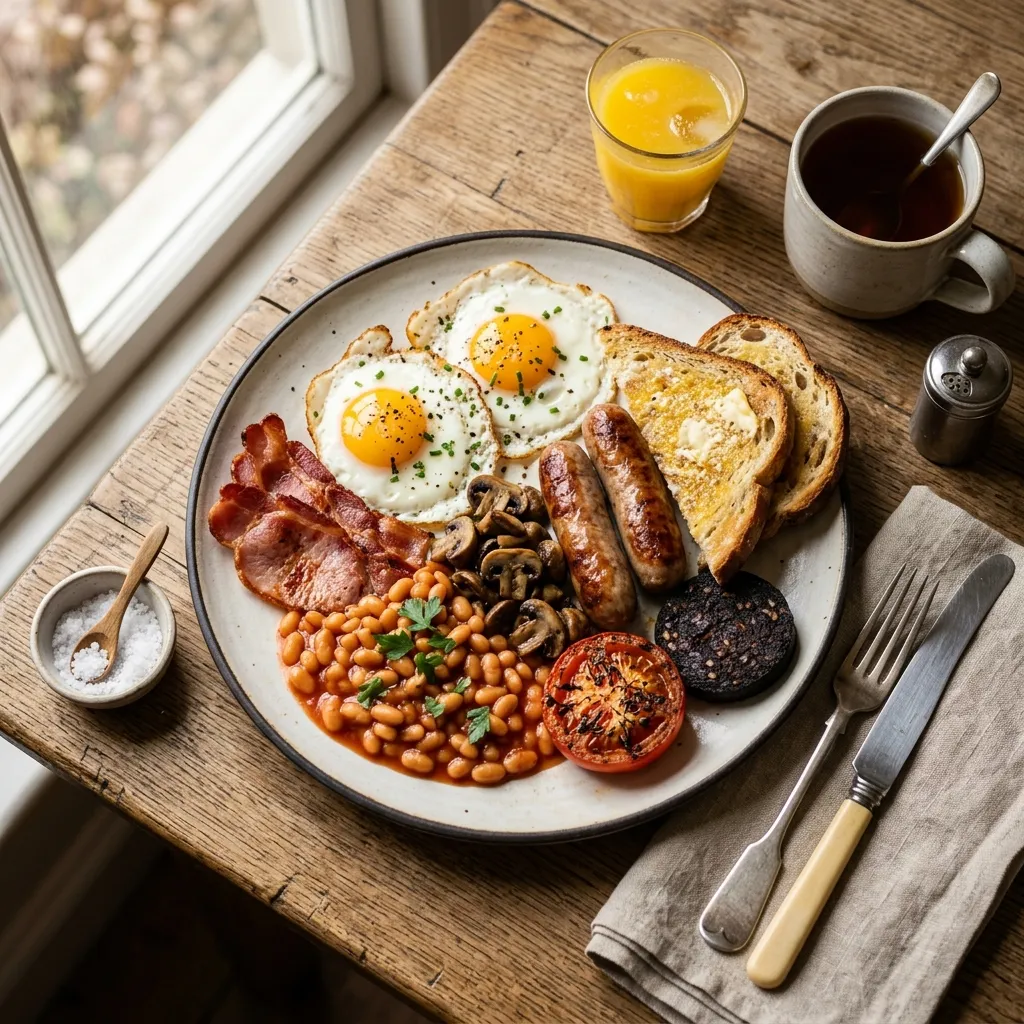
The Full English Breakfast — known colloquially as a fry-up — dates to the country houses of the 13th-century Anglo-Saxon gentry, where a large morning meal signalled wealth and hospitality. By the Victorian era, the tradition had cemented its modern form: eggs, bacon, sausages, toast, tomatoes, mushrooms, baked beans, and black pudding, all cooked and served on a single plate. The meal became democratized in the 20th century through transport cafes and greasy spoons (working-class diners) that served labourers heading to early shifts. The canonical version requires every component cooked to its own standard: bacon rendered until the fat turns translucent and the edges crisp, sausages browned evenly on all sides, eggs fried or poached with runny yolks, mushrooms cooked until their moisture evaporates, tomatoes halved and grilled until soft, toast cut into triangles, and baked beans warmed through. Black pudding — a blood sausage with oatmeal — is traditional in the North of England. Ayurvedically, this is one of the heaviest morning meals in any Western tradition. The combination of animal fats, fried eggs, cured meats, and starchy carbohydrates delivers a massive bolus of earth and water elements at a time when morning agni is still building. The dish is best understood as an occasional, celebratory meal rather than a daily practice — a distinction that most modern Britons already observe.
Strongly grounds Vata with heavy, oily, warm qualities. Significantly aggravates Pitta due to fried, salty, sour, and heating elements. Significantly aggravates Kapha due to extreme heaviness, oil, and density.
Ingredients
- 8 rashers Back bacon rashers
- 8 links Pork sausages (good-quality butcher sausages)
- 4 large Eggs
- 200 g Mushrooms (button or chestnut, halved)
- 4 medium Tomatoes (halved)
- 400 g Baked beans
- 8 slices Black pudding (1cm thick, optional)
- 4 slices Sourdough or white bread (for toast)
- 30 g Butter
- 2 tbsp Olive oil
- 1 tsp Salt
- 1/2 tsp Black pepper
Instructions
- Preheat the oven to 120°C (250°F) — this serves as a warming station for finished components. Place a large baking tray inside.
- Place sausages in a cold, large skillet and turn heat to medium. Cook for 12-15 minutes, turning every few minutes, until golden-brown on all sides and cooked through. Transfer to the warming tray in the oven.
- In the same skillet with the rendered sausage fat, lay the bacon rashers in a single layer. Cook for 3-4 minutes per side until the fat is translucent and edges crisp. Transfer to the warming tray. If using black pudding, fry the slices for 2 minutes per side in the bacon fat.
- Add the halved mushrooms to the skillet, cut-side down. Season with salt and pepper. Cook without moving for 3-4 minutes until golden, then flip and cook another 2 minutes. Transfer to the warming tray.
- Place the halved tomatoes in the skillet cut-side down. Cook for 3 minutes until charred and softened. Transfer to the warming tray. Meanwhile, warm the baked beans in a small saucepan over low heat.
- Wipe the skillet clean if needed and add a tablespoon of butter. Crack the eggs into the pan and fry on medium-low heat for 3-4 minutes, basting with the butter using a spoon, until the whites are set but yolks remain runny.
- Toast the bread and butter it while hot.
- Assemble each plate with 2 sausages, 2 bacon rashers, 1 egg, mushrooms, a tomato half, a spoonful of beans, optional black pudding, and a slice of buttered toast. Serve immediately with HP sauce or ketchup.
Nutrition
These values are estimates calculated from the ingredient list and may vary based on brands, cooking methods, and serving size. Not a substitute for medical or dietary advice.
How This Recipe Affects Each Dosha
Vata
The concentrated warmth, oil, and protein density provide powerful grounding for Vata, particularly during cold weather or after periods of depletion. The eggs, butter, and cooked tomatoes offer nourishing fats that lubricate dry Vata tissues. However, the sheer volume may overwhelm Vata's delicate digestion — a half portion is wiser than the full plate.
Pitta
Nearly every component aggravates Pitta. The fried eggs, cured bacon (salty, heating), pork sausage (heavy, heating), and tomatoes (sour, heating) concentrate Pitta-aggravating qualities. Black pudding adds further heat. Pitta types eating this regularly will experience acid reflux, skin breakouts, and irritability. This is a rare-occasion meal for Pitta at best.
Kapha
The Full English concentrates every quality Kapha should minimize: heavy, oily, dense, and warm-wet. The starchy beans, buttered toast, and fried components create a meal that suppresses agni and promotes congestion, weight gain, and lethargy. Kapha types will feel the effects for hours afterward.
Demands very strong agni. The quantity and density of combined animal fats, starch, and protein creates a digestive load that only robust constitutions can handle in the morning. Eating this with weak or irregular agni leads to ama production — heaviness, bloating, and fatigue rather than sustained energy.
Nourishes: Rasa (plasma), Rakta (blood), Mamsa (muscle), Meda (fat)
Adjustments by Constitution
For Vata Types
Keep the eggs, bacon, and toast but reduce the portion to one of each. Add sauteed spinach with cumin for mineral support. Replace baked beans with a small serving of warm, spiced lentils. Drink ginger tea alongside the meal to support digestion of the heavy fats.
For Pitta Types
Replace the fry-up approach with poached eggs on sourdough toast, grilled mushrooms, steamed spinach, and avocado. Omit bacon, sausages, and black pudding entirely. Use halved tomatoes only if grilled (not fried). Add fresh herbs — parsley and chives — for flavour without heat. Substitute coconut yoghurt for beans.
For Kapha Types
Replace sausages and bacon with a small piece of grilled white fish or turkey rashers. Use one egg, poached rather than fried. Omit baked beans, toast, and black pudding. Add grilled asparagus, wilted kale with lemon, and a generous sprinkle of cracked black pepper. Keep the portion small and eat before 9 AM when morning agni is building.
Seasonal Guidance
The Full English belongs to cold, dark mornings when the body craves warmth and fuel. Eating it during summer compounds Pitta aggravation from both the food and the season. If enjoyed during warmer months, reduce the fried components and emphasize lighter elements like poached eggs and grilled tomatoes.
Best time of day: Morning — between 7 and 9 AM, when the body has fasted overnight and agni is ready for substantial input. Never as a late brunch substitute for both breakfast and lunch; the heaviness lingers all day.
Cultural Context
The Full English is a national ritual with near-religious significance. Hotels, B&Bs, and cafes across Britain are judged by the quality of their fry-up. Regional variations are fiercely defended: Scotland adds haggis and tattie scones, Wales includes laverbread (seaweed), and Northern Ireland brings soda farls and potato bread. The dish carries strong class associations — it originated as gentry hospitality, became working-class fuel, and is now a weekend treat across all demographics. The term 'Full English' distinguishes it from the lighter Continental breakfast of pastries and coffee, embodying a broader cultural identity of heartiness and substance.
Deeper Context
Origins
The Victorian country-house breakfast tradition (documented in Isabella Beeton's 1861 Book of Household Management) established the multi-component morning meal for the upper classes. Industrial Revolution working-class adaptation reduced the elaborate buffet to a hot fry-up that could fuel 12-hour shifts. Wartime rationing (1939-1954) transformed the dish further, and post-WWII American baked-bean introduction (via US servicemen) added the final canonical component in the 1950s and 1960s.
Food as Medicine
Heavy-duty working-class sustenance rather than therapeutically designed. Mushrooms carry classical Yin-building and immune-support status across East Asian medicine. Eggs hold cross-cultural convalescent status. Baked beans contribute fiber, plant protein, and iron. But the overall dish is nutritionally blunt — high in saturated fat, sodium, and calories, designed for heavy physical labor that modern eaters no longer perform.
Ritual & Seasonal Role
Sunday breakfast, hangover cure, holiday Bed-and-Breakfast tradition — the full English is a ritual of occasion more than everyday use for most modern British households. Year-round with weekend and vacation peaks. Not religiously ceremonial but tightly bound to British identity and to the pub-and-B&B tourism experience.
Classical Pairings & Cautions
Fried bread, black pudding (in some regions), grilled tomato, hash browns, HP sauce or brown sauce, toast with butter. A cup of strong tea alongside. Cautions: saturated fat and cholesterol load; religious restrictions on pork (Jewish, Muslim, Hindu, some Buddhist, Adventist); sodium substantial; gout patients should moderate the pork-and-red-meat purine load; Kapha aggravation substantial.
Cross-Tradition View
How other medical and food-wisdom traditions read this dish. Each tradition names the same physiological reality in its own language — the agreements across them are where universal principles live.
Traditional Chinese Medicine
Bacon is Yin-building and salty; eggs build Yin and Blood; sausage is Yin-building; mushrooms build Kidney Yin and Essence; baked beans tonify Spleen Qi with specific Kidney-benefit from the bean content. A comprehensive Yin-Qi-and-Blood tonic — classical TCM restoration-breakfast by composition, though excessive in practice for any daily eater.
Greek Humoral
Hot-wet throughout. Sanguine-building aggressively. Victorian-era upper-class country-house food. Galenic physicians would flag this for damp-heat generation in habitual eaters and would limit it to cold-season occasional consumption for melancholic and phlegmatic labor types.
Ayurveda
Heating virya, pungent vipaka. Pacifies Vata substantially through multiple warming ingredients. Aggravates Pitta notably through the smoked-bacon and cured-sausage combination. Aggravates Kapha substantially through fat content and heaviness. Not a daily-eating dish by any Ayurvedic standard.
Victorian & Working-Class British
The fry-up descends from Victorian-era British upper-class country-house hunting-breakfast traditions and from working-class industrial-era builder's breakfast — a dish that crosses class lines with different cultural registers on either side. The baked-bean addition is American (Boston) introduction via WWII GIs stationed in Britain. Pre-WWII English breakfast lacked baked beans; the modern national form stabilized in the 1950s-1960s.
Chef's Notes
The secret to a good fry-up is timing and fat management — every component should arrive at the table hot, and each element cooks in the rendered fat of the one before it, building layered flavor. Start with sausages (they take longest), then bacon, then everything else. Never rush the sausages by increasing heat — they will burst their casings and dry out inside. A proper fried egg should be cooked low and slow, basted in butter until the white is just set. The runny yolk is non-negotiable.
Frequently Asked Questions
Is Full English Breakfast good for my dosha?
Strongly grounds Vata with heavy, oily, warm qualities. Significantly aggravates Pitta due to fried, salty, sour, and heating elements. Significantly aggravates Kapha due to extreme heaviness, oil, and density. The concentrated warmth, oil, and protein density provide powerful grounding for Vata, particularly during cold weather or after periods of depletion. Nearly every component aggravates Pitta. The Full English concentrates every quality Kapha should minimize: heavy, oily, dense, and warm-wet.
When is the best time to eat Full English Breakfast?
Morning — between 7 and 9 AM, when the body has fasted overnight and agni is ready for substantial input. Never as a late brunch substitute for both breakfast and lunch; the heaviness lingers all day. The Full English belongs to cold, dark mornings when the body craves warmth and fuel. Eating it during summer compounds Pitta aggravation from both the food and the season. If enjoyed during warmer mo
How can I adjust Full English Breakfast for my constitution?
For Vata types: Keep the eggs, bacon, and toast but reduce the portion to one of each. Add sauteed spinach with cumin for mineral support. Replace baked beans with a For Pitta types: Replace the fry-up approach with poached eggs on sourdough toast, grilled mushrooms, steamed spinach, and avocado. Omit bacon, sausages, and black pud
What are the Ayurvedic properties of Full English Breakfast?
Full English Breakfast has Sweet, Salty, Sour, Pungent taste (rasa), Heating energy (virya), and Pungent post-digestive effect (vipaka). Its qualities (gunas) are Heavy, Oily, Warm, Dense. It nourishes Rasa (plasma), Rakta (blood), Mamsa (muscle), Meda (fat). Demands very strong agni. The quantity and density of combined animal fats, starch, and protein creates a digestive load that only robust constitutions can handle in the morning. Eating this with weak or irregular agni leads to ama production — heaviness, bloating, and fatigue rather than sustained energy.