French Onion Soup
French Recipe
Overview
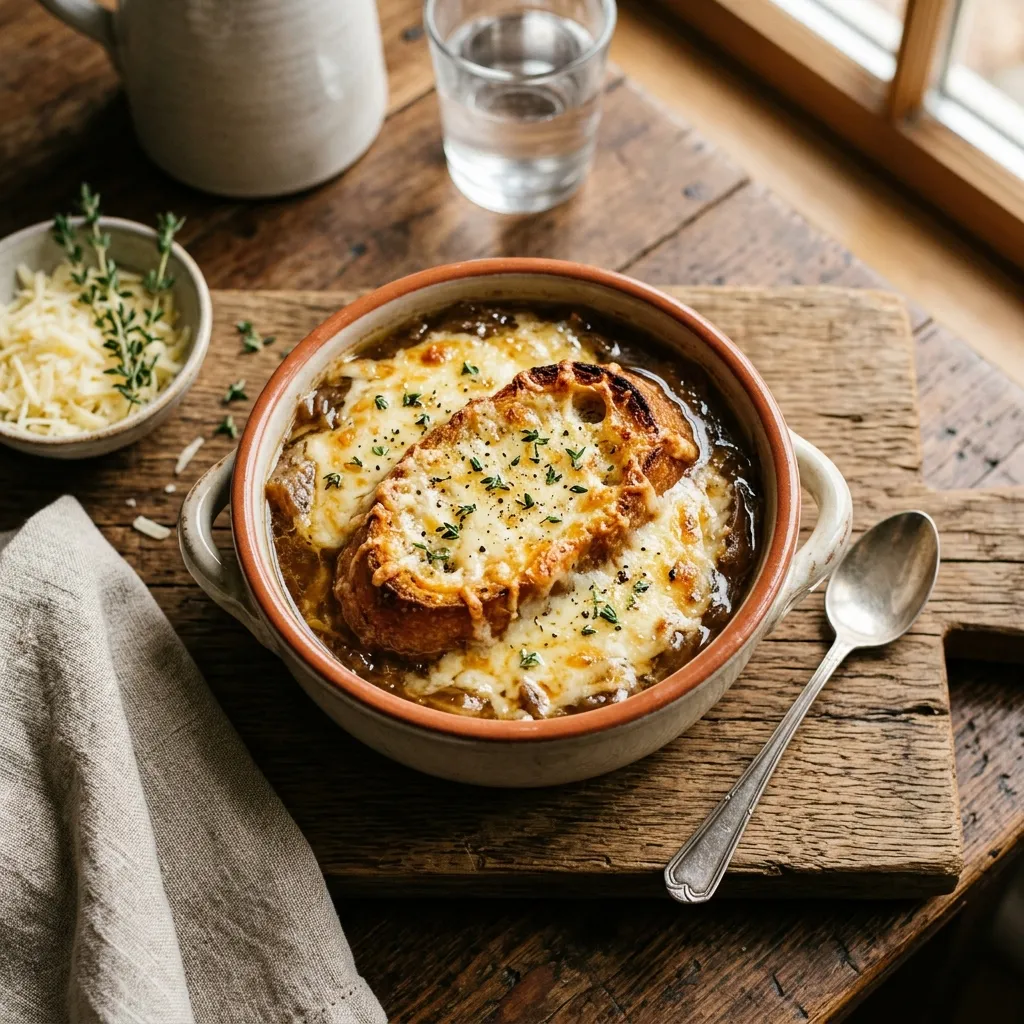
French onion soup originated in 18th-century Paris as a restorative dish for market workers and night laborers who needed warmth and sustenance during long shifts. The technique of slowly caramelizing onions for 45 minutes to an hour transforms their sharp, pungent sulfur compounds into deep, complex sugars — a process that fundamentally changes the food's Ayurvedic properties from predominantly katu (pungent) rasa to a rich madhura (sweet) with underlying katu undertones. The dish relies on a base of beef or vegetable broth ladled over a mound of deeply browned onions, then topped with a thick slice of toasted bread and a generous layer of melted Gruyère cheese. The gratin step — broiling until the cheese bubbles and browns — adds a final layer of transformation, creating a sealed cap that holds the steam and aroma within the bowl. The result is a single-bowl meal that delivers remarkable depth from minimal ingredients. From an Ayurvedic perspective, this soup is a study in contrasts: the warming, circulatory-stimulating properties of the onions balanced against the heavy, cooling, nutritive qualities of the cheese and bread. The long cooking process makes the onions significantly easier to digest than their raw form, while the broth provides hydration and mineral content that supports rasa and rakta dhatus.
The caramelized onions and warm broth strongly increase pitta and may aggravate it in excess. The heavy cheese and bread ground vata effectively, while the overall heaviness and oiliness of the dish can increase kapha, particularly when consumed in large portions.
Traditionally used as a restorative food during recovery from illness, cold exposure, or exhaustion. The warming onion broth supports circulation and helps break up congestion in the chest and sinuses, while the rich broth provides easily assimilated nourishment for weakened digestion.
Ingredients
- 6 large Yellow onions (about 3 pounds, thinly sliced)
- 3 tablespoons Butter (unsalted)
- 1 tablespoon Olive oil
- 1 teaspoon Salt
- 1 teaspoon Sugar (helps caramelization)
- 1 cup Dry white wine (or dry sherry)
- 6 cups Beef broth (or rich vegetable broth)
- 4 sprigs Fresh thyme
- 1 whole Bay leaf
- 1/2 teaspoon Black pepper (freshly ground)
- 4 slices Baguette (1 inch thick, toasted)
- 2 cups Gruyère cheese (grated, about 6 ounces)
Instructions
- Slice all 6 onions into thin half-moons, about 1/8 inch thick. Consistent thickness ensures even caramelization — thicker pieces will remain pale while thin ones burn.
- Heat butter and olive oil in a large Dutch oven or heavy-bottomed pot over medium heat. Add the sliced onions and salt, stirring to coat. Cook for 10 minutes, stirring occasionally, until the onions soften and begin to release their liquid.
- Reduce heat to medium-low and continue cooking the onions for 35-45 minutes, stirring every 5 minutes. The onions should progress from translucent to golden to a deep amber brown. Add the sugar after 20 minutes to accelerate caramelization. If the bottom of the pot darkens too quickly, add a splash of water and scrape up the fond.
- Increase heat to medium-high and pour in the white wine. Scrape up all the browned bits from the bottom of the pot — this fond is concentrated flavor. Cook until the wine has nearly evaporated, about 3 minutes.
- Add the beef broth, thyme sprigs, and bay leaf. Bring to a simmer, then reduce heat to low. Cook uncovered for 20 minutes to allow the flavors to meld. Season with black pepper and adjust salt.
- While the soup simmers, position an oven rack 6 inches below the broiler and preheat the broiler. Toast the baguette slices until golden on both sides.
- Remove and discard the thyme sprigs and bay leaf. Ladle the soup into oven-safe crocks or bowls, filling each about three-quarters full.
- Place a toasted baguette slice on top of each bowl and cover generously with grated Gruyère, allowing the cheese to extend slightly over the edges of the bowl.
- Place the crocks on a baking sheet and broil for 3-5 minutes, watching closely, until the cheese is bubbly, golden, and beginning to brown at the edges. The cheese should form a sealed cap over the soup.
- Let the bowls rest for 5 minutes before serving — the contents are extremely hot. Serve with additional toasted bread on the side.
Nutrition
These values are estimates calculated from the ingredient list and may vary based on brands, cooking methods, and serving size. Not a substitute for medical or dietary advice.
How This Recipe Affects Each Dosha
Vata
The warmth, oiliness, and grounding weight of this soup make it an excellent choice for vata types, particularly during cold, dry, or windy weather. The long-cooked onions are far easier for vata's variable digestion to process than raw alliums. The melted cheese provides the snigdha (oily) and guru (heavy) qualities that vata craves. The broth contributes hydration that supports vata's tendency toward dryness. However, the wine-based acidity may disturb sensitive vata digestion if consumed on an empty stomach.
Pitta
This soup is significantly heating and should be consumed with awareness by pitta types. The caramelized onions, while sweeter than raw, still carry substantial ushna virya that increases internal heat. The beef broth adds further warming and slightly acidic qualities. The Gruyère cheese, being aged, carries additional sharpness and heat. Pitta types may find this soup increases feelings of intensity, acidity, or irritability if consumed during hot weather or periods of pitta aggravation. The broiled cheese crust adds additional fire element.
Kapha
The heavy, dense nature of this soup — combining bread, melted cheese, and rich broth — will increase kapha substantially. The guru and snigdha qualities directly oppose what kapha types need for balance. The slow-cooked onions lose much of their kapha-reducing pungency through the caramelization process. The overall dish promotes heaviness, congestion, and lethargy when consumed by kapha-dominant individuals in large quantities. The sole redeeming quality for kapha is the warming nature of the onions and black pepper.
The warming spices, caramelized onions, and hot broth stimulate jatharagni (digestive fire) moderately. However, the heavy cheese and bread can dampen agni if consumed in excess, creating a push-pull dynamic where the soup simultaneously stimulates appetite and challenges digestion.
Nourishes: rasaraktamamsa
Adjustments by Constitution
For Vata Types
This soup is already well-suited for vata. To optimize further, use ghee instead of butter for easier digestion. Add a pinch of asafoetida (hing) to the broth to reduce any gas-producing tendency of the onions. Use a splash of lemon juice instead of wine if alcohol aggravates your digestion. Ensure the bread is well-toasted — crispy bread is easier for vata to digest than soft. Enjoy this soup warm, never lukewarm.
For Pitta Types
Reduce the onion quantity by one-third and add 2 sliced fennel bulbs, which carry cooling properties that offset the heat. Replace beef broth with vegetable broth to reduce the heating quality. Use fresh mozzarella instead of Gruyère — it is less sharp and less heating than aged cheeses. Omit the black pepper entirely and add a pinch of coriander seed to the broth. Skip the wine and deglaze with a splash of water or coconut aminos instead.
For Kapha Types
Skip the bread and cheese entirely — serve this as a clear onion broth instead. Increase the black pepper to 1 teaspoon and add 1/2 teaspoon of dried ginger powder to the broth. Use water or a very light vegetable broth rather than rich beef stock. Add a generous squeeze of lemon juice before serving to introduce lightness and sourness. Keep the portion to one small bowl rather than a full crock. Add mustard greens or watercress as a garnish for additional lightness and pungency.
Seasonal Guidance
French onion soup is ideal for cold, damp months when the body craves warmth and substance. In fall and winter, the heating onions and rich broth counter the cold, dry qualities of the season. Avoid this dish in summer when pitta is already elevated — the combined heat of onions, broth, and broiled cheese can easily push pitta over the edge.
Best time of day: Best consumed at lunch when digestive fire is strongest, allowing the body to fully process the heavy cheese and bread. If eaten at dinner, serve a smaller portion at least 3 hours before sleep.
Cultural Context
The origins of French onion soup trace to at least the Roman era, when onions were abundant and cheap, making onion-based soups a food of the poor. The modern gratinée version — with its bread and cheese crust — became associated with Les Halles, the central food market of Paris, where it was served to workers in the early morning hours. King Louis XV is said to have created a version at a hunting lodge using only onions, butter, and champagne. The dish became a staple of Parisian brasserie culture in the 19th century and was adopted into American cuisine largely through Julia Child's influence in the 1960s.
Deeper Context
Origins
Onion-and-broth soups have ancient roots across Roman and medieval European peasant cookery — the dish appears in Apicius (4th century CE) and in medieval monastic kitchens. The specifically Parisian gratinéed form developed at Les Halles in the 18th and 19th centuries, when the onion soups of the market workers were adapted for bourgeois restaurant menus. The soupe à l'oignon gratinée served today is an 1800s Parisian refinement of medieval peasant cookery.
Food as Medicine
Onion carries extensive classical and folk-medicine reputation for cardiovascular and respiratory support. Modern research validates allium sulfur compounds (quercetin, S-allyl cysteine, diallyl sulfides) for blood-pressure modulation, cholesterol reduction, and antimicrobial activity. Beef bone broth provides gelatin and minerals — the combination is a classical restoration preparation with therapeutic depth that its touristy reputation conceals.
Ritual & Seasonal Role
Winter staple. Classical after-midnight dish at Les Halles historically, and at late-night Parisian bistros by tradition. Featured on French bistro menus worldwide as quintessentially Parisian. Not religiously ceremonial but strongly tied to French working-class and bistro identity.
Classical Pairings & Cautions
A glass of Burgundy or Beaujolais alongside. The soup is essentially complete-meal on its own. Cautions: high sodium load (broth plus cheese); gluten intolerance precludes the bread topping (gluten-free bread substitutions work imperfectly); lactose sensitivity; FODMAP sensitivity from the heavy onion content substantial — IBS patients may react; religious beef restrictions (Hindu, some Buddhist); vegetarian versions use mushroom broth for umami depth.
Cross-Tradition View
How other medical and food-wisdom traditions read this dish. Each tradition names the same physiological reality in its own language — the agreements across them are where universal principles live.
Traditional Chinese Medicine
Onion is warm-pungent and disperses cold; gruyère is Yin-building and Kidney-supporting; thyme is warm-dispersing; beef broth is Qi-and-Blood-building. A Qi-dispersing Yin-building winter food — TCM physicians would recognize the onion's warmth-moving-through-cold as classically appropriate for early-stage wind-cold invasion.
Greek Humoral
Hot-wet sanguine-building. The slow-caramelized onions shift the temperament toward hot-dry; the broth provides hot-wet balance. Galenic physicians specifically endorsed onion preparations for respiratory complaints and for heart health — the allium compounds were recognized long before modern cardiovascular research validated them.
Ayurveda
Heating virya, sweet vipaka. Pacifies Vata through warmth and unctuousness. Kapha-mixed — the caramelized onion is Kapha-reducing through heat, but the cheese-bread topping is Kapha-aggravating. Pitta mildly aggravated through the allium-beef combination.
Parisian Les Halles
French onion soup as we know it descends from Les Halles — Paris's central wholesale market (operating from the 12th century until its demolition in 1971). Market workers, porters, and after-hours revelers gathered at the soup kitchens for onion soup as pre-dawn sustenance between the night shift and morning delivery runs. The gratinéed form (bread-and-cheese crust on top) is a 19th-century Parisian innovation that transformed the dish from worker's broth into bourgeois restaurant food.
Chef's Notes
The entire success of this dish depends on patience during the onion caramelization stage. Rushing this step by raising the heat produces bitter, unevenly cooked onions rather than the sweet, jammy consistency that defines the soup. The fond — those browned bits stuck to the pot — should be built up and deglazed repeatedly throughout the cooking process. Each deglaze adds another layer of depth. Using a mix of onion varieties (yellow, red, and shallots) creates more complexity than a single type alone.
Frequently Asked Questions
Is French Onion Soup good for my dosha?
The caramelized onions and warm broth strongly increase pitta and may aggravate it in excess. The heavy cheese and bread ground vata effectively, while the overall heaviness and oiliness of the dish can increase kapha, particularly when consumed in large portions. The warmth, oiliness, and grounding weight of this soup make it an excellent choice for vata types, particularly during cold, dry, or windy weather. This soup is significantly heating and should be consumed with awareness by pitta types. The heavy, dense nature of this soup — combining bread, melted cheese, and rich broth — will increase kapha substantially.
When is the best time to eat French Onion Soup?
Best consumed at lunch when digestive fire is strongest, allowing the body to fully process the heavy cheese and bread. If eaten at dinner, serve a smaller portion at least 3 hours before sleep. French onion soup is ideal for cold, damp months when the body craves warmth and substance. In fall and winter, the heating onions and rich broth counter the cold, dry qualities of the season. Avoid t
How can I adjust French Onion Soup for my constitution?
For Vata types: This soup is already well-suited for vata. To optimize further, use ghee instead of butter for easier digestion. Add a pinch of asafoetida (hing) to t For Pitta types: Reduce the onion quantity by one-third and add 2 sliced fennel bulbs, which carry cooling properties that offset the heat. Replace beef broth with veg
What are the Ayurvedic properties of French Onion Soup?
French Onion Soup has madhura,katu taste (rasa), ushna energy (virya), and madhura post-digestive effect (vipaka). Its qualities (gunas) are guru,snigdha,ushna. It nourishes rasa,rakta,mamsa. The warming spices, caramelized onions, and hot broth stimulate jatharagni (digestive fire) moderately. However, the heavy cheese and bread can dampen agni if consumed in excess, creating a push-pull dynamic where the soup simultaneously stimulates appetite and challenges digestion.