Falafel
Middle Eastern Recipe
Overview
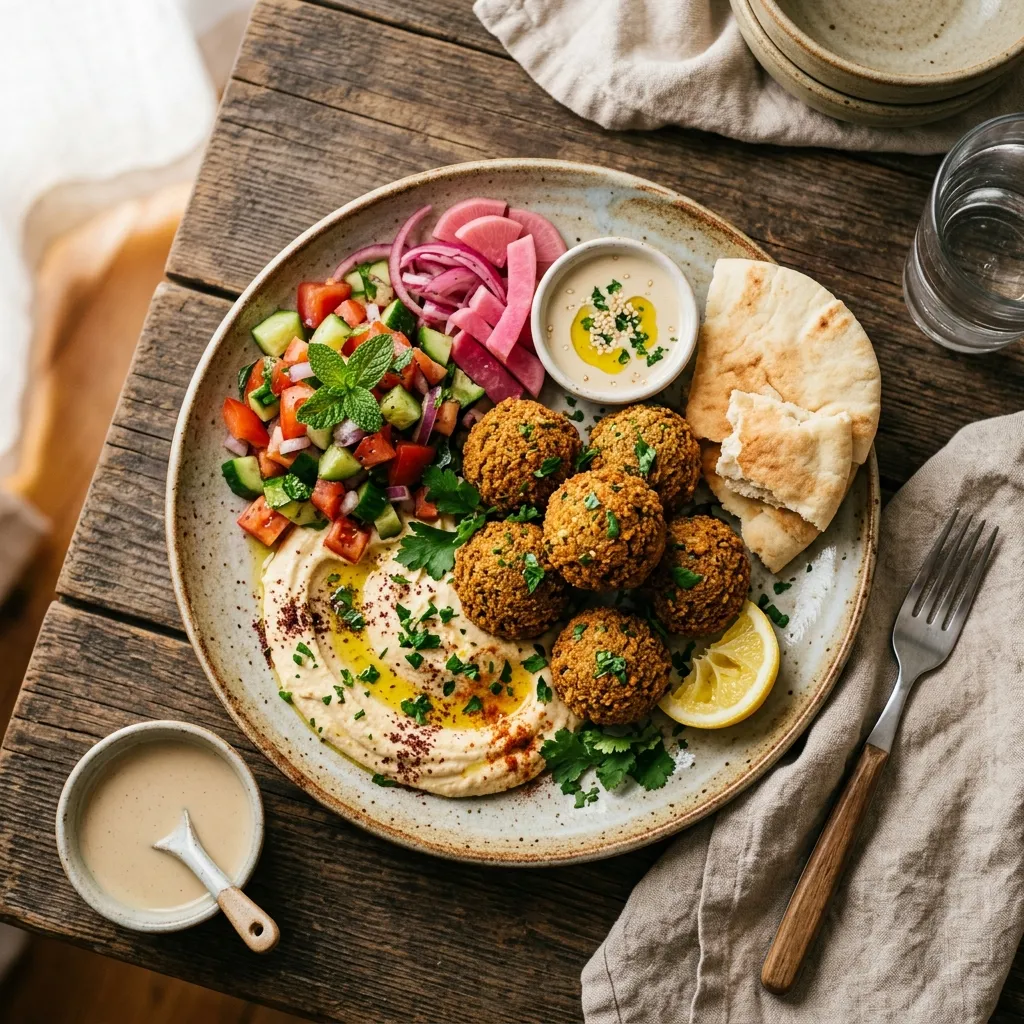
Falafel are deep-fried fritters made from raw, soaked chickpeas (or fava beans, or a blend) ground with herbs, spices, and aromatics into a coarse paste, then shaped into balls or patties and fried until the exterior forms a dark, crispy shell and the interior turns vivid green from the parsley and cilantro. The critical distinction from most bean fritters: falafel are made from raw, uncooked chickpeas that have been soaked overnight — never from canned or pre-cooked chickpeas, which produce mushy, falling-apart fritters. The dish's origin is debated — Egypt's Coptic Christians may have created ta'amiya (the fava bean version) as a Lenten protein substitute, or it may have emerged from broader Levantine chickpea cuisine. Today, falafel is street food across the entire Middle East and North Africa, served in pita bread with tahini sauce, pickled vegetables, and fresh herbs. Israel, Lebanon, Egypt, Palestine, and Jordan each have distinct falafel traditions — the Egyptian version uses fava beans (smaller, greener, more herbaceous), the Levantine version uses chickpeas (crunchier, nuttier). Ayurvedically, falafel presents a paradox: the base ingredients (chickpeas, herbs, spices) are light and dry, but deep-frying transforms them into heavy, oily food. The raw chickpea-herb interior retains astringent, drying qualities even within the fried shell. The result is a food that is simultaneously drying (inside) and oily (outside) — a complex profile that different doshas experience differently.
Complex doshic profile due to the contrast between raw chickpea interior and fried exterior. The herbs and spices support digestion. Mildly Vata-pacifying from the oil. May increase Kapha through heaviness and oil. Pitta-neutral in moderation.
Ingredients
- 2 cups Dried chickpeas (soaked 12-24 hours — NEVER use canned)
- 1 cup Fresh parsley (packed, stems removed)
- 1/2 cup Fresh cilantro (packed)
- 1 small Onion (roughly chopped)
- 4 cloves Garlic
- 2 tsp Cumin (ground)
- 1 tsp Coriander (ground)
- 1/4 tsp Cayenne pepper
- 1/2 tsp Baking powder (added just before frying)
- 1 tsp Salt
- 2 tbsp Sesame seeds (for coating)
- 3 cups Vegetable oil (for deep frying)
- 4 rounds Pita bread (for serving)
- 1/2 cup Tahini sauce (tahini thinned with lemon juice and water)
Instructions
- Drain the soaked chickpeas thoroughly — excess moisture causes falafel to fall apart during frying and makes the oil splatter dangerously.
- Pulse the chickpeas in a food processor in batches until they form a coarse, sandy texture — not a paste. Each piece should be roughly the size of couscous. If over-processed into a smooth paste, the falafel will be dense and heavy instead of light and crunchy.
- Add parsley, cilantro, onion, garlic, cumin, coriander, cayenne, and salt to the food processor with the ground chickpeas. Pulse until the herbs are finely distributed throughout but the mixture retains visible texture. It should hold together when squeezed in your palm.
- Transfer to a bowl, cover, and refrigerate for 30 minutes to 1 hour. Chilling firms the mixture and makes it easier to shape. Just before frying, fold in the baking powder — this creates the internal lightness.
- Shape the mixture into balls slightly larger than a golf ball (about 40g each) or flatten into thick patties. Press a few sesame seeds onto the surface of each. If the mixture crumbles, add 1-2 tablespoons of chickpea flour as a binder — never egg or bread crumbs.
- Heat oil to 175C (350F) in a deep pot. Gently lower 4-5 falafel into the oil — do not crowd. Fry for 3-4 minutes, turning once, until deeply golden brown all over. The color should be dark golden — pale falafel means the interior is still raw.
- Remove with a slotted spoon and drain on a wire rack. Cut one open to check: the interior should be bright green from the herbs, moist but fully cooked through, with no raw-chickpea taste.
- Serve in warm pita bread with tahini sauce, diced tomatoes, pickled turnips, and fresh mint. Or plate alongside hummus, tabbouleh, and pickled vegetables for a mezze spread.
Nutrition
These values are estimates calculated from the ingredient list and may vary based on brands, cooking methods, and serving size. Not a substitute for medical or dietary advice.
How This Recipe Affects Each Dosha
Vata
The deep-frying provides warmth and oil that Vata needs, and the cumin and coriander support Vata digestion. However, chickpeas are inherently Vata-increasing — dry, astringent, and gas-producing — and even frying does not fully eliminate these qualities. The interior of a falafel retains significant dryness. Vata types should eat falafel with generous tahini sauce and pickled vegetables for moisture.
Pitta
Falafel are moderate for Pitta. The chickpeas are astringent (Pitta-reducing), the fresh herbs add cooling quality, and the cumin/coriander spice blend is relatively mild. The garlic and cayenne add some heat, and the deep-frying increases Pitta slightly. Overall, falafel in a pita with tahini and vegetables is a reasonable Pitta meal.
Kapha
Deep-fried and heavy — two qualities Kapha does not need. The chickpea base provides some redeeming lightness and astringency, and the herbs contribute freshness, but the frying method overwhelms these benefits. Kapha types should limit falafel to occasional eating and favor baked versions when available.
The cumin and coriander in the falafel blend are classical Ayurvedic digestive spices. The deep-frying, paradoxically, makes the chickpeas harder to digest than simpler preparations like hummus. The raw chickpea interior retains some resistant starch that requires strong agni. Serve with lemon and tahini — both aid the digestion of heavy fried foods.
Nourishes: Rasa (plasma), Mamsa (muscle — from chickpea protein), Asthi (bone — from sesame seeds)
Adjustments by Constitution
For Vata Types
Serve with extra tahini sauce drizzled over and inside the pita. Include pickled vegetables and tomatoes for moisture. Add a smear of hummus to the pita for additional oil and creaminess. Pair with a warm soup to provide liquid nourishment alongside the dry falafel.
For Pitta Types
Reduce garlic and omit cayenne. Increase the fresh herb content in the mixture (more parsley and cilantro). Serve with cooling cucumber-yogurt sauce instead of or alongside tahini. Add fresh mint leaves to the pita. Choose pita with salad greens rather than a heavy bread-and-falafel-only combination.
For Kapha Types
Bake the falafel at 200C (400F) for 20 minutes instead of deep frying — brush with a thin coat of oil for browning. Serve in lettuce wraps instead of pita bread. Use a lighter tahini sauce (thinned generously with lemon juice). Add raw onion, radish, and pickled hot peppers for metabolic stimulation.
Seasonal Guidance
Falafel work best in spring (the drying quality helps clear Kapha) and autumn (the warming oil and spices suit the cooling weather). In summer, the deep-frying adds unwanted heat. In winter, the drying interior can aggravate Vata even though the oil provides warmth.
Best time of day: Lunch — the heavy, fried quality needs robust midday agni for proper digestion
Cultural Context
Falafel transcends national boundaries in the Middle East while simultaneously being claimed by everyone. In Egypt, ta'amiya (fava bean falafel) is breakfast food, eaten in aish baladi (pita) from street carts by workers heading to their morning shift. In Lebanon, Palestine, Jordan, and Syria, chickpea falafel is lunch food, served in sandwiches from shops that have been operating in the same location for generations. In Israel, falafel became a national symbol in the 1950s and '60s, adopted by the new state from Palestinian street vendors. The dish carries enormous cultural weight — it appears in debates about cultural appropriation, national identity, and the politics of food origin in the Middle East.
Deeper Context
Origins
Falafel's origin is most commonly attributed to Egyptian Coptic Christians who developed the fava-bean-based ta'ameya as Lenten fasting food (Coptic Christianity observes extensive meat-free periods). The dish spread across the Levant, with chickpea-based versions becoming the internationally-recognized form through Palestinian, Lebanese, and later Israeli cuisine. The Israeli-Palestinian dispute over falafel as cultural heritage is political-culinary controversy; the dish predates modern national boundaries by at least 1,500 years.
Food as Medicine
Chickpea complete protein when paired with grain (typically pita bread). Parsley provides substantial vitamin K, iron, and folate. Tahini contributes calcium and magnesium. The cumin-and-herb combination supports digestion. A nutritionally dense plant-based protein preparation with classical Egyptian-and-Levantine fasting-food status.
Ritual & Seasonal Role
Coptic Lent (Great Lent, 40 days before Orthodox Easter) featured prominently in Egyptian Coptic tradition. Year-round Levantine street food and home cookery. Friday Orthodox Christian fasting in some traditions. Global vegetarian-and-vegan food staple since 1970s Middle-Eastern restaurant expansion in Western cities.
Classical Pairings & Cautions
Pita bread, tahini sauce, pickled vegetables, hummus, tabbouleh, Israeli/Arab salad. Cautions: FODMAP issues from chickpeas; sesame allergies through tahini; gluten intolerance affects pita (gluten-free wraps work); fava beans in Egyptian versions contraindicate G6PD-deficiency patients (favism); deep-frying adds oxidized fat concerns in frequent consumption.
Cross-Tradition View
How other medical and food-wisdom traditions read this dish. Each tradition names the same physiological reality in its own language — the agreements across them are where universal principles live.
Traditional Chinese Medicine
Chickpeas build Kidney essence and tonify Spleen Qi; parsley is cool and supports Liver; cilantro clears Heat; cumin is warm and supports digestion; tahini is Yin-building and Kidney-supporting. A Kidney-essence-and-Yin tonic with Liver-and-Heat-clearing accents — TCM physicians would class this as restoration food for depleted working populations.
Greek Humoral
Hot-dry with cold-wet herb balance. A Galenic-suitable fried preparation — the Hippocratic endorsement of legume-and-herb combinations for sanguine nourishment matches falafel's structural logic.
Ayurveda
Heating virya, sweet vipaka. Pacifies Vata substantially through protein density and warmth. Mild Kapha aggravation through fried preparation. Chickpea is classical Ayurvedic Vata-pacifying protein.
Egyptian Coptic & Levantine
Falafel's origin is disputed — Egyptian Copts claim origin (ta'ameya, fava-bean-based) during Lenten fasting observance, tracing to Coptic Christian meat-free traditions of the 4th century CE onwards. Palestinian/Levantine chickpea-based version spread across the region and became the internationally-recognized form. Egyptian falafel still uses fava beans or fava-chickpea mix; Israeli/Palestinian/Lebanese falafel uses chickpeas. The dish is central to Levantine and Egyptian Orthodox Christian fasting cuisine.
Chef's Notes
The non-negotiable rule: use dried, soaked chickpeas. Canned chickpeas have been cooked and lost the starch structure that binds falafel together. If your mixture is too wet, spread it on a sheet pan and refrigerate for 1 hour to dry out. If using a falafel scoop (the spring-loaded tool), dip it in water between each scoop to prevent sticking. A pinch of baking powder added just before frying is the secret to an ethereally light interior — without it, falafel are dense and leaden. Do not add baking powder during the rest period, as it activates on contact with moisture and loses its effect.
Frequently Asked Questions
Is Falafel good for my dosha?
Complex doshic profile due to the contrast between raw chickpea interior and fried exterior. The herbs and spices support digestion. Mildly Vata-pacifying from the oil. May increase Kapha through heaviness and oil. Pitta-neutral in moderation. The deep-frying provides warmth and oil that Vata needs, and the cumin and coriander support Vata digestion. Falafel are moderate for Pitta. Deep-fried and heavy — two qualities Kapha does not need.
When is the best time to eat Falafel?
Lunch — the heavy, fried quality needs robust midday agni for proper digestion Falafel work best in spring (the drying quality helps clear Kapha) and autumn (the warming oil and spices suit the cooling weather). In summer, the deep-frying adds unwanted heat. In winter, the dryin
How can I adjust Falafel for my constitution?
For Vata types: Serve with extra tahini sauce drizzled over and inside the pita. Include pickled vegetables and tomatoes for moisture. Add a smear of hummus to the pi For Pitta types: Reduce garlic and omit cayenne. Increase the fresh herb content in the mixture (more parsley and cilantro). Serve with cooling cucumber-yogurt sauce i
What are the Ayurvedic properties of Falafel?
Falafel has Sweet, Astringent, Pungent taste (rasa), Heating energy (virya), and Sweet post-digestive effect (vipaka). Its qualities (gunas) are Heavy, Dry (interior), Oily (exterior), Warm. It nourishes Rasa (plasma), Mamsa (muscle — from chickpea protein), Asthi (bone — from sesame seeds). The cumin and coriander in the falafel blend are classical Ayurvedic digestive spices. The deep-frying, paradoxically, makes the chickpeas harder to digest than simpler preparations like hummus. The raw chickpea interior retains some resistant starch that requires strong agni. Serve with lemon and tahini — both aid the digestion of heavy fried foods.