Char Siu (Chinese BBQ Pork)
Chinese Recipe
Overview
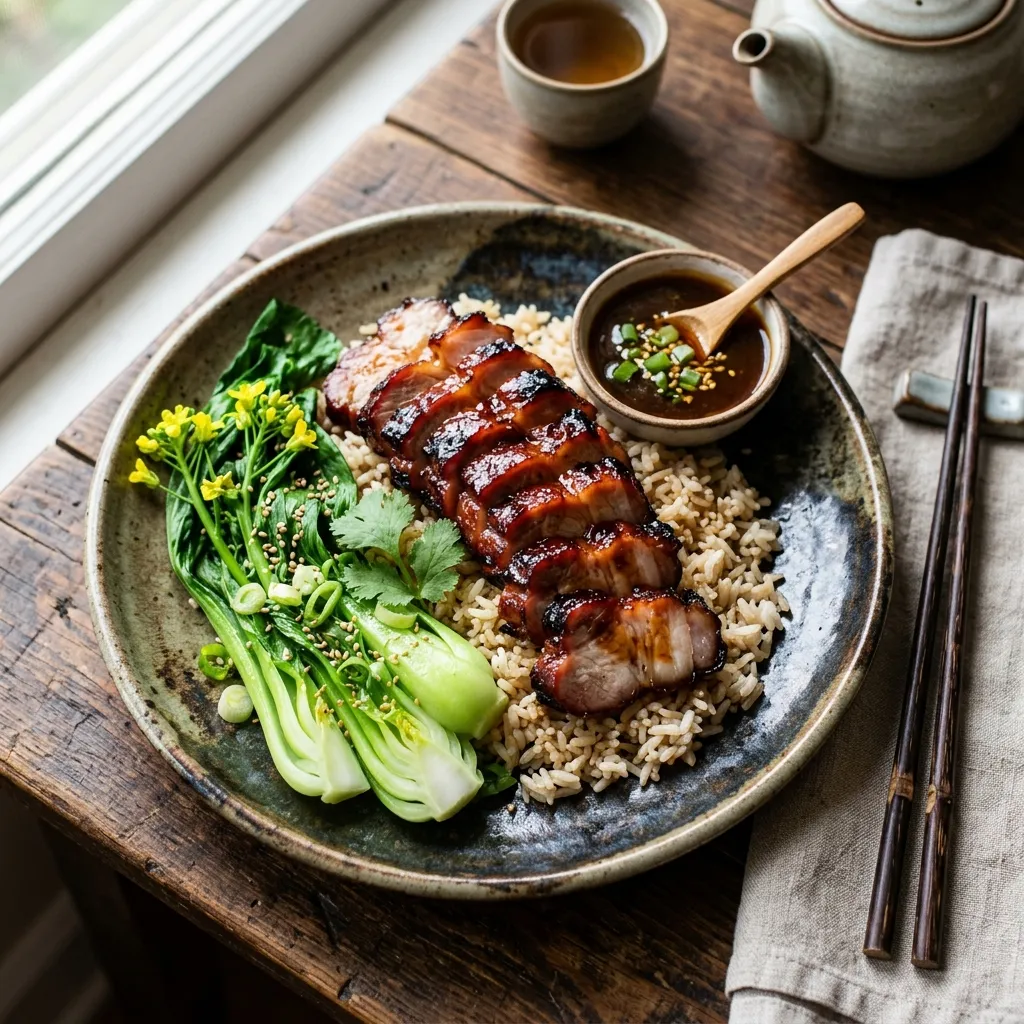
Char siu — literally "fork-roasted" in Cantonese — is the lacquered, crimson-red barbecued pork that hangs in the windows of Cantonese roast meat shops across Hong Kong, Guangzhou, and every Chinatown in the world. The technique involves marinating pork in a sauce of honey, soy sauce, hoisin, five-spice powder, and fermented red bean curd (the ingredient responsible for the signature red color), then roasting at high heat while basting repeatedly to build up layers of sticky, caramelized glaze. The pork cut matters enormously. Char siu is traditionally made from pork collar (also called pork neck or jowl) — a cut with heavy marbling that renders into succulent, almost buttery tenderness during the high-heat roasting. Leaner cuts like tenderloin produce dry, stringy results. The exterior should be deeply caramelized and slightly charred at the edges (the literal meaning of "char"), while the interior remains pink-tinged and juicy. Ayurvedically, char siu combines the sweet, heavy nature of pork with the complex heating qualities of fermented bean curd, honey, and five-spice powder. The fermented elements introduce a sour-salty dimension that stimulates digestion. The honey glaze is heating when cooked (Ayurveda distinguishes between raw honey, which is medicine, and heated honey, which becomes more rajasic). The overall effect is warming, building, and nourishing — a strongly anabolic food.
Strongly nourishing and building. Pacifies Vata through heavy, sweet, oily warmth. Increases Kapha through density and sweetness. Moderately increases Pitta through the heating spices, garlic, and cooked honey.
Useful as a building food for underweight individuals or those recovering from wasting conditions. The combination of marbled pork and sweet glaze nourishes rasa, mamsa, and meda dhatus when agni can handle the richness.
Ingredients
- 1 kg Pork collar or shoulder (cut into 2-3 long strips)
- 3 tbsp Hoisin sauce
- 2 tbsp Soy sauce
- 3 tbsp Honey (plus extra for basting)
- 2 tbsp Shaoxing wine
- 2 tbsp Fermented red bean curd (nam yue) (mashed)
- 1 tsp Five-spice powder
- 1/2 tsp White pepper
- 3 cloves Garlic (minced)
- 1 tbsp Sugar
- 1 tsp Sesame oil
- 1/4 tsp Red food coloring (optional, for traditional color)
Instructions
- Combine the hoisin sauce, soy sauce, 2 tablespoons honey, Shaoxing wine, fermented red bean curd, five-spice powder, white pepper, garlic, sugar, sesame oil, and food coloring (if using) in a bowl. Mix thoroughly until smooth.
- Place the pork strips in a large zip-top bag or shallow dish. Pour the marinade over the pork, turning to coat all surfaces. Seal and refrigerate for at least 4 hours, or overnight for the best flavor penetration. Turn the pork once during marinating.
- Remove the pork from the refrigerator 30 minutes before cooking to bring it toward room temperature. Preheat the oven to 475F / 245C with a rack in the upper third. Line a sheet pan with foil and set a wire rack on top.
- Remove the pork from the marinade, allowing excess to drip off. Reserve the remaining marinade. Place the pork strips on the wire rack. Pour 1 cup of water into the sheet pan below — the steam prevents the drippings from burning and smoking.
- Roast for 15 minutes, then flip the pork. Mix the remaining tablespoon of honey with 2 tablespoons of the reserved marinade to make a basting glaze. Brush this glaze over the pork.
- Continue roasting for another 10 minutes, then brush with glaze again. Roast for a final 5-10 minutes until the edges are caramelized and slightly charred, the glaze is sticky and lacquered, and the internal temperature reaches 145F / 63C.
- Rest the pork for 10 minutes before slicing against the grain into 1/4-inch thick pieces. The resting is essential — it allows the juices to redistribute throughout the meat.
- Serve over steamed jasmine rice, in noodle soups, stuffed into bao buns, or chopped into fried rice. Drizzle any remaining glaze from the pan over the sliced pork.
Nutrition
These values are estimates calculated from the ingredient list and may vary based on brands, cooking methods, and serving size. Not a substitute for medical or dietary advice.
How This Recipe Affects Each Dosha
Vata
Char siu is deeply grounding for Vata. The marbled pork provides heavy, oily sustenance. The sweet glaze nourishes depleted tissues. The warming five-spice and white pepper support digestion. The overall effect is stabilizing and nourishing — one of the better meat preparations for Vata types when agni is adequate to handle the richness.
Pitta
The cooked honey, garlic, five-spice, and fermented bean curd create cumulative heat. Pork itself is warming. The sweet and salty tastes provide some Pitta balance, but the overall heating trajectory makes this a dish to moderate for Pitta types. Smaller portions paired with cooling vegetables are advisable.
Kapha
The heavy, sweet, oily qualities of glazed pork are Kapha-increasing. The high sugar content of the glaze adds to the concern. Five-spice powder and white pepper provide some pungent counterbalance, but not enough to offset the dense, building nature of the dish. Best for Kapha in small portions.
The five-spice powder and fermented bean curd support digestion of the rich pork, but the heavy, oily nature of the meat combined with the sweet glaze still demands strong agni. Those with weak digestion may experience sluggishness after a large portion.
Nourishes: Rasa (plasma), Rakta (blood), Mamsa (muscle), Meda (fat), Shukra (reproductive)
Adjustments by Constitution
For Vata Types
Serve over warm jasmine rice with steamed bok choy and a drizzle of sesame oil for a complete, grounding meal. Add extra five-spice to the marinade and include star anise and cinnamon for their warming, digestive properties.
For Pitta Types
Replace pork with chicken breast for a leaner, less heating protein. Reduce the honey by half and replace hoisin with a mild plum sauce. Omit garlic and increase ginger. Serve with cool cucumber salad and steamed rice.
For Kapha Types
Use the leanest pork possible (tenderloin, trimmed of visible fat). Reduce honey and sugar in the marinade by half. Add extra white pepper and a pinch of dried ginger. Serve over steamed vegetables or cauliflower rice instead of white rice. Keep portions small.
Seasonal Guidance
Best in cooler months when the body benefits from dense, warming, nourishing foods and agni is naturally robust. The sweet, heavy qualities match winter's building needs. In summer, the heating spices and heavy pork create excess internal heat. Spring calls for lighter preparations as the body sheds winter accumulation.
Best time of day: Lunch or dinner, ideally when paired with rice and vegetables for a balanced meal
Cultural Context
Char siu is one of the three pillars of Cantonese siu mei (roasted meats), alongside siu yuk (crispy roast pork belly) and siu ngap (roast duck). In Hong Kong, siu mei shops display their gleaming roasted meats on hooks in the window — the visual spectacle is part of the marketing. Char siu has spread from Cantonese cuisine to become a fundamental element of Southeast Asian cooking: it appears in Malaysian char siu rice, Singaporean hawker stalls, Vietnamese com suon, and Japanese ramen as chashu. Each culture adapted the technique to local taste, but the Cantonese original remains the benchmark.
Deeper Context
Origins
Cantonese origin — part of the Guangdong siu mei (roasted meats) tradition that includes siu yuk (roast pork), siu aap (roast duck), and siu gai (roast chicken). Char-siu specifically refers to the pork-collar cut slow-roasted on a fork (cha meaning fork, siu meaning roast). Hong Kong siu-mei shops have preserved the technique for centuries and remain the gold standard for the dish globally. The Japanese chashu adaptation shifted technique and flavor profile while retaining the roasted-pork-as-topping logic.
Food as Medicine
Five-spice is a classical TCM digestive combination — each of the five spices has substantial materia medica individually, and the combination is believed to move Qi across all five elements (wood, fire, earth, metal, water). Fermented red bean curd (nam yue) adds probiotic content and umami depth. The honey glaze provides Spleen-Qi-tonifying sweetness. Surprisingly well-composed medicinally despite its restaurant-indulgence positioning.
Ritual & Seasonal Role
Lunar New Year celebratory meat — siu mei appears prominently on holiday feast tables across Cantonese-speaking communities. Year-round in siu mei shops and in Cantonese rice-plate lunch spots. Chinese diaspora communities maintain siu mei shops as cultural anchors worldwide.
Classical Pairings & Cautions
White rice, Cantonese-style noodles, bao (steamed buns), stir-fried greens. Cautions: sodium and sugar load in the glaze; religious pork restrictions (Jewish, Muslim, Hindu, some Buddhist, Adventist); nitrates in some commercial preparations; fermented red bean curd contains soy — soy allergies apply; diabetic monitoring for the sugar glaze.
Cross-Tradition View
How other medical and food-wisdom traditions read this dish. Each tradition names the same physiological reality in its own language — the agreements across them are where universal principles live.
Greek Humoral
Hot-wet sanguine-building luxury food. The honey-glazed-roast-meat technique has Galenic-Byzantine parallels in honey-glazed game preparations that appear in the Byzantine cookbook of Apicius. A melancholic-dispelling feast dish in classical Galenic terms — the honey providing sanguine sweetness, the pork providing Yin restoration.
Japanese Kanpo
Char-siu was adopted into Japanese cuisine as chashu — the ramen-shop slow-cooked pork that defines modern Japanese ramen culture. Kanpo reading of pork as Yin-building parallels TCM understanding. The preparation was imported to Japan via early Buddhist cultural contact with Tang-dynasty China, and the Japanese version uses soy-based braising liquid rather than the Cantonese honey-hoisin glaze.
Unani Tibb
Pork is not eaten in Unani practice due to Islamic dietary restriction, but the five-spice technique (star anise, fennel, cinnamon, cloves, Sichuan pepper) overlaps extensively with hakim materia medica — saunf (fennel), darchini (cinnamon), laung (cloves) are all core Unani spices. The honey-glaze-and-five-spice technique applied to lamb or goat would function as a classical Indo-Persian convalescent preparation.
Ayurveda
Heating virya, sweet vipaka. Pacifies Vata through warmth and unctuous fat; aggravates Pitta through the honey-spice-caramelization combination; aggravates Kapha through pork fat and sugar glaze. Pork is not traditional Ayurvedic meat — classically heavy and tamasic; char-siu is feast food rather than daily cookery in Ayurvedic terms.
Chef's Notes
The fermented red bean curd is the secret ingredient that distinguishes authentic char siu from generic sweet-roasted pork. It provides the umami depth, subtle red tint, and fermented complexity that no combination of other sauces can replicate. It is inexpensive and available in any Asian grocery store. If the honey glaze burns before the pork is cooked through, tent loosely with foil for the final minutes. For the most traditional char siu experience, seek out pork collar (neck) — the marbling is similar to wagyu beef and the result is incomparably juicy. Leftover char siu makes exceptional fried rice and char siu bao (steamed buns).
Frequently Asked Questions
Is Char Siu (Chinese BBQ Pork) good for my dosha?
Strongly nourishing and building. Pacifies Vata through heavy, sweet, oily warmth. Increases Kapha through density and sweetness. Moderately increases Pitta through the heating spices, garlic, and cooked honey. Char siu is deeply grounding for Vata. The cooked honey, garlic, five-spice, and fermented bean curd create cumulative heat. The heavy, sweet, oily qualities of glazed pork are Kapha-increasing.
When is the best time to eat Char Siu (Chinese BBQ Pork)?
Lunch or dinner, ideally when paired with rice and vegetables for a balanced meal Best in cooler months when the body benefits from dense, warming, nourishing foods and agni is naturally robust. The sweet, heavy qualities match winter's building needs. In summer, the heating spices
How can I adjust Char Siu (Chinese BBQ Pork) for my constitution?
For Vata types: Serve over warm jasmine rice with steamed bok choy and a drizzle of sesame oil for a complete, grounding meal. Add extra five-spice to the marinade an For Pitta types: Replace pork with chicken breast for a leaner, less heating protein. Reduce the honey by half and replace hoisin with a mild plum sauce. Omit garlic a
What are the Ayurvedic properties of Char Siu (Chinese BBQ Pork)?
Char Siu (Chinese BBQ Pork) has Sweet, Salty, Pungent taste (rasa), Heating energy (virya), and Sweet post-digestive effect (vipaka). Its qualities (gunas) are Heavy, Oily, Warm, Dense. It nourishes Rasa (plasma), Rakta (blood), Mamsa (muscle), Meda (fat), Shukra (reproductive). The five-spice powder and fermented bean curd support digestion of the rich pork, but the heavy, oily nature of the meat combined with the sweet glaze still demands strong agni. Those with weak digestion may experience sluggishness after a large portion.